
Start with the exposure that could change the choice
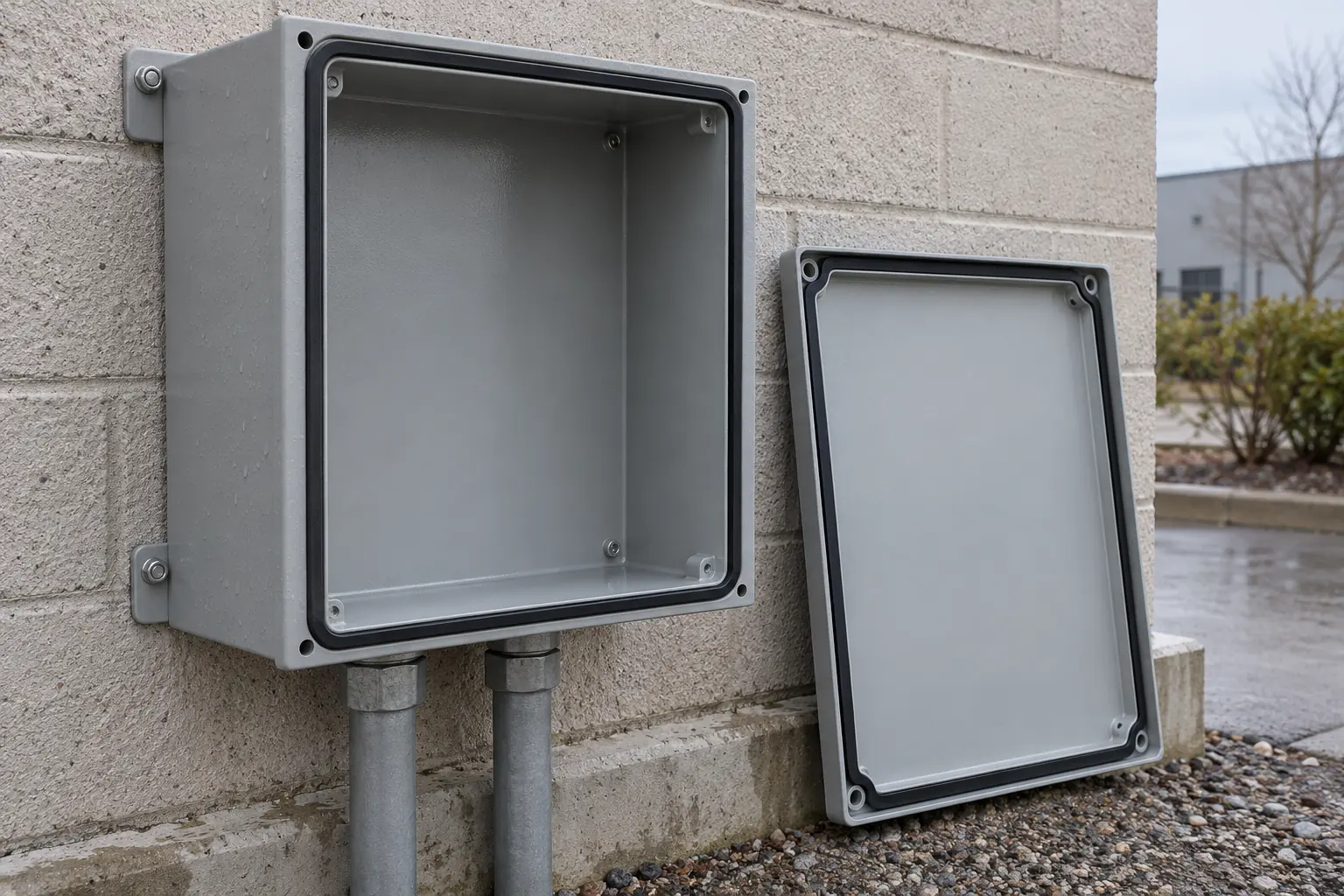
Consider a hypothetical removable equipment cover: a solid rubber perimeter gasket sits between the cover's flange and the enclosure rim, and cover fasteners provide the closing force. The seal must maintain contact along that path. Sponge, foam, conductive, and dynamic seals fall outside this comparison because changing their construction or function changes the design question.
EPDM is a useful starting candidate for weather and water exposure; silicone warrants closer consideration when heat resistance or cold flexibility drives selection. Parker's O-Ring Handbook describes these family tendencies and highlights chemical limitations. They guide screening, not a purchasing specification or an installed-life promise.
Define operating and storage conditions at the seal, including solar heating, cleaning, incidental contaminants, and cover-removal practices. If temperature is unknown, obtain observations or a justified service envelope before choosing a grade. Identify cleaners by their actual formulation and use conditions: a mild-looking liquid or an outdoor label does not establish compatibility.
Compare documented compounds against the same duty
A compound is a specific rubber formulation, including its additives and curing system. Ask each supplier to identify the proposed formulation, solid construction, hardness, and relevant test conditions. Compare evidence under service conditions that matter to this enclosure rather than lining up isolated datasheet maxima.
Compression set describes the lasting change in shape after a rubber sample has been squeezed and released. It is useful evidence about recovery, but results obtained with different specimen conditions or exposure histories are not a direct ranking of finished gaskets. Request comparable data and explain how it relates to the intended assembly.
| Decision dimension | EPDM candidate | Silicone candidate | Selection consequence |
|---|---|---|---|
| Weather and water | A natural screening option for this exposure. | Also offers weathering resistance. | Keep both if their proposed grades support the complete duty. |
| Heat and cold | Check the documented service envelope. | Often worth prioritizing for demanding thermal conditions. | Prefer silicone when its grade supports a thermal duty the EPDM proposal cannot. |
| Cleaning and contaminants | Mineral oil and fuel exposure raise compatibility concerns. | Chemical compatibility still needs grade-specific evidence. | An unsupported cleaner excludes the candidate until suitable evidence is obtained. |
| Recovery and installation | Use compound and section data for the intended squeeze. | Evaluate recovery alongside susceptibility to handling damage. | Select the grade that maintains contact without creating an impractical closure or service procedure. |
Make compression work with the cover and flange
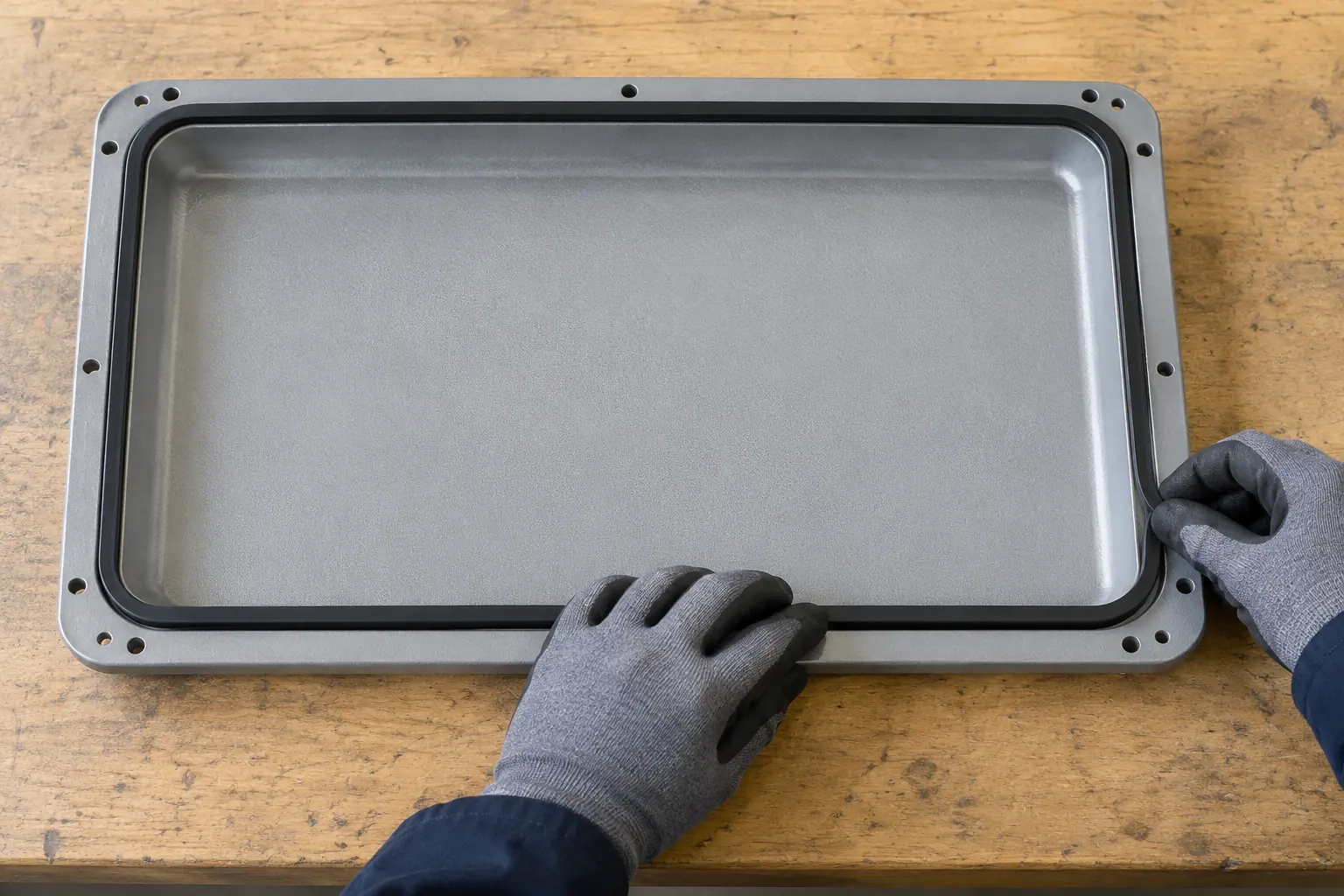
The gasket seals because closing the cover squeezes it against the mating surfaces. Its cross-section and the closed gap determine that squeeze, while flange flatness and cover stiffness determine how evenly it is distributed. Near a fastener, contact may be firm; between fasteners, a flexible cover may lift and leave a weak sealing region.
Review the largest and smallest permitted gaps against the proposed gasket dimensions and the producer's compression guidance. If a section scarcely contacts at the open end of the tolerance range, revise the section or mating geometry. If closure requires excessive force or bends the cover, review stiffness, fastening, and section design before choosing a harder compound.
Inspect seating along the rim and corners during a trial assembly, then examine the gasket after removal for cuts, shifting, or uneven contact evidence. An interruption near a bowed flange points toward an assembly investigation, not an automatic material change. Hardness measures resistance to indentation; it does not establish the closing force or seal quality of this particular profile.
Choose a construction that can be made and inspected
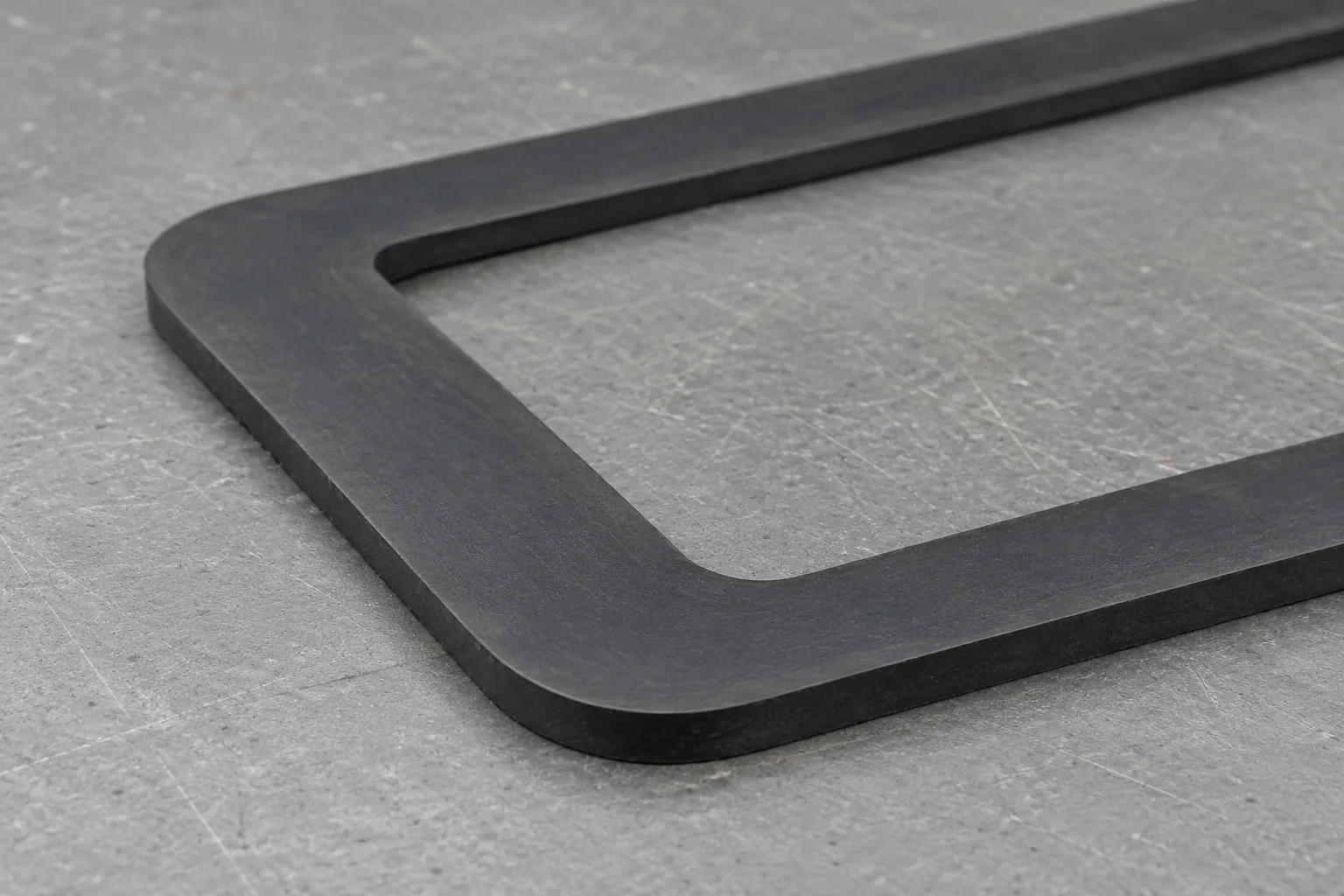
A flat perimeter design may suit cutting from solid sheet, provided the available thickness and edge quality meet the drawing. A shaped section or integrated corner may favor molding. A profile formed by another route may need joined ends. Ask the producer to explain the practical route for the geometry and order quantity, including any tooling.
Where a joint exists, agree its location, preparation, joining method, and acceptance checks. Examine the corner or seam for an interruption in the sealing path and inspect whether the finished part lies correctly on the mating flange. A visually neat joint still needs verification after installation and the relevant exposure.
Review tolerances, flash or cut-edge condition, handling, and material identification with the proposed production process. If the sample route differs from the intended batch route, identify which dimensions and joint checks need repeating on production-representative parts. Compare quotations using material availability, setup, inspection, traceability, packaging, and replacement supply; neither family nor process carries a universal price or delivery advantage.
Let failure evidence determine the next branch
Run both viable proposals against the same sealing purpose, exposure, installation concept, and acceptance target. Record the actual compound, gasket drawing, cover condition, assembly procedure, and test method so an outcome can be traced to the tested configuration.
If exposure screening fails, seek a suitable formulation before spending effort on enclosure testing. If the rubber remains serviceable but contact is interrupted, adjust the geometry or installation and retest the revised assembly. Where the evidence supports neither proposal, evaluate another compound or seal design rather than forcing a choice.
Once a candidate meets the required tests, compare the complete delivery conditions: verification effort, any finishing or joining operations, routine inspection, maintenance access, replacement parts, and sourcing continuity. This turns a technically viable gasket into a supportable purchasing choice.
Verify performance at enclosure level
Agree the customer's enclosure test method and acceptance criteria before making an approval claim. Include relevant conditioning, cleaning exposure, and reopening in the verification plan when those belong to the service requirement. A test on a loose rubber specimen answers a material question; a test on the fitted cover addresses the sealing assembly.
Inspect and record where leakage or damage appears if the assembly misses its target. Compare those locations with seams, corner seating, flange condition, and fastener positions. Use the observations to choose the next investigation instead of attributing failure to EPDM or silicone from appearance alone.
Treat a compound substitution as an engineering change. Revisit the dimensions, closure behavior, chemical evidence, and affected tests, even if the replacement has the same stated hardness. An enclosure ingress rating requires the applicable assembly evidence; a gasket material cannot grant it.
Prepare an RFQ that makes the alternatives comparable
Send the same requirement package to the gasket producers and mark unresolved items as requests for engineering review. Ask each response to identify deviations and the evidence behind its proposed compound and construction. This makes alternatives easier to compare without hiding uncertainty.
Bring drawings, exposure records, current assembly observations, and the intended acceptance method to the discussion. With that information, the producer and enclosure engineer can shortlist a grade, settle the section and joint approach, and assign the validation work needed before approval.
- Supply gasket and enclosure CAD, the controlled gasket drawing, and the mating flange surfaces.
- Describe gap limits, cover stiffness, fastening arrangement, and assembly or compression constraints.
- Identify approved formulations or required properties, solid construction, hardness, and color.
- List environmental exposure, cleaner formulations, incidental contaminants, and relevant use conditions.
- Explain removal frequency, installation handling, joining details, and replacement expectations.
- State quantities, batch needs, traceability, required documentation, and timing objectives.
- Assign test responsibilities and provide the enclosure acceptance criteria, separating firm requirements from open design questions.
Frequently asked questions
Does matching hardness make a replacement compound interchangeable?
It does not make the parts mechanically equivalent. Hardness is a local indentation measurement, while a gasket's response also depends on formulation and shape. If the replacement changes how the cover closes or how the seal recovers, the original installation evidence no longer settles the substitution.
Can a sheltered bench trial settle an outdoor-use decision?
A bench trial can reveal fit and closure problems. It leaves exposure-dependent questions open if cleaning, thermal changes, or service reopening were absent. Match the follow-up evaluation to the missing duty rather than treating an easy initial fit as proof of outdoor suitability.
Should a leaking cover simply be tightened further?
Extra tightening may distort a flexible lid or damage an already crowded gasket section. Locate the leak and inspect contact around that area before altering closure settings. A geometry correction may be more useful than added force, especially when leakage appears between fasteners.
What if the cleaner information is unavailable at quotation time?
Request a provisional quote that names the compatibility assumption and excludes application approval on that point. Obtain the cleaning product identification and exposure practice before committing the material. If the selected grade proves unsuitable, reopen the shortlist while preserving the agreed sealing requirement.