
Core advantages
Lightweight, excellent machinability, good corrosion resistance, stable overall strength, suitable for CNC machining, anodizing, excellent surface treatment results, moderate cost, and wide range of applications.
A general-purpose engineering aluminum alloy material suitable for CNC precision machined parts, lightweight structural parts, exterior metal parts, mechanical brackets, fixtures, and medium-strength functional parts.
6061 Aluminum Alloy is a commonly used aluminum-magnesium-silicon wrought aluminum alloy, featuring good overall mechanical properties, processing performance, corrosion resistance, and surface treatment adaptability. It is commonly used in CNC machining, mechanical structural parts, housings, brackets, fixtures and fixtures, robot parts, automotive component samples, and lightweight metal functional components. Compared to 2A12 and 7075 aluminum alloys, 6061 is not the strongest but offers better corrosion resistance, processing stability, anodizing effect, and overall application range.
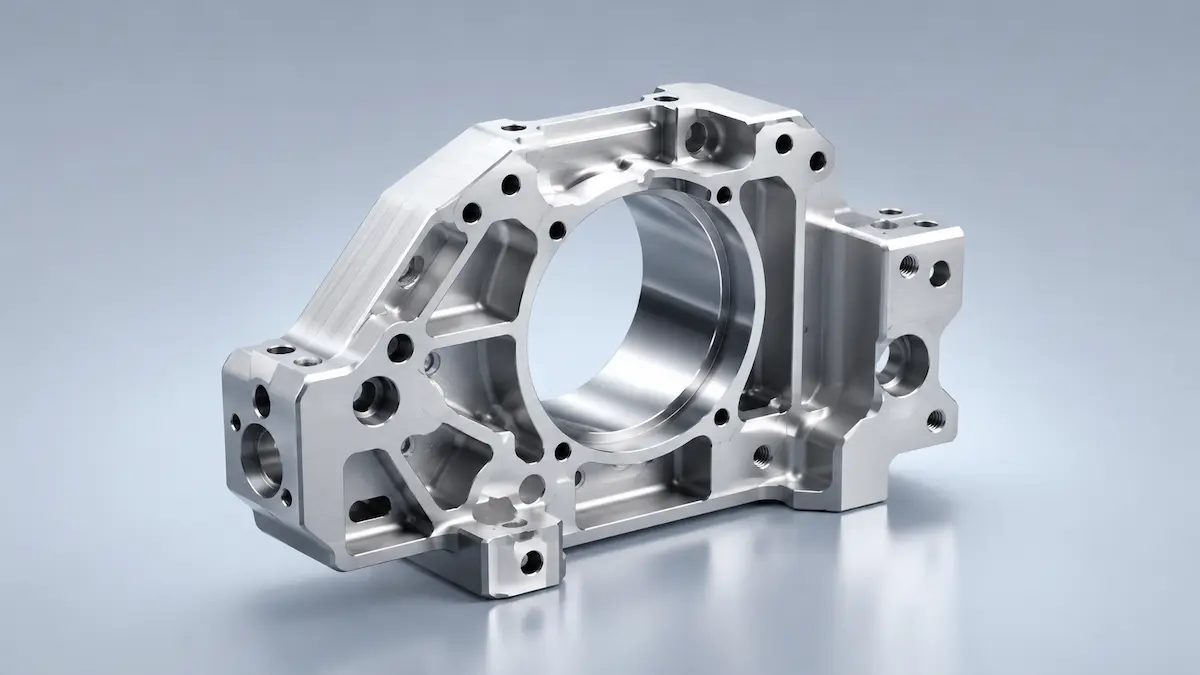
By focusing on application scenarios, boundaries of advantages, and non-recommended scenarios, it helps sales, customer service, and quoting staff quickly determine whether the material meets current part requirements.
Lightweight, excellent machinability, good corrosion resistance, stable overall strength, suitable for CNC machining, anodizing, excellent surface treatment results, moderate cost, and wide range of applications.
Mechanical structural parts, housings, brackets, mounting bases, fixtures and fixtures, robot parts, drone parts, automotive component samples, electronic device housings, instrument and meter parts, heat dissipation structural parts, connectors, CNC aluminum parts, lightweight functional parts, and small-batch metal samples.
Ultra-high strength load-bearing parts, high-temperature long-term load-bearing parts, highly wear-resistant moving parts, high-elastic snap-fit parts, long-term exposed parts in highly corrosive environments, extremely high hardness parts, heavy-duty structural parts replacing steel parts, food direct contact parts, and ultra-high-strength aerospace structural parts.
The following parameters come from product information and material knowledge fields, used for design review, quotation communication, and preliminary judgment before material selection.
| Material positioning | A general-purpose engineering aluminum alloy material suitable for CNC precision machined parts, lightweight structural parts, exterior metal parts, mechanical brackets, fixtures, and medium-strength functional parts. |
|---|---|
| Precision performance | 6061 Aluminum Alloy suitable for CNC high-precision machining, it can achieve good dimensional accuracy, hole position accuracy, flatness, and assembly surface quality. Actual accuracy is affected by part dimensions, wall thickness, clamping method, machining path, cutting tool, thermal deformation, and post-processing methods. Thin-walled parts, long strip parts, large flat parts, and deep cavity structures require special attention to processing deformation and clamping stability. |
| Dimensional tolerances | The conventional dimensional tolerances of CNC machining 6061 Aluminum Alloy can be referenced as ± 0.02mm to ±0.10mm, while ordinary structural parts can be evaluated at ±0.10mm-±0.20mm. This value is a standard reference range and does not guarantee absolute tolerances for all structures. Thin-walled parts, large parts, complex curved surfaces, deep holes, long vias, and post-processed parts may have greater deviations; it is recommended to mark tolerance requirements separately on precision assembly surfaces. |
| Minimum Wall Thickness | The wall thickness of ordinary CNC machined structures is recommended to be no less than 0.8mm-1.0mm. Small non-load-bearing areas can be further optimized according to structure and processing methods, but large-area designs that are too thin are not recommended. It is recommended to thicken the load-bearing structure, screw connection positions, clamping positions, and post-processing positions appropriately to avoid processing deformation, assembly cracking, or insufficient strength. |
| Recommended wall thickness | For ordinary structural parts, 1.5mm-3.0mm is recommended; for load-bearing brackets, mounting seats, screw posts, fixtures, and jigs, the assembly position is recommended to be above 2.0mm; for large-size thin shell parts, it is recommended to add reinforcing ribs, rounded corners, and local thickening to improve rigidity and reduce machining deformation. |
| Minimum aperture | CNC machining can achieve smaller hole diameters, but deep small holes are more difficult to machine. Standard designs recommend hole diameters not less than 1.0mm; deep holes, small threaded holes, and high-precision positioning holes should be evaluated in conjunction with tool length and machinability assessment. It is recommended to reserve reasonable machining space for threaded holes, positioning holes, and assembly holes, and if necessary, use drilling, reaming, boring, or post-tapping for processing. |
| Assembly clearance | For precision metal assembly, one side can be reserved at 0.02mm-0.10mm according to fitting requirements; for ordinary plug-in and assembly, it is recommended to reserve 0.10mm-0.30mm per side. If subsequent anodizing, hard oxidation, painting, or powder coating are required, additional gaps should be reserved according to the thickness of the film layer to avoid over-tight assembly, surface scratches, or hole interference. |
| Detailed performance | 6061 Aluminum Alloy suitable for machining holes, grooves, steps, chamfers, curved surfaces, threads, countersunk holes, positioning holes, heat dissipation fins, and structural details. CNC machining details are clear, with good edge sharpness and assembly surface quality. For fine text, logos, and labels, it is recommended to achieve them through laser marking, engraving, silkscreen printing, or etching to avoid overly small textures, which increase processing costs or affect clarity. |
| Surface effect | The original CNC-machined surface of the 6061 has a silver-white metallic texture, with visible tool patterns or machined textures. After sandblasting, it achieves a uniform matte silver-gray finish; brushing produces a delicate linear metallic texture; and anodizing produces black, silver, red, blue, gold, and other color effects. The anodized appearance stability of 6061 is generally better than that of 2A12, making it more suitable for exterior metal parts. |
Based on material characteristics and suitable product ranges, customer needs are broken down into easier application directions to determine.
Mechanical structural parts, housings, brackets, mounting bases, fixtures and fixtures, robot parts, drone parts, automotive component samples, electronic device housings, instrument and meter parts, heat dissipation structural parts, connectors, CNC aluminum parts, lightweight functional parts, and small-batch metal samples.
A general-purpose engineering aluminum alloy material suitable for CNC precision machined parts, lightweight structural parts, exterior metal parts, mechanical brackets, fixtures, and medium-strength functional parts.
6061 Aluminum Alloy is an aluminum alloy material with very balanced overall performance, offering excellent CNC machining performance, corrosion resistance, and surface treatment adaptability. It is more suitable for CNC machining than 5052 and more suitable for surface oxidation and corrosion resistance scenarios than 2A12 and 7075. 6061 is commonly used for parts that require both certain strength and good appearance, good machinability, and effective cost control.
Based on wall thickness, hole position, assembly clearance, dimensional tolerances, and material usage risks, determine in advance whether the part structure is suitable for 6061 Aluminum Alloy.
Post-processing of 6061 Aluminum Alloy affects appearance, dimensions, hole position, assembly clearance, and usage validation results, and should be explained in advance during quotation, DFM review, and sample confirmation stages.
Post-processing should focus on appearance display, dimensional fitting, connection assembly, and testing verification. Parts involving assembly positions need to be reserved in advance for machining, coating, and trial assembly allowances.
For common issues such as threads, snaps, strength, temperature resistance, and weather resistance, identify in advance whether the material needs to be replaced or if another processing method should be used.
When customer demand exceeds 6061 Aluminum Alloy material boundaries, it is necessary to combine strength, temperature resistance, toughness, long-term stability, and mass production goals to promptly recommend alternative materials or processing technologies.
If higher strength is required, 7075 aluminum alloy or 2A12 aluminum alloy can be chosen; If better bending forming and sheet metal fabrication are needed, 5052 aluminum alloy can be chosen; If higher corrosion resistance and long-term outdoor stability are required, aluminum alloy solutions with 316L Stainless Steel, TC4 Titanium Alloy (Ti-6Al-4V), or stronger surface protection can be chosen; If higher wear resistance is required, CNC Acetal (POM), stainless steel, alloy steel, or surface-hardened materials can be chosen; If only appearance verification is needed, photosensitive resin, nylon, or ordinary spray paint samples can be chosen.
If customers require lightweight design, CNC machining precision, good metal appearance, anodizing effect, and medium-strength structural performance,6061 Aluminum Alloy is an excellent choice. If customers are more concerned about maximum strength, consider 7075 or 2A12; If customers are more interested in bent sheet metal housings, 5052 can be considered; If customers are more concerned about corrosion resistance and long-term use in harsh environments, they may consider 316L Stainless Steel or TC4 Titanium Alloy (Ti-6Al-4V).
After uploading 3D/2D drawings and supplementing materials, quantities, tolerances, surface treatments, and delivery requirements, XPartsLab will provide next steps in 3D printing manufacturability, cost, and delivery pathways.