Support Hours: 09:00–18:00 (GMT+8) · Messages and quote requests are accepted 24/7.
Material Database

C17200 Beryllium Copper

High-strength elastic copper alloy materials suitable for making highly elastic conductive parts, precision spring clips, connector terminals, wear-resistant conductive parts, mold inserts, electrodes, and high-performance copper alloy functional parts.

Material description

Beryllium copper C17200 is a high-strength beryllium copper alloy material, typically containing about 2% beryllium. It features high strength, high hardness, good elasticity, good electrical conductivity, good thermal conductivity, fatigue resistance, and wear resistance. It is commonly used in spring clips, spring contacts, connectors, terminals, precision electronic components, mold inserts, electrodes, wear-resistant conductive parts, and high-performance elastic copper alloy parts. Compared toPure CopperT2 and TU2 Oxygen-Free Copper, C17200 has significantly better strength and elasticity; Compared to Brass, it offers superior electrical and thermal conductivity and elastic properties.

Beryllium copper C17200C17200 beryllium copperBeCu C17200Bronze with berliumBeryllium copper alloyCuBe2CDA172 beryllium copperHigh-strength beryllium copperElastic copper alloy
The core feature of beryllium copper C17200 is its high strengthHigh elasticity and certain electrical and thermal conductivityIt's not as soft asPure CopperNor is it as easy to cut as ordinary BrassInstead, it is more suitable for making it that requires repeated elastic deformationPrecision parts with conductive contacts and fatigue resistanceC17200 hardness can usually be improved through solution and aging treatmentStrength and elastic performanceIt is one of the commonly used materials in the high-end spring clip and connector field
C17200 Beryllium Copper
CNC MachiningMetals

Material compatibility assessment

By focusing on application scenarios, boundaries of advantages, and non-recommended scenarios, it helps sales, customer service, and quoting staff quickly determine whether the material meets current part requirements.

Core advantages

High strength, good elasticity, good fatigue resistance, good wear resistance, electrical conductivity better than most ordinary copper alloys, good thermal conductivity, suitable for precision spring pieces and terminals, ideal for long-life elastic structures, and can improve strength and hardness through aging treatment.

Suitable for the product

Spring clips, spring contacts, connector terminals, relay contacts, electronic connectors, battery contact pieces, shielding spring clips, precision spring plates, conductive clips, wear-resistant conductive parts, mold inserts, injection mold thermal conductive inserts, electrodes, fixture conductive parts, precision copper sleeves, and high-life elastic parts.

Not suitable for the product

Low-cost ordinary copper parts, food direct contact parts, medical implants, children's products, high-strength load-bearing structural parts, highly corrosive environment parts, high-temperature long-term load-bearing parts, copper busbar parts requiring the highest conductivity, products with strict beryllium restrictions, and parts where dust cannot be effectively controlled during processing.

Key parameter references

The following parameters come from product information and material knowledge fields, used for design review, quotation communication, and preliminary judgment before material selection.

Material positioningHigh-strength elastic copper alloy materials suitable for making highly elastic conductive parts, precision spring clips, connector terminals, wear-resistant conductive parts, mold inserts, electrodes, and high-performance copper alloy functional parts.
Precision performanceBeryllium copper C17200 is suitable for stamping, etching, CNC machining, wire cutting, bending, and precision spring forming. Planar profiles, hole positions, and terminal structures can achieve good accuracy, but the bent angle, elasticity, and springback are affected by material condition, plate thickness, rolling direction, die, heat treatment, and electroplating. Spring pieces, contact plates, and terminal parts should focus on controlling key dimensions, contact pressure, rebound height, and fatigue life.
Dimensional tolerancesFor CNC machined beryllium copper C17200, the standard dimensional tolerances can be referenced as ± 0.02mm to ±0.10mm, while ordinary stamped or wire-cut parts can be evaluated at ± 0.05mm to ±0.20mm. The overall size and angle of bent spring pieces are affected by springback, material condition, and heat treatment. These values represent the standard reference range and are not absolute guaranteed tolerances for all structures. Elasticity, contact height, and key assembly dimensions should be separately defined as inspection standards.
Minimum Wall ThicknessBeryllium copper C17200 is commonly used in the form of plates, strips, rods, and wires. Precision spring plates and terminals can use thinner plates, with common thicknesses ranging from 0.05mm, 0.1mm, 0.2mm, 0.3mm, up to over 1.0mm. For ordinary structural parts, it is recommended that the wall thickness be no less than 0.5mm-0.8mm; where threads, assembly, or pressure force are needed, the thickness should be appropriate.
Recommended wall thicknessStandard spring clips, terminals, and contact pieces can be referenced from 0.1mm to 0.5mm; medium-elastic clips, conductive plates, and shielding spring pieces can be used from 0.2mm to 1.0mm; CNC copper alloy parts, mold inserts, electrodes, and wear-resistant conductive parts are recommended to be above 1.0mm-3.0mm, with specific requirements based on elasticity, conductive current, wear resistance, heat dissipation, and assembly requirements.
Minimum apertureStamping, etching, or laser machining aperture should be determined based on plate thickness and processing method. For stable design, it is recommended that the hole diameter be no less than one time the plate thickness, and for conventional design, it is recommended not less than 0.5mm-1.0mm. CNC drilling can achieve smaller hole diameters, but deep small holes require consideration of chip evacuation, burrs, and tool strength. Hole positions near the spring's load-bearing area should have margin spacing to prevent fatigue cracks from spreading from the hole edges.
Assembly clearanceFor ordinary metal assemblies, it is recommended to reserve 0.05mm-0.20mm on one side; precision terminals, spring plates, and connector structures should be designed separately based on contact pressure, elastic deformation, coating thickness, and plugging/unplugging life. If gold, silver, nickel, or tin plating is needed later, additional gaps should be reserved according to the thickness of the coating. Contact components should not only pursue gaps but also meet stable contact pressure and low contact resistance.
Detailed performanceBeryllium copper C17200 is suitable for producing precise spring piece profiles, terminal structures, contact points, snap pins, slots, fine bending, positioning holes, and conductive contact details. Detail clarity is affected by plate thickness, stamping dies, etching and side etching, burr control, and plating. Sharp corners and narrow bridge positions should be rounded to avoid stress concentration, bending cracking, and fatigue fracture.
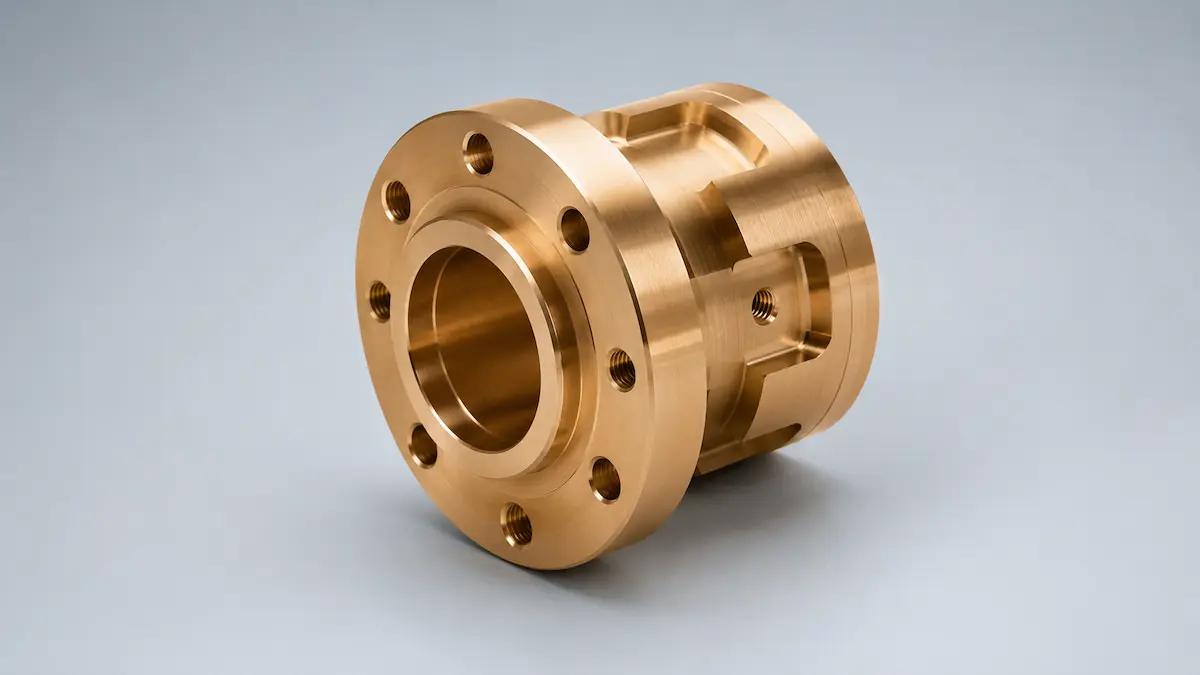
Surface effectThe original surface of beryllium copper C17200 usually appears as golden, light copper-yellow, or reddish-yellow metallic texture. Polishing produces a brighter metallic surface, brushing produces linear textures, and sandblasting produces a matte copper alloy effect. Long-term exposure to air may cause oxidation, darkening, or surface color differences. High-end connectors, terminals, and spring plates often enhance conductivity, wear resistance, and oxidation resistance through nickel, gold, silver, or tin plating.

Typical application scenarios

Based on material characteristics and suitable product ranges, customer needs are broken down into easier application directions to determine.

Product validation

Spring clips, spring contacts, connector terminals, relay contacts, electronic connectors, battery contact pieces, shielding spring clips, precision spring plates, conductive clips, wear-resistant conductive parts, mold inserts, injection mold thermal conductive inserts, electrodes, fixture conductive parts, precision copper sleeves, and high-life elastic parts.

Reasons for material selection

High-strength elastic copper alloy materials suitable for making highly elastic conductive parts, precision spring clips, connector terminals, wear-resistant conductive parts, mold inserts, electrodes, and high-performance copper alloy functional parts.

Material characteristics

The core feature of beryllium copper C17200 is that it combines high strength, high elasticity, and certain electrical and thermal conductivity. It is not as soft asPure Copper, nor is it as easy to cut as ordinary Brass, but it is more suitable for precision parts that require repeated elastic deformation, conductive contact, and fatigue resistance. C17200 typically improves hardness, strength, and elasticity through solution and aging treatments, making it one of the commonly used materials in the high-end spring clip and connector field.

Design and risk review

Based on wall thickness, hole position, assembly clearance, dimensional tolerances, and material usage risks, determine in advance whether the part structure is suitable for C17200 Beryllium Copper.

Design considerations

  • When designing beryllium copper C17200 parts
  • Focus should be placed on the condition of the materials
  • Rolling direction
  • Bending direction
  • Bending radius
  • Elastic deformation amount
  • Contact pressure
  • Fatigue life and the impact of the plating layer
Precision performanceBeryllium copper C17200 is suitable for stamping, etching, CNC machining, wire cutting, bending, and precision spring forming. Planar profiles, hole positions, and terminal structures can achieve good accuracy, but the bent angle, elasticity, and springback are affected by material condition, plate thickness, rolling direction, die, heat treatment, and electroplating. Spring pieces, contact plates, and terminal parts should focus on controlling key dimensions, contact pressure, rebound height, and fatigue life.
Dimensional tolerancesFor CNC machined beryllium copper C17200, the standard dimensional tolerances can be referenced as ± 0.02mm to ±0.10mm, while ordinary stamped or wire-cut parts can be evaluated at ± 0.05mm to ±0.20mm. The overall size and angle of bent spring pieces are affected by springback, material condition, and heat treatment. These values represent the standard reference range and are not absolute guaranteed tolerances for all structures. Elasticity, contact height, and key assembly dimensions should be separately defined as inspection standards.
Quality riskThe main risks of beryllium copper C17200 include high material costs, strict processing safety requirements, heat treatment condition affecting performance, bending cracking, unstable elasticity, coating quality, contact resistance, and fatigue life. It is suitable for high-performance elastic conductive components, but you can't just look at the material name—you also need to clarify the material condition, hardness, aging conditions, surface coating, elasticity requirements, and lifespan testing. When involving export, environmental protection, medical, food, or children's products, compliance requirements for materials should be confirmed in advance.
Surface effectThe original surface of beryllium copper C17200 usually appears as golden, light copper-yellow, or reddish-yellow metallic texture. Polishing produces a brighter metallic surface, brushing produces linear textures, and sandblasting produces a matte copper alloy effect. Long-term exposure to air may cause oxidation, darkening, or surface color differences. High-end connectors, terminals, and spring plates often enhance conductivity, wear resistance, and oxidation resistance through nickel, gold, silver, or tin plating.

Post-processing and assembly precautions

Post-processing of C17200 Beryllium Copper affects appearance, dimensions, hole position, assembly clearance, and usage validation results, and should be explained in advance during quotation, DFM review, and sample confirmation stages.

Post-processing options

Post-processing should focus on appearance display, dimensional fitting, connection assembly, and testing verification. Parts involving assembly positions need to be reserved in advance for machining, coating, and trial assembly allowances.

Remove burrsDeburring is used to improve the appearance of parts, assembly, or functional verification effects, and it is necessary to confirm the impact on dimensions, strength, and delivery in combination with material characteristics.
PolishingImproves support marks, layer lines, and edge feel, but will slightly alter local dimensions and the shape of sharp edges.
PolishingUsed to improve transparency or surface smoothness, may change edge details and local dimensions.
BrushedBrushing is used to improve the appearance, assembly, or validation of parts, and must be combined with material properties to confirm dimensions, strength, and delivery impact.
SandblastingAchieve a more uniform matte surface, suitable for engineering prototype display and slight surface mark reduction.
Nickel platingNickel plating is used to improve the appearance, assembly, or validation of parts, and must be determined by combining material properties with dimensions, strength, and delivery impact.
GildedGold plating is used to improve the appearance, assembly, or validation of parts, and must be determined by combining material properties with dimensions, strength, and delivery impact.
Silver-platedSilver plating is used to improve the appearance, assembly, or validation of parts, and must be combined with material properties to confirm dimensions, strength, and delivery impact.

Key control point

Size impactBeryllium copper C17200 typically requires a combination of material condition and aging treatment to achieve the target elasticity; strength and hardness; processing; polishing; Polishing; grinding; Special attention should be paid to dust during EDM and welding; Safety control of smoke dust and beryllium-containing particles
Assembly clearanceFor positions involving snapping, plugging, sliding, or enclosure closure, the clearance needs to be adjusted according to post-processing thickness, material shrinkage, and trial assembly results.
Hole Position StrengthThreading, inserting nuts, locking screws, and the areas around positioning holes need to ensure wall thickness to avoid cracks, stripped threads, or chipped edges during post-processing or assembly.
Environmental matchingWhen used in high-temperature, outdoor, humid, friction, or load-bearing scenarios, post-processing materials, adhesives, coatings, and fasteners must also meet the corresponding usage environment.

Structure and usage boundaries

For common issues such as threads, snaps, strength, temperature resistance, and weather resistance, identify in advance whether the material needs to be replaced or if another processing method should be used.

Thread Recommendation

Applicable ScopeBeryllium copper C17200 can be processed into threads, but the material cost is high, and attention should be paid to burrs, strength, and coating effects during small thread processing.
Risk pointFor positions with high locking force or frequent disassembly, ensure sufficient thread meshing length; if necessary, use screw sleeves, standard fasteners, or steel parts for coordination.
Recommended practiceDirect tapping is not recommended for thin elastic parts; usually, riveting, welding, screw crimping, insertion, or standard terminal structures are used.

Buckle recommendation

Applicable ScopeBeryllium Copper C17200 is ideal for manufacturing metal spring clips with small deformation, long lifespan, conductive clips, shielded spring clips, and contact spring clips.
Risk pointThe base of the clip should have rounded corners to control deformation and avoid exceeding the elastic limit.
Recommended practiceHigh-frequency plug-in or long-term compression scenarios should be tested through sample parts to verify elastic attenuation, fatigue life, contact resistance, and coating wear.

Strength and Environment

Mechanical strengthAfter proper aging treatment, beryllium copper C17200 can achieve very high strength, hardness, and elastic limits, making it one of the strongest copper alloys.
Environmental boundaryIts strength, elasticity, and fatigue performance are significantly superior toPure Copperand ordinary Brass, while retaining certain electrical and thermal conductivity.
Recommended practiceActual strength performance depends on the material condition, heat treatment conditions, plate thickness, machining direction, and part structure. Beryllium copper C17200 has better temperature resistance than most ordinary plastics and some ordinary copper alloys, making it suitable for elastic conductivity and contact applications at certain temperatures. However, prolonged high temperatures may cause elastic decay, stress relaxation, oxidation, or changes in coating properties. If used for high-temperature contact parts, mold inserts, or conductive springs near heat sources, verification should be conducted based on actual temperature, load, contact pressure, and aging condition. Beryllium copper C17200 has certain corrosion resistance and is generally superior to ordinary carbon steel, but it may oxidize, discolor, or degrade in humidity, salt spray, sweat, sulfides, ammonia, or corrosive media. For products requiring long-term conductive contact and stable appearance, it is recommended to use nickel, gold, silver, tin, or other oxidation-resistant surface treatments. If used in harsh outdoor or corrosive environments, environmental testing and plating solution confirmation should be combined.

Alternative material selection and final judgment

When customer demand exceeds C17200 Beryllium Copper material boundaries, it is necessary to combine strength, temperature resistance, toughness, long-term stability, and mass production goals to promptly recommend alternative materials or processing technologies.

Alternative material suggestions

If higher electrical and thermal conductivity is required, Pure CopperT2, TU2 Oxygen-Free Copper, or chromium-zirconium copper can be chosen; If lower cost and standard machining performance are required, Brass H59, H62, or HPb59-1 can be chosen; If better corrosion resistance and beryllium-free elastic materials are needed, phosphor bronze, tin bronze, or 301 stainless steel can be chosen; If higher strength metal structures are needed, stainless steel, spring steel, alloy steel, or titanium alloys can be chosen.

Material selection suggestions

If customers require high elasticity, long lifespan, good electrical conductivity, and precise contact properties, the beryllium copper C17200 is an excellent choice. If the customer only has ordinary conductive parts or copper busbars, Pure CopperT2 or TU2 Oxygen-Free Copper is usually more economical; If the customer only needs ordinary turning hardware, Brass is more suitable; If customers have strict requirements for beryllium elements, environmental compliance, or processing safety, they should confirm material restrictions in advance and, if necessary, switch to phosphor bronze, tin bronze, or stainless steel spring materials.

Already have the blueprints? Directly enter the quotation for custom parts

After uploading 3D/2D drawings and supplementing materials, quantities, tolerances, surface treatments, and delivery requirements, XPartsLab will provide next steps in 3D printing manufacturability, cost, and delivery pathways.