Support Hours: 09:00–18:00 (GMT+8) · Messages and quote requests are accepted 24/7.
Material Database

Brass – Lost-Wax Casting, Polished

Copper alloy materials suitable for making decorative parts, handicrafts, cultural and creative products, small metal parts, complex-shaped metal parts, and low- to medium-strength functional samples.

Material description

Brass(wax casting-polishing) is a metalworking method that uses wax pattern casting to produce Brass metal parts, followed by post-processing such as gate removal, finishing, grinding, and polishing to achieve the final appearance. Brass has a golden metallic texture, good decorative properties, certain strength, and good workability. It is commonly used for jewelry accessories, handicrafts, ornaments, souvenirs, small decorative pieces, cultural and creative products, and complex metal parts.

BrassCasting BrassBrass cast in waxBrass lost wax castingBrass castingsBrass handicraftsBrass accessoriesCopper alloy castingsBrass polished parts
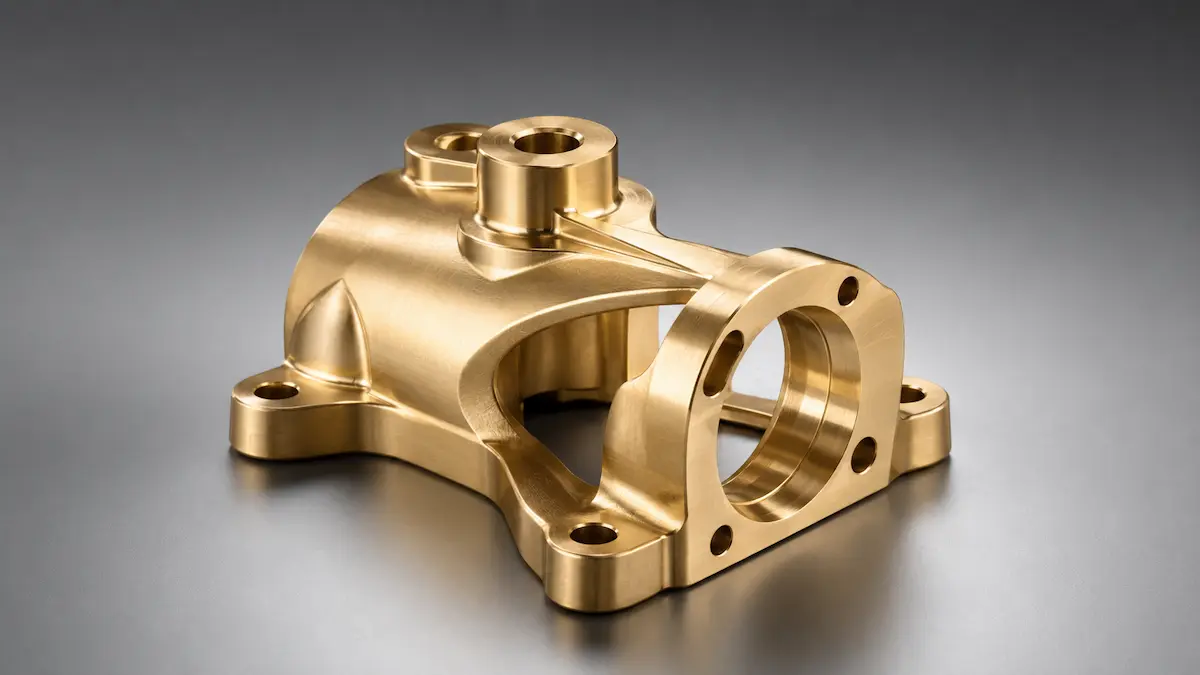
Brass has a distinct metallic texture and a golden yellow appearanceAfter polishingPolishing can achieve a better glossy finishIt can also be done by brushingSandblastingand other methods to create a vintage textureComplex curved surfaces can be produced through wax casting technologyReliefHollowed-outTextures and traditional machining are difficult to form in one go
Brass – Lost-Wax Casting, Polished
3D PrintingMetals

Material compatibility assessment

By focusing on application scenarios, boundaries of advantages, and non-recommended scenarios, it helps sales, customer service, and quoting staff quickly determine whether the material meets current part requirements.

Core advantages

The metal texture is distinct, the color leans toward golden yellow, the decorative effect is good, suitable for complex casting shapes, the material cost is lower than precious metals, can be polished and polished, can be used for vintage or aged effects, and is suitable for small-batch customization.

Suitable for the product

Handicraft ornaments, cultural and creative metal pieces, souvenirs, pendants, badges, jewelry accessories, keychains, metal nameplates, small sculptures, decorative hardware, small structural parts, model accessories, vintage-style products, and small-batch custom metal parts.

Not suitable for the product

High-precision mechanical transmission parts, long-term heavy-duty load-bearing parts, high-elasticity snap-fit parts, high-frequency moving parts, direct contact parts with food, medical implant parts, highly corrosion-resistant environmental parts, lightweight large-size products, and appearance parts with extremely high long-term color stability requirements that do not require surface protection.

Key parameter references

The following parameters come from product information and material knowledge fields, used for design review, quotation communication, and preliminary judgment before material selection.

Material positioningCopper alloy materials suitable for making decorative parts, handicrafts, cultural and creative products, small metal parts, complex-shaped metal parts, and low- to medium-strength functional samples.
Precision performanceWax casting Brass suitable for complex shapes and small-batch metal parts production, but not directly used as an ultra-high-precision machining solution. Actual accuracy is affected by wax pattern printing accuracy, embedded materials, casting shrinkage, metal flow, cooling, finishing, grinding, and polishing. It is recommended to reserve machining allowance for precision assembly surfaces, hole positions, and thread positions.
Dimensional tolerancesStandard dimensional tolerances can refer to ± 0.20mm to ±0.50mm. This value is the standard reference range after wax casting and grinding, and is not an absolute guarantee tolerance for all structures. Small sizes with simple structures are usually easier to control, but large parts, thin-walled parts, complex hollowed parts, and areas requiring extensive polishing may experience greater deviations. Precision hole positions, assembly surfaces, and thread positions are recommended for post-processing or manual finishing.
Minimum Wall ThicknessIt is recommended that the minimum wall thickness be no less than 0.8mm-1.0mm. Small decorative details can be locally thinner, but it is not recommended to use them as the main load-bearing structure. For locations that require long-term wearing, assembly, connection, or exposure to external forces, it is recommended to increase the wall thickness to at least 1.2mm to avoid incomplete casting, deformation, or post-processing damage.
Recommended wall thicknessFor ordinary decorative parts and small craft parts, 1.2mm-2.0mm is recommended; for pendant bodies, connecting rings, mounting seats, and load-bearing positions, 1.5mm-2.5mm or more; for large parts, thin pieces, and areas requiring further grinding and polishing, thickness should be appropriately increased and post-processing losses reserved.
Minimum apertureThe recommended aperture is no less than 1.0mm. Too small holes may shrink, become clogged, or deform during wax patterns, embedding, casting, and polishing. It is recommended to reserve allowance for chain holes, assembly holes, positioning holes, and screw holes; if necessary, drill, expand, or finish after casting.
Assembly clearanceFor ordinary metal assemblies, it is recommended to reserve 0.15mm-0.30mm on one side; for movable connections, plug-in structures, or areas requiring post-polishing, it is recommended to reserve larger gaps. When casting shrinkage, grinding wear, electroplating, or protective coatings are involved, additional consideration of dimensional changes is needed to avoid over-tightening or loose assembly.
Detailed performanceBrass wax casting is suitable for expressing reliefs, textures, text, hollowing, and complex curved surfaces. Raised text, shallow relief, and fine textures are recommended to be no less than 0.3mm-0.5mm. Overly fine details may weaken during wax pattern cleaning, embedding, casting, polishing, or polishing. Important text and textures should avoid large polishing areas and gate finishing areas.
Surface effectBrass original castings usually have a rough surface and require grinding and polishing to develop a golden metallic luster. It can achieve glossy mirror finishes, soft mattes, sandblasting, brushing, vintage vintage looks, and local highlights. Unprotected Brass surfaces oxidize and darken over time, forming natural patina; If you want to maintain a bright yellow appearance for a long time, it's recommended to apply anti-oxidation treatment or a transparent protective layer.

Typical application scenarios

Based on material characteristics and suitable product ranges, customer needs are broken down into easier application directions to determine.

Product validation

Handicraft ornaments, cultural and creative metal pieces, souvenirs, pendants, badges, jewelry accessories, keychains, metal nameplates, small sculptures, decorative hardware, small structural parts, model accessories, vintage-style products, and small-batch custom metal parts.

Reasons for material selection

Copper alloy materials suitable for making decorative parts, handicrafts, cultural and creative products, small metal parts, complex-shaped metal parts, and low- to medium-strength functional samples.

Material characteristics

Brass has a distinct metallic texture and golden yellow appearance. After polishing and polishing, it achieves a good glossy finish, and can also be achieved through brushing, sandblasting, or aging to create a vintage feel. Through wax casting, complex curved surfaces, embossing, hollowing, textures, and shapes that are difficult to form in one go by traditional machining can be made, but castings are still affected by shrinkage, porosity, sand holes, gates, and post-processing losses.

Design and risk review

Based on wall thickness, hole position, assembly clearance, dimensional tolerances, and material usage risks, determine in advance whether the part structure is suitable for Brass – Lost-Wax Casting, Polished.

Design considerations

  • When designing Brass wax castings
  • Wax pattern printing should also be considered
  • Metal casting
  • Gate vent
  • Grinding, polishing, and final use scenarios
  • It is recommended to avoid overly thin walls
  • A solitary slender pole
  • Sharp thin edges
Precision performanceWax casting Brass suitable for complex shapes and small-batch metal parts production, but not directly used as an ultra-high-precision machining solution. Actual accuracy is affected by wax pattern printing accuracy, embedded materials, casting shrinkage, metal flow, cooling, finishing, grinding, and polishing. It is recommended to reserve machining allowance for precision assembly surfaces, hole positions, and thread positions.
Dimensional tolerancesStandard dimensional tolerances can refer to ± 0.20mm to ±0.50mm. This value is the standard reference range after wax casting and grinding, and is not an absolute guarantee tolerance for all structures. Small sizes with simple structures are usually easier to control, but large parts, thin-walled parts, complex hollowed parts, and areas requiring extensive polishing may experience greater deviations. Precision hole positions, assembly surfaces, and thread positions are recommended for post-processing or manual finishing.
Quality riskBrass main risks of wax castings include wax pattern quality, casting shrinkage, porosity, sand holes, under-gouring, deformation, gate position, grinding wear, and surface oxidation. Complex hollowing, slender structures, thin-walled structures, and large areas of glossy surfaces are more prone to casting defects or uneven post-processing. During the design phase, wall thickness, hole position, gate, venting, post-treatment allowance, and final appearance requirements should be evaluated in advance.
Surface effectBrass original castings usually have a rough surface and require grinding and polishing to develop a golden metallic luster. It can achieve glossy mirror finishes, soft mattes, sandblasting, brushing, vintage vintage looks, and local highlights. Unprotected Brass surfaces oxidize and darken over time, forming natural patina; If you want to maintain a bright yellow appearance for a long time, it's recommended to apply anti-oxidation treatment or a transparent protective layer.

Post-processing and assembly precautions

Post-processing of Brass – Lost-Wax Casting, Polished affects appearance, dimensions, hole position, assembly clearance, and usage validation results, and should be explained in advance during quotation, DFM review, and sample confirmation stages.

Post-processing options

Post-processing should focus on appearance display, dimensional fitting, connection assembly, and testing verification. Parts involving assembly positions need to be reserved in advance for machining, coating, and trial assembly allowances.

Remove the gateGate removal is used to improve the appearance, assembly, or validation of parts, and dimensions, strength, and delivery impact must be confirmed based on material properties.
and repaired the casting mouthCasting Repair: Used to improve the appearance, assembly, or validation of parts, dimensions, strength, and delivery impact must be confirmed based on material characteristics.
PolishingImproves support marks, layer lines, and edge feel, but will slightly alter local dimensions and the shape of sharp edges.
Refined PracticeFinishing is used to improve the appearance, assembly, or validation of parts, and must be combined with material properties to confirm dimensions, strength, and delivery impact.
PolishingUsed to improve transparency or surface smoothness, may change edge details and local dimensions.
Mirror polishingMirror polishing is used to improve the appearance, assembly, or validation of parts, and must be determined by combining material properties to confirm dimensions, strength, and delivery impact.
SandblastingAchieve a more uniform matte surface, suitable for engineering prototype display and slight surface mark reduction.
BrushedBrushing is used to improve the appearance, assembly, or validation of parts, and must be combined with material properties to confirm dimensions, strength, and delivery impact.

Key control point

Size impactBrass grinding and polishing reduce local dimensions; Corners and detail positions are easily rounded off; Polished Brass surfaces are prone to fingerprints; Oxidation darkening or color difference; For exterior parts, it is recommended to add anti-oxidation protection or transparent protective coatings; Aged; Oxidation and electroplating effects are affected by surface roughness; Cleanliness and batch impact
Assembly clearanceFor positions involving snapping, plugging, sliding, or enclosure closure, the clearance needs to be adjusted according to post-processing thickness, material shrinkage, and trial assembly results.
Hole Position StrengthThreading, inserting nuts, locking screws, and the areas around positioning holes need to ensure wall thickness to avoid cracks, stripped threads, or chipped edges during post-processing or assembly.
Environmental matchingWhen used in high-temperature, outdoor, humid, friction, or load-bearing scenarios, post-processing materials, adhesives, coatings, and fasteners must also meet the corresponding usage environment.

Structure and usage boundaries

For common issues such as threads, snaps, strength, temperature resistance, and weather resistance, identify in advance whether the material needs to be replaced or if another processing method should be used.

Thread Recommendation

Applicable ScopeBrass wax casting is not recommended to rely directly on casting to form small-sized precision threads.
Risk pointIf a threaded structure is required, it is recommended to drill, tap, or re-process after casting.
Recommended practiceLarger-size, low-precision threads can be used for appearance verification, but for frequent disassembly or high-reliability connection positions, post-processed threads or metal insert solutions should be used.

Buckle recommendation

Applicable ScopeBrass not suitable for highly elastic, large, or high-frequency snap-fit structures.
Risk pointBrass can make low-frequency fasteners, hooks, connecting rings, and decorative clamping structures, but the buckle deformation should be minimal, and the load-bearing area should be thickened and rounded corners added.
Recommended practiceFor snap-fit structures requiring elastic recovery, it is recommended to choose metal materials or mature hardware solutions with more suitable elasticity.

Strength and Environment

Mechanical strengthBrass has certain strength and good metalworkability, making it suitable for decorative parts, small structural parts, and low- to medium-strength metal parts.
Environmental boundaryCompared to aluminum alloys and stainless steel, Brass density is higher, and strength and wear resistance must be evaluated based on specific grades and structures.
Recommended practiceIt is not suitable for directly replacing high-strength industrial structural parts; high-stress locations should focus on wall thickness, fillets, hole edges, and connection methods. Brass itself has good temperature resistance, and its stability is good in daily use and in ordinary environments. However, the overall temperature resistance of wax-cast Brass parts is also affected by solder, protective coatings, electroplating, glue, or assembly auxiliary materials. If used near heat sources or in high-temperature environments, testing and verification should be conducted in combination with the specific structure and surface treatment method. Brass gradually oxidizes and darkens under air, humidity, and sweat environments, and the surface may develop patina, color differences, or localized spots. Natural oxidation can create a retro effect, but if you need to maintain a bright yellow metallic luster for a long time, anti-oxidation treatment, transparent protective coatings, or regular cleaning and maintenance are recommended. Long-term outdoor use requires attention to oxidation, corrosion, and surface color changes.

Alternative material selection and final judgment

When customer demand exceeds Brass – Lost-Wax Casting, Polished material boundaries, it is necessary to combine strength, temperature resistance, toughness, long-term stability, and mass production goals to promptly recommend alternative materials or processing technologies.

Alternative material suggestions

For a more premium precious metal texture, platinum, 18K gold, or silver are available; If you need to display samples at lower cost, you can choose resin sprayed metallic paint or electroplated parts; If higher strength and corrosion resistance are required, stainless steel, aluminum alloy, or titanium alloy can be chosen; If higher precision mechanical performance is required, CNC Brass, CNC aluminum alloy, or CNC stainless steel can be chosen.

Material selection suggestions

If customers mainly care about metallic texture, decorative effects, vintage style, complex shapes, and small-batch customization, Brass(wax casting-polishing) is a suitable choice. If customers require high-precision assembly, long-term heavy loads, high corrosion resistance, lightweight design, or extremely high surface consistency, priority should be given to CNC metalworking, stainless steel, aluminum alloy, or other engineering metal solutions.

Already have the blueprints? Directly enter the quotation for custom parts

After uploading 3D/2D drawings and supplementing materials, quantities, tolerances, surface treatments, and delivery requirements, XPartsLab will provide next steps in 3D printing manufacturability, cost, and delivery pathways.