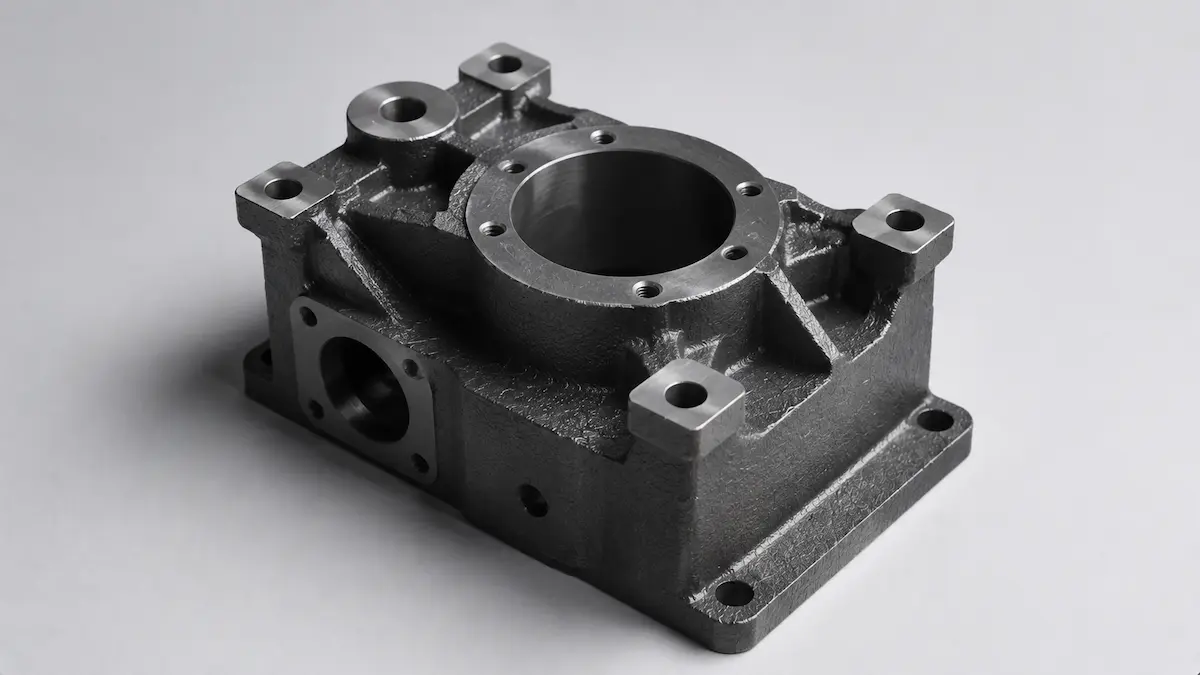
Post-processing options
Post-processing should focus on appearance display, dimensional fitting, connection assembly, and testing verification. Parts involving assembly positions need to be reserved in advance for machining, coating, and trial assembly allowances.
Remove burrsDeburring is used to improve the appearance of parts, assembly, or functional verification effects, and it is necessary to confirm the impact on dimensions, strength, and delivery in combination with material characteristics.
PolishingImproves support marks, layer lines, and edge feel, but will slightly alter local dimensions and the shape of sharp edges.
SandblastingAchieve a more uniform matte surface, suitable for engineering prototype display and slight surface mark reduction.
PelletizingShot blasting is used to improve the appearance, assembly, or validation of parts, and must be combined with material properties to confirm dimensions, strength, and delivery impact.
Turns blackUsed for rust prevention and appearance treatment of steel parts, suitable for low-reflective black effects but limited protection.
PhosphatingPhosphating is used to improve part appearance, assembly, or usage validation, and must be combined with material properties to confirm dimensions, strength, and delivery impact.
Spray paintEnhances color and appearance consistency, but will increase coating thickness, so assembly surfaces need to allow for clearance.
Powder sprayingSuitable for metal surface protection and color consistency; when coatings are thick, assembly gaps must be reserved.
Key control point
Size impactCast Iron is prone to generating Graphite dust and fine iron filings during processing; Proper cleaning and protection are required; Cast Iron parts usually require aging treatment to reduce internal stress; Reduces subsequent deformation; Spray painting; blackening; Phosphating and rust-preventive oils can enhance rust prevention performance; However, it will affect the appearance and the condition of the assembly surface
Assembly clearanceFor positions involving snapping, plugging, sliding, or enclosure closure, the clearance needs to be adjusted according to post-processing thickness, material shrinkage, and trial assembly results.
Hole Position StrengthThreading, inserting nuts, locking screws, and the areas around positioning holes need to ensure wall thickness to avoid cracks, stripped threads, or chipped edges during post-processing or assembly.
Environmental matchingWhen used in high-temperature, outdoor, humid, friction, or load-bearing scenarios, post-processing materials, adhesives, coatings, and fasteners must also meet the corresponding usage environment.