Support Hours: 09:00–18:00 (GMT+8) · Messages and quote requests are accepted 24/7.
Material Database

T2 Copper

Suitable for manufacturing conductive parts, thermal components, copper busbars, connecting strips, grounding plates, shielding parts, heat sinks, electrical terminals, and sheet metal structural parts requiring high electrical and thermal conductivity.

Material description

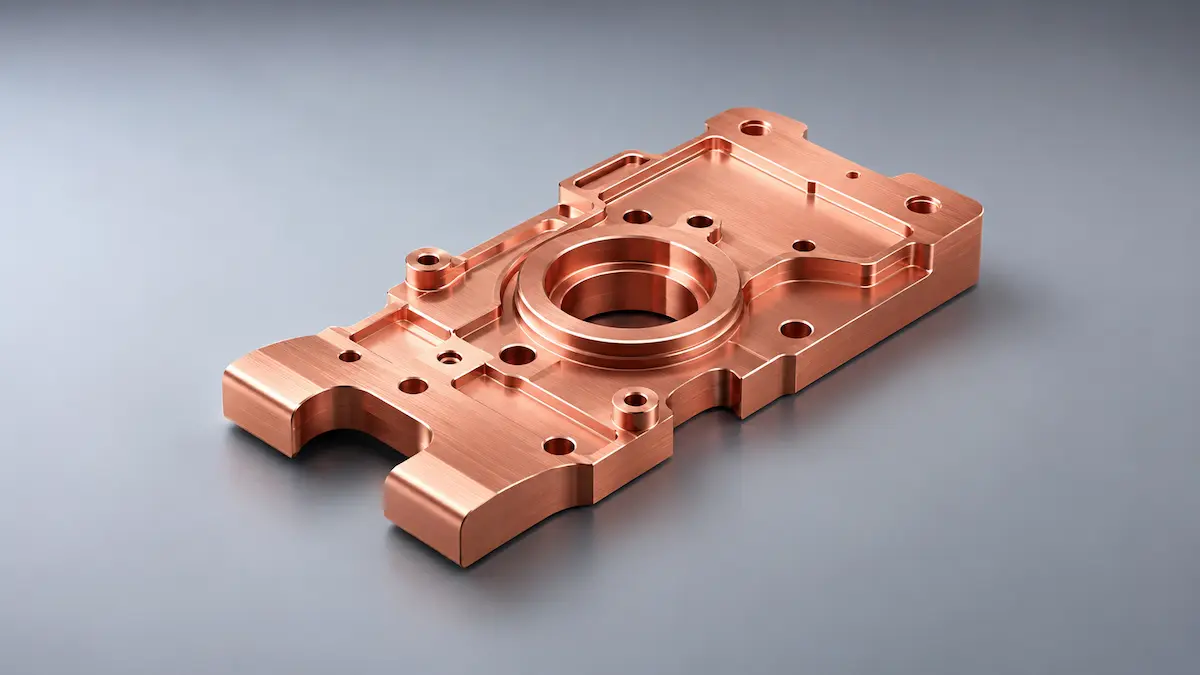
T2 Copperis a type of copper sheet metal part based onT2 Coppersheet metal, produced through laser cutting, CNC punching, bending, stamping, drilling, tapping, riveting, welding, polishing, wire drawing, tin plating, nickel plating, and other processes. T2 Copperhas excellent electrical and thermal conductivity, ductility, and good corrosion resistance, and is commonly used in conductive strips, copper connectors, heat sinks, electrical terminals, shielding components, grounding plates, thermal conductive structural components, and sheet metal parts of electronic and electrical equipment. Compared to aluminum alloys and steel plates, T2 Copperhas better electrical and thermal conductivity, but the material is softer, more expensive, and weaker in strength and rigidity.

T2 Coppersheet metalT2T2 CopperboardRed copper sheet metalPure copper and sheet metalCopper plate processingCopper busbar processingConductive copper platesThermally conductive copper plateCopper connectorsCopper-mother platter
The biggest feature of sheet metal fabricationT2 Copperis its excellent electrical and thermal conductivitySuitable for current conductionHeat conductionGroundingShielding and heat-dissipation-related partsT2 Coppermaterial is relatively softGood ductilitySuitable for bending and stampingBut it also makes it easier to get scratchedIndentation
Pure Copper
Sheet Metal FabricationMetals

Material compatibility assessment

By focusing on application scenarios, boundaries of advantages, and non-recommended scenarios, it helps sales, customer service, and quoting staff quickly determine whether the material meets current part requirements.

Core advantages

Good electrical conductivity, thermal conductivity, good ductility, good bending performance, good corrosion resistance, suitable for electrical connections, heat dissipation structures, stamping and bending, tin-plated and nickel-plated, suitable for electronics, electrical, and thermal management scenarios.

Suitable for the product

Copper busbars, copper busbars, conductive connecting sheets, grounding sheets, battery connecting strips, electrical terminals, heat sinks, heat sink plates, thermal conductive sheets, shielding covers, shielding sheets, copper gaskets, copper foil structural parts, copper parts for power equipment, copper parts for distribution equipment, conductive parts for electronic and electrical appliances, thermal conductive parts for instruments and meters, small copper sheet metal structural parts.

Not suitable for the product

High-strength load-bearing parts, high-rigidity structural parts, high-wear-resistant moving parts, high-elasticity snap-fit parts, low-cost ordinary housing parts, high-gloss appearance structural parts, long-term strong friction parts, parts exposed to strong acid and alkali environments, structural parts that are extremely sensitive to weight, parts requiring stainless steel strength and hardness, and parts that require long-term non-oxidation of the surface and do not require coating protection.

Key parameter references

The following parameters come from product information and material knowledge fields, used for design review, quotation communication, and preliminary judgment before material selection.

Material positioningSuitable for manufacturing conductive parts, thermal components, copper busbars, connecting strips, grounding plates, shielding parts, heat sinks, electrical terminals, and sheet metal structural parts requiring high electrical and thermal conductivity.
Precision performanceT2 Coppersheet metal is suitable for laser cutting, CNC punching, bending, stamping, and general sheet metal fabrication. The cutting profile and hole positioning accuracy are relatively good, but because the material is softer, burrs, deformation, indentations, and clamping marks are prone to occur. The overall dimensions after bending are influenced by plate thickness, bending radius, material hardness, bend springback, and processing equipment. Large thin plates, long strip copper busbars, and multi-hole connectors require focused control of flatness and cumulative error in hole positions.
Dimensional tolerancesFor standard laser cutting, dimensional tolerances can be referenced ± 0.10mm to ±0.30mm, and after bending and forming, the overall dimensional tolerance can be referenced ± 0.30mm to ±1.00mm. Small copper connectors and simple copper busbars are usually easier to control, while large copper plates, thin-walled parts, strips, and plated parts may show greater deviations. These values are standard reference ranges and are not absolute guaranteed tolerances for all structures. Conductive contact surfaces, assembly holes, and key hole spacing should be separately marked with tolerance requirements.
Minimum Wall ThicknessT2 Coppersheet metal is usually selected based on plate thickness, with common thicknesses including 0.3mm, 0.5mm, 0.8mm, 1.0mm, 1.5mm, 2.0mm, 3.0mm and above. Ordinary conductive sheets and shielding sheets can be made from thinner sheets; It is recommended that the position of ordinary copper busbars, connecting pieces, and those bearing assembly forces be no less than 1.0mm; for high-current copper busbars, the cross-sectional area should be determined based on current, temperature rise, and connection method.
Recommended wall thicknessStandard shielding sheets, grounding sheets, and small connectors are recommended to be 0.3mm-1.0mm; ordinary conductive connectors, heat sinks, and terminal sheets are recommended 1.0mm-2.0mm; high-current copper busbars, busbars, screw connection points, and positions subjected to compression force are recommended to be at least 2.0mm. The final thickness should be determined based on current capacity, heat dissipation conditions, screw specifications, and temperature rise requirements.
Minimum apertureFor laser cutting or CNC punching, the recommended hole diameter should not be less than one of the plate thickness, and for stable design, the hole diameter should be no less than 1.0mm. Small holes, dense holes, and holes near the bending line are prone to burrs, deformation, or edge strains. Screw holes, positioning holes, and assembly holes should be reasonably allowable according to board thickness, fastener specifications, coating thickness, and conductive contact requirements.
Assembly clearanceFor ordinary sheet metal assembly, it is recommended to reserve 0.10mm-0.30mm on one side; for inserts, slots, and multi-bend structures, it is recommended to appropriately increase the clearance according to plate thickness, bending error, and plating thickness. When used as a conductive connector, the contact position should not be too loose, ensuring sufficient contact area and pressing force. If tin, nickel, silver, or gold plating is needed later, additional consideration should be given to the coating thickness to avoid overtightening or interference with hole positions.
Detailed performanceT2 Coppersheet metal is suitable for making holes, grooves, edges, connectors, heat sinks, conductive contact surfaces, grounding holes, terminal holes, and simple structural details. Because the material is relatively soft, passing through small sharp corners, narrow bridges, fine characters, and thin edges can easily cause burrs, deformation, or unstable processing. Logos and markings are recommended to be achieved through laser marking, etching, silkscreen printing, or labeling; complex textures are not recommended on high-current contact surfaces and heat dissipation contact surfaces.
Surface effectT2 Copperoriginal surface usually shows a purplish-red or copper-colored metallic texture, with a distinct copper appearance. Polishing produces a brighter red copper surface, brushing produces linear metal textures, and sandblasting produces a matte copper finish. Long-term exposure to air gradually oxidizes and darkens, and the surface may appear brown, dark red, or oxidized spots. If long-term appearance and conductivity stability are needed, tin, nickel, silver, gold, or oxidation protection are recommended.

Typical application scenarios

Based on material characteristics and suitable product ranges, customer needs are broken down into easier application directions to determine.

Product validation

Copper busbars, copper busbars, conductive connecting sheets, grounding sheets, battery connecting strips, electrical terminals, heat sinks, heat sink plates, thermal conductive sheets, shielding covers, shielding sheets, copper gaskets, copper foil structural parts, copper parts for power equipment, copper parts for distribution equipment, conductive parts for electronic and electrical appliances, thermal conductive parts for instruments and meters, small copper sheet metal structural parts.

Reasons for material selection

Suitable for manufacturing conductive parts, thermal components, copper busbars, connecting strips, grounding plates, shielding parts, heat sinks, electrical terminals, and sheet metal structural parts requiring high electrical and thermal conductivity.

Material characteristics

The biggest feature of sheet metal fabricationT2 Copperis its excellent electrical and thermal conductivity, making it suitable for current conduction, heat conduction, grounding, shielding, and heat dissipation-related parts. T2 Coppermaterials are softer and more flexible, suitable for bending and stamping, but they are also more prone to scratches, dents, deformation, and burrs. Compared to Brass, T2 Copperhas better electrical and thermal conductivity, but weaker strength and machining stability; Compared to aluminum alloy, T2 Copperoffers better heat dissipation and electrical conductivity, but is heavier and more expensive.

Design and risk review

Based on wall thickness, hole position, assembly clearance, dimensional tolerances, and material usage risks, determine in advance whether the part structure is suitable forT2 Copper.

Design considerations

  • When designingT2 Coppersheet metal parts
  • Focus should be placed on conduction paths
  • Thermal conduction path
  • Cross-sectional area
  • Contact area
  • Compression method
  • Hole margins
  • Bending radius and surface oxidation
Precision performanceT2 Coppersheet metal is suitable for laser cutting, CNC punching, bending, stamping, and general sheet metal fabrication. The cutting profile and hole positioning accuracy are relatively good, but because the material is softer, burrs, deformation, indentations, and clamping marks are prone to occur. The overall dimensions after bending are influenced by plate thickness, bending radius, material hardness, bend springback, and processing equipment. Large thin plates, long strip copper busbars, and multi-hole connectors require focused control of flatness and cumulative error in hole positions.
Dimensional tolerancesFor standard laser cutting, dimensional tolerances can be referenced ± 0.10mm to ±0.30mm, and after bending and forming, the overall dimensional tolerance can be referenced ± 0.30mm to ±1.00mm. Small copper connectors and simple copper busbars are usually easier to control, while large copper plates, thin-walled parts, strips, and plated parts may show greater deviations. These values are standard reference ranges and are not absolute guaranteed tolerances for all structures. Conductive contact surfaces, assembly holes, and key hole spacing should be separately marked with tolerance requirements.
Quality riskThe main risksT2 Coppersheet metal fabrication include soft materials, easy scratches on the surface, obvious machining burrs, deformation of thin plates, easy oxidation and discoloration of the surface, insufficient thread strength, and poor quality of the coating affecting conductivity. It is suitable for conductive and thermal functional components, but not suitable as high-strength structural components. When used for copper busbars, connectors, grounding plates, and heat sinks, focus on confirming material grade, board thickness, conductive contact surface, hole burrs, coating requirements, current-carrying capacity, and temperature rise risk.
Surface effectT2 Copperoriginal surface usually shows a purplish-red or copper-colored metallic texture, with a distinct copper appearance. Polishing produces a brighter red copper surface, brushing produces linear metal textures, and sandblasting produces a matte copper finish. Long-term exposure to air gradually oxidizes and darkens, and the surface may appear brown, dark red, or oxidized spots. If long-term appearance and conductivity stability are needed, tin, nickel, silver, gold, or oxidation protection are recommended.

Post-processing and assembly precautions

Post-processing ofT2 Copperaffects appearance, dimensions, hole position, assembly clearance, and usage validation results, and should be explained in advance during quotation, DFM review, and sample confirmation stages.

Post-processing options

Post-processing should focus on appearance display, dimensional fitting, connection assembly, and testing verification. Parts involving assembly positions need to be reserved in advance for machining, coating, and trial assembly allowances.

Remove burrsDeburring is used to improve the appearance of parts, assembly, or functional verification effects, and it is necessary to confirm the impact on dimensions, strength, and delivery in combination with material characteristics.
ChamferChamfering is used to improve the appearance of parts, assembly, or functional verification effects, and the dimensions, strength, and delivery impact need to be confirmed in combination with material characteristics.
PolishingImproves support marks, layer lines, and edge feel, but will slightly alter local dimensions and the shape of sharp edges.
PolishingUsed to improve transparency or surface smoothness, may change edge details and local dimensions.
BrushedBrushing is used to improve the appearance, assembly, or validation of parts, and must be combined with material properties to confirm dimensions, strength, and delivery impact.
SandblastingAchieve a more uniform matte surface, suitable for engineering prototype display and slight surface mark reduction.
tin-platedTin plating is used to improve the appearance, assembly, or validation of parts, and must be determined by combining material properties to confirm dimensions, strength, and delivery impact.
Nickel platingNickel plating is used to improve the appearance, assembly, or validation of parts, and must be determined by combining material properties with dimensions, strength, and delivery impact.

Key control point

Size impactT2 Coppermaterial is relatively soft; processing; Prone to scratches during handling and assembly; Crush damage and deformation; After bending and stamping, attention must be paid to surface indentations and burrs; tin plating; Nickel plating; Silver-plated
Assembly clearanceFor positions involving snapping, plugging, sliding, or enclosure closure, the clearance needs to be adjusted according to post-processing thickness, material shrinkage, and trial assembly results.
Hole Position StrengthThreading, inserting nuts, locking screws, and the areas around positioning holes need to ensure wall thickness to avoid cracks, stripped threads, or chipped edges during post-processing or assembly.
Environmental matchingWhen used in high-temperature, outdoor, humid, friction, or load-bearing scenarios, post-processing materials, adhesives, coatings, and fasteners must also meet the corresponding usage environment.

Structure and usage boundaries

For common issues such as threads, snaps, strength, temperature resistance, and weather resistance, identify in advance whether the material needs to be replaced or if another processing method should be used.

Thread Recommendation

Applicable ScopeT2 Coppercan be tapped, but copper is softer, and its thread wear resistance and anti-thread resistance are inferior to steel parts.
Risk pointThin plateT2 Copperis not recommended to directly tap high-strength threads; instead, it is recommended to use through-hole screws, riveted nuts, welded nuts, metal inserts, or thickened copper block structures.
Recommended practiceFor frequent disassembly, high locking force, or highly reliable connection positions, increase the thread meshing length to avoid thread slipping, dents, or prolonged loosening.

Buckle recommendation

Applicable ScopeT2 Copperis not suitable for designing large deformation elastic buckles like plastics, nor for long-term high-frequency elastic structures.
Risk pointLow-deformation bent buckles, conductive plates, contact plates, slots, screw fixing, or riveting structures can be designed, but deformation and contact pressure must be controlled.
Recommended practiceIf a highly elastic conductive snap is needed, materials such as beryllium copper, phosphor bronze, 65Mn, or 301 stainless steel, which are more suitable for elastic operation, should be considered.

Strength and Environment

Mechanical strengthT2 Copperhas relatively low strength and hardness, but good ductility and toughness, making it suitable for conductive, thermal, shielding, grounding, and heat dissipation sheet metal parts.
Environmental boundaryIt is not suitable as a high-strength load-bearing component or a high-wear-resistant structural component.
Recommended practiceThe load-bearing structure should focus on plate thickness, hole edge spacing, bending position, screw tightening force, and deformation risk. If higher strength and wear resistance are required, consider Brass, chromium-zircon-copper, beryllium copper, aluminum alloy, or steel. T2 Copperhas excellent thermal conductivity, making it suitable for heat conduction and cooling applications. The material's temperature resistance is superior to most plastics and resins, but it is prone to oxidation and discoloration at high temperatures, reducing strength, and affecting surface condition and welded areas. Applications such as high-temperature thermal conduction, welding, brazing, or thermal cycling should be validated in combination with specific temperature, atmosphere, load, and surface treatment. T2 Coppernaturally oxidizes and darkens in air, and moisture, sweat, salt spray, sulfides, ammonia, or acid-alkaline environments accelerate discoloration and corrosion. Indoor conductive components can usually improve stability through surface cleaning, tin plating, nickel plating, silver plating, gold plating, or oxidation resistance treatments. If customers need long-term outdoor weather resistance, maintain a bright copper appearance, or maintain low contact resistance over time, reliable surface protection should be added, or depending on the environment, coated copper parts, stainless steel, aluminum alloy, or other corrosion-resistant materials should be used.

Alternative material selection and final judgment

When customer demand exceedsT2 Coppermaterial boundaries, it is necessary to combine strength, temperature resistance, toughness, long-term stability, and mass production goals to promptly recommend alternative materials or processing technologies.

Alternative material suggestions

If higher strength and better machinability are required, Brass H62, H59, or C18150 Chromium Zirconium Copper can be chosen; If higher purity and lower oxygen content are required, TU2 Oxygen-Free Copper can be chosen; If a lighter cooling structure is needed,5052 Aluminum Alloy, 6061, or AlSi 10Mg can be chosen; If higher corrosion-resistant structural components are required,304 Stainless Steel or 316 can be chosen; If you only want a regular low-cost sheet metal shell, you can choose SPCC, SECC, SGCC, or Q235 powder coating parts.

Material selection suggestions

If customers mainly focus on conductivity, thermal conduction, grounding, shielding, or electrical connections, sheet metal fabricationT2 Copperis a very suitable choice. If customers only have ordinary housings, brackets, or structural components, it is not recommended to prioritizeT2 Copperdue to higher material costs and weight. If customers need to maintain appearance and contact stability over the long term, it is recommended to consider tin plating, nickel plating, silver plating, gold plating, or oxidation resistance. For high-current copper busbars, focus should be placed on calculating current-carrying capacity, temperature rise, cross-sectional area, and connection method.

Already have the blueprints? Directly enter the quotation for custom parts

After uploading 3D/2D drawings and supplementing materials, quantities, tolerances, surface treatments, and delivery requirements, XPartsLab will provide next steps in 3D printing manufacturability, cost, and delivery pathways.