Support Hours: 09:00–18:00 (GMT+8) · Messages and quote requests are accepted 24/7.
Material Database

Invar

It is suitable for manufacturing low-thermal expansion structural parts, precision instrument parts, measurement reference parts, optical equipment parts, electronic packaging components, and high-precision metal parts that require dimensional stability under temperature changes.

Material description

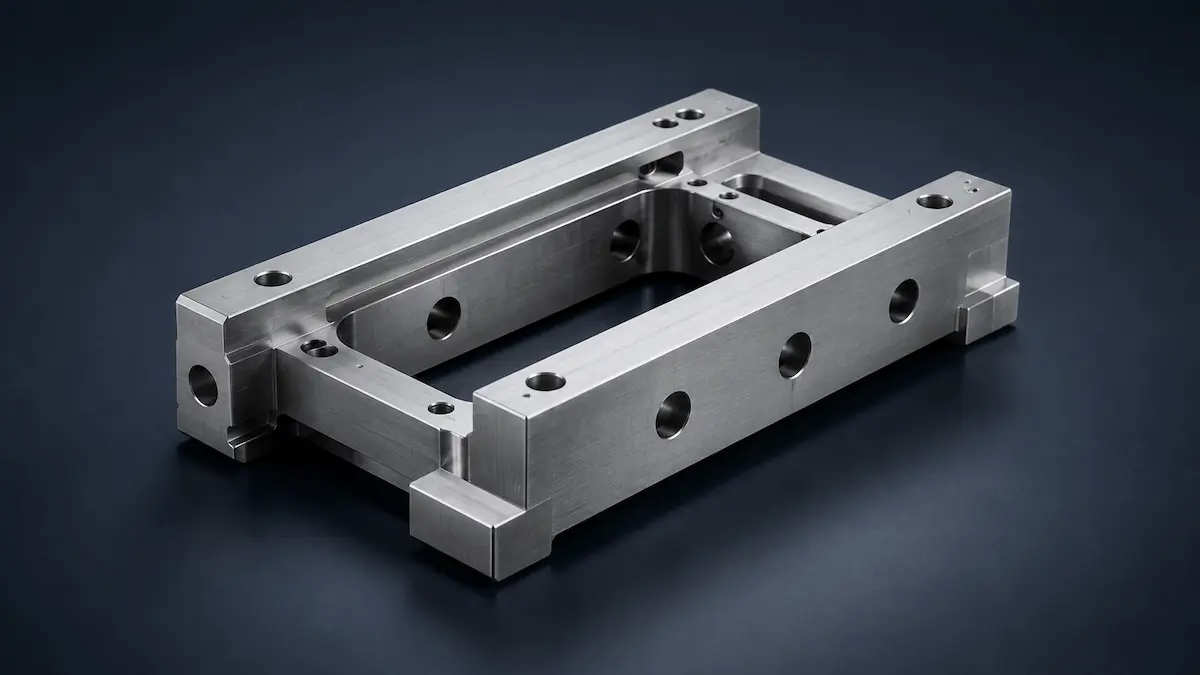
Invar usually refers to Inwa alloy, often corresponding to 4J36, a low-expansion iron-nickel alloy material. Its main feature is its extremely low coefficient of thermal expansion within a certain temperature range, making it suitable for parts that require high dimensional stability, deformation control under temperature changes, and precision assembly. It is commonly used in precision instruments, optical equipment, measurement reference parts, electronic packaging, aerospace parts, low-expansion structural components, and high-precision tooling fixtures. The core value of Invar is not high strength or wear resistance, but dimensional stability under temperature changes.

InvarMade from alloy alloyInvar alloy4J36 alloyLow-tumultiation alloyIron-nickel alloyFe-Ni alloy36 nickel-iron alloyPrecision alloysLow thermal expansion alloy
The main characteristic of Invar is its extremely low coefficient of thermal expansionIt can maintain good dimensional stability during temperature changesTherefore, it is suitable for precision instrumentsOptical systemMetrology equipment and packaging structureCompared to ordinary steel,Stainless steelAluminum alloys and copper alloysInvar changes in size under temperature changes are smallerBut its material costs
Invar
CNC MachiningMetals

Material compatibility assessment

By focusing on application scenarios, boundaries of advantages, and non-recommended scenarios, it helps sales, customer service, and quoting staff quickly determine whether the material meets current part requirements.

Core advantages

Low coefficient of thermal expansion, good dimensional stability, suitable for precision structures, temperature variation environments, optical and measuring equipment, CNC machining, weldable and brazed, suitable for low-expansion matching structures.

Suitable for the product

Precision instrument structural parts, optical platform parts, measurement reference parts, standard rulers, positioning seats, sensor housings, electronic packaging parts, low-expansion brackets, aerospace precision parts, laser equipment structural parts, precision fixtures, low-expansion connectors, temperature-sensitive components, scientific instrument parts.

Not suitable for the product

Low-cost ordinary structural parts, high-strength load-bearing parts, high-hardness wear-resistant parts, high thermal conductivity and heat dissipation parts, high electrical conductivity parts, highly corrosive environment parts, lightweight structural parts, large-size low-budget parts, high-elasticity snap-fit parts, ordinary appearance decorative parts, and conventional metal parts that do not require dimensional stability.

Key parameter references

The following parameters come from product information and material knowledge fields, used for design review, quotation communication, and preliminary judgment before material selection.

Material positioningIt is suitable for manufacturing low-thermal expansion structural parts, precision instrument parts, measurement reference parts, optical equipment parts, electronic packaging components, and high-precision metal parts that require dimensional stability under temperature changes.
Precision performanceInvar suitable for CNC turning, milling, drilling, tapping, grinding, wire cutting, and precision machining. Since its application is mostly related to low expansion and high dimensional stability, in actual machining it should focus on controlling machining stress, clamping deformation, thermal deformation, and post-processing dimensional changes. Precision positioning surfaces, reference planes, hole positions, assembly surfaces, and optical-related structures should be individually controlled for tolerances, flatness, perpendicularity, coaxiality, and surface roughness.
Dimensional tolerancesThe standard dimensional tolerances for CNC machined Invar can be evaluated as ± 0.02mm to ±0.10mm, while ordinary structural parts can be evaluated at ± 0.05mm to ±0.20mm. Precision reference planes, positioning holes, optical mounting surfaces, and measurement structures can be further controlled according to machining capabilities. This value is a standard reference range and does not guarantee the absolute tolerance of all structures; For parts involving low expansion and high stability, final tolerances should be confirmed based on material condition, heat treatment, processing flow, and temperature detection.
Minimum Wall ThicknessThe wall thickness of ordinary CNC machined structures is recommended to be no less than 0.8mm-1.0mm. Since Invar is mostly used for precision structures, thin-walled parts need to focus on machining deformation, clamping deformation, and dimensional changes after stress release. Positions requiring welding, tapping, bearing assembly forces, or serving as precision references should be appropriately thickened to ensure structural stability and machining reliability.
Recommended wall thicknessFor ordinary precision structural parts, 1.5mm-3.0mm is recommended; positioning seats, mounting seats, reference plates, optical brackets, and other positions requiring positional stability are recommended to be at least 2.0mm; for large-size low-expansion structural parts, design should be based on rigidity, thermal stability, weight, and machining deformation, and if necessary, add reinforcing ribs or use split assembly structures.
Minimum apertureCNC drilling can achieve smaller hole diameters, but deep holes, precision holes, and low deformation require focused control of tool rigidity, chip evacuation, burrs, and stress at the hole position. For general designs, the recommended aperture is no less than 1.0mm. It is recommended to reserve machining allowance for positioning holes, threaded holes, pin holes, and assembly holes, and if necessary, use drilling, reaming, boring, or grinding methods to ensure accuracy.
Assembly clearanceFor precision metal assembly, 0.02mm-0.10mm per side can be reserved according to fitting requirements; for ordinary assembly, 0.10mm-0.30mm per side is recommended. If subsequent nickel plating, gold plating, passivation, or other surface treatments are needed, additional gaps should be reserved according to the thickness of the coating. For assembly structures with large temperature fluctuations, the gap should be designed based on the thermal expansion differences of the Invar and the mating material to avoid overtightness, looseness, or stress concentration caused by temperature changes.
Detailed performanceInvar suitable for machining holes, grooves, steps, chamfers, threads, positioning surfaces, reference surfaces, assembly surfaces, and precision structural details. CNC machining and grinding can achieve better detail quality. Small text, logos, and markings are recommended to be achieved through laser marking, engraving, or etching. It is not recommended to design unnecessary decorative textures in the precision reference area to avoid affecting inspection, assembly, and stability.
Surface effectInvar raw processed surface usually has a silver-gray or gray metallic texture. After grinding and polishing, a relatively smooth metal surface can be obtained, and sandblasting produces a uniform matte finish. As a precision alloy material, Invar usually focus more on dimensional stability, surface roughness, and rust resistance rather than decorative appearance. If corrosion resistance or soldering performance is needed, nickel plating, gold plating, passivation, or other surface protection treatments can be performed.

Typical application scenarios

Based on material characteristics and suitable product ranges, customer needs are broken down into easier application directions to determine.

Product validation

Precision instrument structural parts, optical platform parts, measurement reference parts, standard rulers, positioning seats, sensor housings, electronic packaging parts, low-expansion brackets, aerospace precision parts, laser equipment structural parts, precision fixtures, low-expansion connectors, temperature-sensitive components, scientific instrument parts.

Reasons for material selection

It is suitable for manufacturing low-thermal expansion structural parts, precision instrument parts, measurement reference parts, optical equipment parts, electronic packaging components, and high-precision metal parts that require dimensional stability under temperature changes.

Material characteristics

The main feature of Invar is its very low coefficient of thermal expansion, allowing it to maintain good dimensional stability under temperature changes, making it suitable for precision instruments, optical systems, metrology equipment, and packaging structures. Compared to ordinary steel, stainless steel, aluminum alloys, and copper alloys, Invar shows smaller dimensional changes under temperature changes; However, its material cost, processing difficulty, and specialized applications are higher, making it unsuitable for use as ordinary structural steel or low-cost metal parts.

Design and risk review

Based on wall thickness, hole position, assembly clearance, dimensional tolerances, and material usage risks, determine in advance whether the part structure is suitable for Invar.

Design considerations

  • When designing Invar parts
  • It should be around low thermal expansion
  • Dimensional Stability
  • Stress control during processing and matching of assembly materials are used for design
  • Avoid overly thin walls
  • Sharp inner horn
  • Excessively long thin rods and large areas of unsupported thin plates
  • It is recommended to add fillets and transition structures to the load-bearing and reference positions
Precision performanceInvar suitable for CNC turning, milling, drilling, tapping, grinding, wire cutting, and precision machining. Since its application is mostly related to low expansion and high dimensional stability, in actual machining it should focus on controlling machining stress, clamping deformation, thermal deformation, and post-processing dimensional changes. Precision positioning surfaces, reference planes, hole positions, assembly surfaces, and optical-related structures should be individually controlled for tolerances, flatness, perpendicularity, coaxiality, and surface roughness.
Dimensional tolerancesThe standard dimensional tolerances for CNC machined Invar can be evaluated as ± 0.02mm to ±0.10mm, while ordinary structural parts can be evaluated at ± 0.05mm to ±0.20mm. Precision reference planes, positioning holes, optical mounting surfaces, and measurement structures can be further controlled according to machining capabilities. This value is a standard reference range and does not guarantee the absolute tolerance of all structures; For parts involving low expansion and high stability, final tolerances should be confirmed based on material condition, heat treatment, processing flow, and temperature detection.
Quality riskThe main risks Invar include unclear material grades, inconsistent heat treatment conditions, unreleased processing stress, unverified dimensional stability, surface corrosion, and insufficient temperature control in the assembly environment. It cannot be accepted solely as ordinary metal parts; special attention should be paid to thermal expansion performance, dimensional stability, flatness, coaxiality, surface condition, and actual operating temperature range. For optical, metrology, aerospace, or precision instruments, sample validation and temperature cycling testing are recommended.
Surface effectInvar raw processed surface usually has a silver-gray or gray metallic texture. After grinding and polishing, a relatively smooth metal surface can be obtained, and sandblasting produces a uniform matte finish. As a precision alloy material, Invar usually focus more on dimensional stability, surface roughness, and rust resistance rather than decorative appearance. If corrosion resistance or soldering performance is needed, nickel plating, gold plating, passivation, or other surface protection treatments can be performed.

Post-processing and assembly precautions

Post-processing of Invar affects appearance, dimensions, hole position, assembly clearance, and usage validation results, and should be explained in advance during quotation, DFM review, and sample confirmation stages.

Post-processing options

Post-processing should focus on appearance display, dimensional fitting, connection assembly, and testing verification. Parts involving assembly positions need to be reserved in advance for machining, coating, and trial assembly allowances.

Remove burrsDeburring is used to improve the appearance of parts, assembly, or functional verification effects, and it is necessary to confirm the impact on dimensions, strength, and delivery in combination with material characteristics.
PolishingImproves support marks, layer lines, and edge feel, but will slightly alter local dimensions and the shape of sharp edges.
PolishingUsed to improve transparency or surface smoothness, may change edge details and local dimensions.
SandblastingAchieve a more uniform matte surface, suitable for engineering prototype display and slight surface mark reduction.
Annealing fireAnnealing is used to improve the appearance, assembly, or validation of parts, and must be determined by combining material properties with dimensions, strength, and delivery impact.
Stabilization treatmentStabilization treatment is used to improve the appearance, assembly, or validation of parts, and must be combined with material properties to confirm dimensions, strength, and delivery impact.
Stress reliefStress relief is used to improve the appearance, assembly, or validation of parts, and must be determined by combining material properties with dimensions, strength, and delivery impact.
PicklingPickling is used to improve the appearance, assembly, or validation of parts, and must be determined by combining material properties with dimensions, strength, and delivery impact.

Key control point

Size impactInvar for precision dimensional stabilization scenarios; Focus should be placed on controlling machining stress and heat treatment conditions; CNC machining; welding; Both grinding and surface treatment may introduce stress or dimensional changes; Precision parts usually require stress relief; Stabilization or finishing processes; Nickel plating
Assembly clearanceFor positions involving snapping, plugging, sliding, or enclosure closure, the clearance needs to be adjusted according to post-processing thickness, material shrinkage, and trial assembly results.
Hole Position StrengthThreading, inserting nuts, locking screws, and the areas around positioning holes need to ensure wall thickness to avoid cracks, stripped threads, or chipped edges during post-processing or assembly.
Environmental matchingWhen used in high-temperature, outdoor, humid, friction, or load-bearing scenarios, post-processing materials, adhesives, coatings, and fasteners must also meet the corresponding usage environment.

Structure and usage boundaries

For common issues such as threads, snaps, strength, temperature resistance, and weather resistance, identify in advance whether the material needs to be replaced or if another processing method should be used.

Thread Recommendation

Applicable ScopeInvar can tap and machine threads, but threads in precision structures should avoid introducing excessive local stress.
Risk pointFor high locking force or frequent disassembly, it is recommended to ensure sufficient thread meshing length, and if necessary, use a screw sleeve or standard fastener structure.
Recommended practiceIf parts require plating or heat treatment, thread size changes should be considered. When used for precision positioning structures, threaded holes and positioning holes should have clear divisions to avoid relying on threads for high-precision positioning.

Buckle recommendation

Applicable ScopeInvar is not suitable for designing large deformation elastic buckles like plastic, nor is it suitable as a highly elastic metal buckle material.
Risk pointLow-deformation metal slots, pressure plates, limit steps, screw fixing, pin positioning, welding fixation, or brazing fixation structures can be designed.
Recommended practiceIf spring clips, spring plates, or highly elastic clips are needed, 301 stainless steel, 65Mn, beryllium copper, or specialized elastic materials should be chosen.

Strength and Environment

Mechanical strengthInvar has certain mechanical strength and rigidity, meeting the needs of most precision structures, instrument brackets, packaging, and low-expansion components, but it is not high-strength structural steel and is not suitable as a substitute for 40Cr, 45# steel, mold steel, or high-strength stainless steel for heavy loads.
Environmental boundaryIts structural design should focus on low expansion, dimensional stability, assembly stress, and processing stress, rather than simply pursuing high strength.
Recommended practiceThe core advantage of Invar is dimensional stability under low thermal expansion and temperature changes, rather than high-temperature strength. It is suitable for precision applications that maintain dimensional stability within a certain temperature range, but the specific operating temperature range must be confirmed based on the grade, heat treatment status, and working environment. If used for long-term high-temperature loading, thermal cycling impact, or high-temperature corrosive environments, specialized verification should be conducted, and heat-resistant stainless steel, nickel-based alloys, or other high-temperature materials should be selected if necessary. Invar corrosion resistance is generally inferior to stainless steels like 304 and 316, and long-term exposure to humidity, salt spray, acids and alkalis, or outdoor environments may cause oxidation or corrosion. Precision parts are usually recommended for use in controlled environments and undergo rust-preventive packaging, nickel plating, gold plating, passivation, or other surface protection. If customers require long-term outdoor or highly corrosive environments, priority should be given to stainless steel, titanium alloy, or packaging solutions with reliable coatings.

Alternative material selection and final judgment

When customer demand exceeds Invar material boundaries, it is necessary to combine strength, temperature resistance, toughness, long-term stability, and mass production goals to promptly recommend alternative materials or processing technologies.

Alternative material suggestions

If lower expansion and greater dimensional stability are required, 4J36 Invar alloys can be further selected; If glass or ceramic sealing and matching are needed, Keva alloy 4J29 or other fixed-expansion alloys can be selected; If only ordinary strength structural parts are needed, carbon steel,304 Stainless Steel, or 6061 Aluminum Alloy can be chosen; If higher corrosion resistance is required,316L Stainless Steel or TC4 Titanium Alloy (Ti-6Al-4V) can be chosen; If higher thermal conductivity is required, Pure CopperT2, TU2 Oxygen-Free Copper, or aluminum alloys can be chosen.

Material selection suggestions

If the customer's core requirements are dimensional stability under temperature changes, low thermal expansion, precise positioning, or optical measurement structures, Invar is the right choice. If customers only need ordinary brackets, shells, machined parts, or low-cost structural components, it is not recommended to prioritize Invar; stainless steel, aluminum alloy, or ordinary carbon steel can be used. If the part requires both low expansion and sealing or airtightness, further confirmation should be made to determine whether 4J36, 4J29, or other precision alloy grades are needed.

Already have the blueprints? Directly enter the quotation for custom parts

After uploading 3D/2D drawings and supplementing materials, quantities, tolerances, surface treatments, and delivery requirements, XPartsLab will provide next steps in 3D printing manufacturability, cost, and delivery pathways.