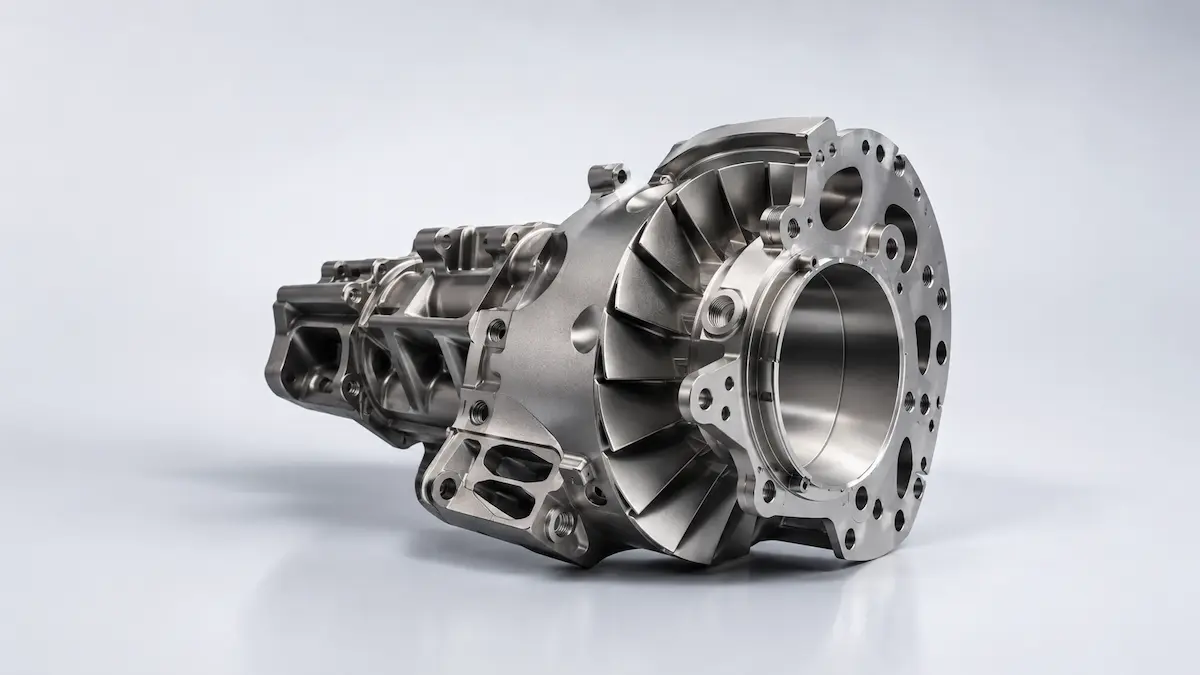
Post-processing options
Post-processing should focus on appearance display, dimensional fitting, connection assembly, and testing verification. Parts involving assembly positions need to be reserved in advance for machining, coating, and trial assembly allowances.
To support itRemove the printed support structure, focus on controlling the support contact points, and avoid cracking at edges caused by hard prying.
SandblastingAchieve a more uniform matte surface, suitable for engineering prototype display and slight surface mark reduction.
PolishingImproves support marks, layer lines, and edge feel, but will slightly alter local dimensions and the shape of sharp edges.
PolishingUsed to improve transparency or surface smoothness, may change edge details and local dimensions.
Heat treatmentUsed to adjust metal hardness, strength, or internal stress, it is necessary to confirm deformation risk and subsequent processing allowance in advance.
Solution treatmentSolution treatment is used to improve the appearance, assembly, or validation of parts, and must be combined with material properties to confirm dimensions, strength, and delivery impact.
Prescription processingAging treatment is used to improve the appearance of parts, assembly or usage validation, and must be determined by confirming dimensions, strength, and delivery impact based on material properties.
Stress reliefStress relief is used to improve the appearance, assembly, or validation of parts, and must be determined by combining material properties with dimensions, strength, and delivery impact.
Key control point
Size impactNickel-Based Superalloy high processing hardness; High cutting difficulty; Cutting tools wear out quickly; The cost of post-machining with CNC is usually high; Metal 3D printed parts often require heat treatment to improve their structure and performance; Key hole positions; Threads; It is recommended to process the sealing and assembly surfaces afterward
Assembly clearanceFor positions involving snapping, plugging, sliding, or enclosure closure, the clearance needs to be adjusted according to post-processing thickness, material shrinkage, and trial assembly results.
Hole Position StrengthThreading, inserting nuts, locking screws, and the areas around positioning holes need to ensure wall thickness to avoid cracks, stripped threads, or chipped edges during post-processing or assembly.
Environmental matchingWhen used in high-temperature, outdoor, humid, friction, or load-bearing scenarios, post-processing materials, adhesives, coatings, and fasteners must also meet the corresponding usage environment.