Support Hours: 09:00–18:00 (GMT+8) · Messages and quote requests are accepted 24/7.
Material Database

TU2 Oxygen-Free Copper

High-purity copper materials suitable for making high-conductivity parts, high thermal conductivity parts, vacuum electronic devices, precision copper parts, electrodes, terminal connectors, heat dissipation structural components, and copper alloy parts with high material purity requirements.

Material description

TU2 Oxygen-Free Copper is a high-purity, oxygen-free copper material with low oxygen content, offering excellent electrical conductivity, thermal conductivity, ductility, weldability, and good processing properties. It is commonly used in parts that require electrical conductivity, thermal conductivity, vacuum performance, welding stability, and material purity, such as conductive strips, connecting terminals, heat sinks, electrodes, vacuum electronic devices, precision copper parts, and high thermal conductivity structural components. Compared to ordinaryPure CopperT2, TU2 Oxygen-Free Copper has lower oxygen content and performs more stably in vacuum, high-temperature welding, and highly conductive applications.

TU2 oxygen-free copperOxygen-free copperOxygen-freePure CopperC10200 oxygen-free copperOF copperOxygen-Free CopperConductive copperThermally conductive copperHigh-purity copperOxygen-free copper rods
The core feature of TU2 Oxygen-Free Copper is high conductivityHigh thermal conductivity and low oxygen contentIt is Brass more than usualAluminum alloys and most steels have better electrical and thermal conductivitySuitable for electrical connectionsThermal management and vacuum electronics applicationsTU2 material is relatively softThe strength and hardness are not highProne to scratchesIndentation and processing burrs
TU2 Oxygen-Free Copper
CNC MachiningMetals

Material compatibility assessment

By focusing on application scenarios, boundaries of advantages, and non-recommended scenarios, it helps sales, customer service, and quoting staff quickly determine whether the material meets current part requirements.

Core advantages

Good electrical conductivity, thermal conductivity, low oxygen content, good ductility, good weldability, good brazing performance, suitable for vacuum and electronic and electrical applications, suitable for precision conductive and heat dissipation components, with material purity higher than ordinaryPure Copper.

Suitable for the product

Conductive strips, copper terminals, connecting sheets, electrodes, conductive contacts, heat sinks, heat sink blocks, heat conduction parts, vacuum electronic devices, RF devices, copper parts for electronic and electrical appliances, electrical connectors for motors, precision copper bushings, copper gaskets, copper sealing parts, welded copper parts, high thermal conductivity clamps, copper parts for laboratory equipment.

Not suitable for the product

High-strength load-bearing parts, high-hardness wear-resistant parts, high-elasticity snap-fit parts, long-term strong friction moving parts, high-rigidity structural parts, lightweight structural parts, parts in strong acid and strong alkali environments, parts in sulfur or ammonia-containing corrosive environments, low-cost ordinary structural parts, and parts requiring high-strength threaded connections.

Key parameter references

The following parameters come from product information and material knowledge fields, used for design review, quotation communication, and preliminary judgment before material selection.

Material positioningHigh-purity copper materials suitable for making high-conductivity parts, high thermal conductivity parts, vacuum electronic devices, precision copper parts, electrodes, terminal connectors, heat dissipation structural components, and copper alloy parts with high material purity requirements.
Precision performanceTU2 Oxygen-Free Copper suitable for CNC turning, milling, drilling, tapping, stamping, bending, wire cutting, and some precision machining. Because copper is relatively soft and has high thermal conductivity, it is prone to knife sticking, burrs, knife marks, surface scratches, and thin-wall deformation during processing. Precision conductive surfaces, sealing surfaces, assembly holes, and welded surfaces are recommended to separately control tolerances and surface roughness.
Dimensional tolerancesThe conventional dimensional tolerances of CNC machining TU2 Oxygen-Free Copper can be referenced as ± 0.02mm to ±0.10mm, while ordinary structural parts can be evaluated at ±0.10mm-±0.20mm. The overall dimensional tolerance for stamped, bent, or large-size thin copper plates may be larger. These values are standard reference ranges and do not guarantee absolute tolerances for all structures. Actual values should be confirmed based on part dimensions, wall thickness, processing methods, surface treatment, and assembly requirements.
Minimum Wall ThicknessThe wall thickness of ordinary CNC machined structures is recommended to be no less than 0.8mm-1.0mm. Because oxygen-free copper is relatively soft, thin-walled structures are prone to deformation, dents, or machining vibrations, so the load-bearing positions, thread positions, welding positions, and large sheet positions should be appropriately thickened. For stamped copper sheets or conductive connectors, thinner sheets can be selected based on current, heat dissipation, elasticity, and assembly requirements, but deformation and strength must be evaluated.
Recommended wall thicknessStandard conductive sheets and connectors are recommended 0.5mm-2.0mm; ordinary CNC copper parts are recommended 1.0mm-3.0mm; heat sinks, conductive blocks, terminals, busbars, and the positions of assembly forces are recommended to be above 2.0mm, and design should be based on current capacity, heat conduction requirements, screw tightening force, and structural strength.
Minimum apertureCNC machining can achieve smaller hole diameters, but copper is softer, making small and deep holes prone to burrs, tool sticking, and chip removal difficulties. For general designs, the recommended aperture is no less than 1.0mm. It is recommended to reserve space for precision holes, screw holes, positioning holes, and conductive contact holes, and if necessary, drilling, reaming, boring, or deburring are used.
Assembly clearanceFor precision metal assembly, one side can be reserved at 0.02mm-0.10mm according to fitting requirements; for ordinary plug-in and assembly, it is recommended to reserve 0.10mm-0.30mm per side. If parts require tin, nickel, silver, gold, or anti-oxidation treatments, additional gaps should be reserved according to the thickness of the coating. The conductive contact position should not be too loose; it should be evaluated separately in consideration of contact pressure, surface treatment, and conductivity requirements.
Detailed performanceTU2 Oxygen-Free Copper suitable for machining holes, grooves, steps, chamfers, threads, conductive contact surfaces, heat dissipation surfaces, and simple structural details. Because the material is soft, overly fine sharp corners, thin edges, elongated stitches, and tiny text are prone to deformation, burrs, or weakening after post-processing. LOGO, numbering, and markings are recommended to be achieved through laser marking, engraving, etching, or subsequent surface treatment, with key conductive surfaces avoiding excessive texturization.
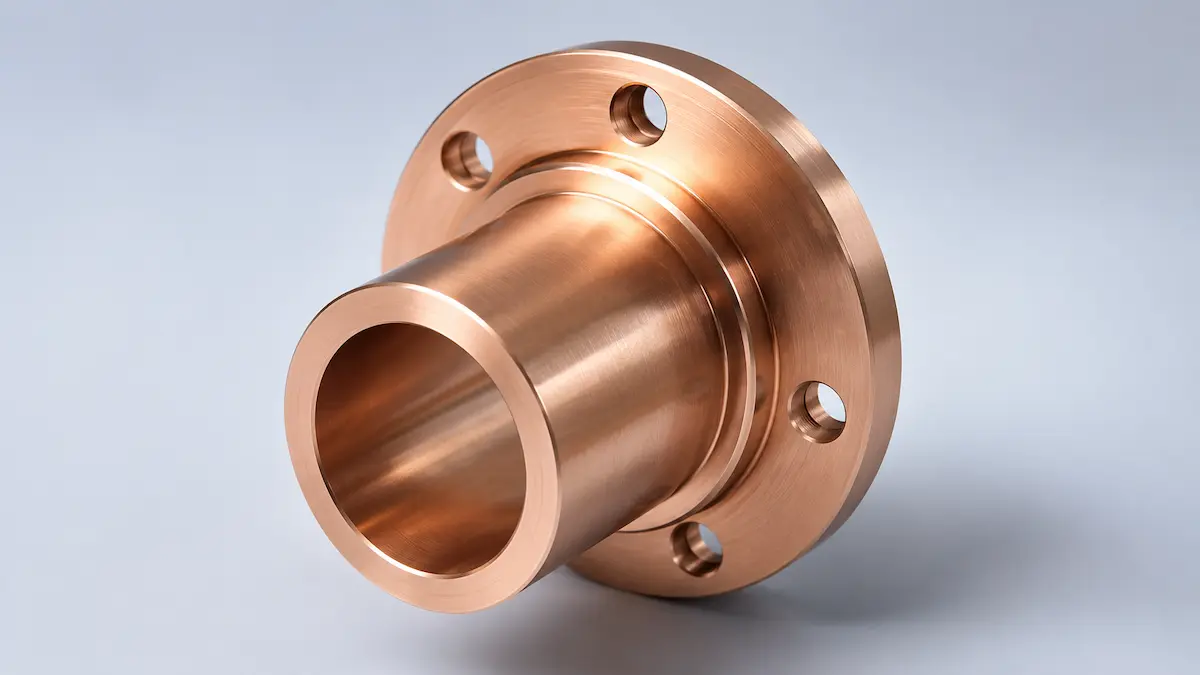
Surface effectTU2 Oxygen-Free Copper raw surface usually appears as a purplish-red or copper-colored metallic texture, with a typical pure copper appearance. Polishing produces a brighter red copper surface, brushing produces linear metal textures, and sandblasting produces a matte copper finish. Long-term exposure to air gradually oxidizes and darkens, and the surface may appear brown, dark red, or oxidized spots. If long-term appearance and conductivity stability are needed, tin, nickel, silver, gold, or oxidation protection can be applied.

Typical application scenarios

Based on material characteristics and suitable product ranges, customer needs are broken down into easier application directions to determine.

Product validation

Conductive strips, copper terminals, connecting sheets, electrodes, conductive contacts, heat sinks, heat sink blocks, heat conduction parts, vacuum electronic devices, RF devices, copper parts for electronic and electrical appliances, electrical connectors for motors, precision copper bushings, copper gaskets, copper sealing parts, welded copper parts, high thermal conductivity clamps, copper parts for laboratory equipment.

Reasons for material selection

High-purity copper materials suitable for making high-conductivity parts, high thermal conductivity parts, vacuum electronic devices, precision copper parts, electrodes, terminal connectors, heat dissipation structural components, and copper alloy parts with high material purity requirements.

Material characteristics

The core features of TU2 Oxygen-Free Copper are high electrical conductivity, high thermal conductivity, and low oxygen content. It has better electrical and thermal conductivity than ordinary Brass, aluminum alloys, and most steels, making it suitable for electrical connections, thermal management, and vacuum electronics applications. TU2 material is relatively soft, with low strength and hardness, making it prone to scratches, indentations, and processing burrs, making it more suitable for conductive and thermal functional components rather than high-strength structural or wear-resistant parts.

Design and risk review

Based on wall thickness, hole position, assembly clearance, dimensional tolerances, and material usage risks, determine in advance whether the part structure is suitable for TU2 Oxygen-Free Copper.

Design considerations

  • When designing TU2 Oxygen-Free Copper parts
  • Conductive paths should be prioritized
  • Heat dissipation path
  • Contact area
  • Assembly pressure
  • Surface oxidation and processing burrs
  • The stress points should avoid being too thin or the walls and sharp corners
  • The screw locking position should include washers or thickened structures
Precision performanceTU2 Oxygen-Free Copper suitable for CNC turning, milling, drilling, tapping, stamping, bending, wire cutting, and some precision machining. Because copper is relatively soft and has high thermal conductivity, it is prone to knife sticking, burrs, knife marks, surface scratches, and thin-wall deformation during processing. Precision conductive surfaces, sealing surfaces, assembly holes, and welded surfaces are recommended to separately control tolerances and surface roughness.
Dimensional tolerancesThe conventional dimensional tolerances of CNC machining TU2 Oxygen-Free Copper can be referenced as ± 0.02mm to ±0.10mm, while ordinary structural parts can be evaluated at ±0.10mm-±0.20mm. The overall dimensional tolerance for stamped, bent, or large-size thin copper plates may be larger. These values are standard reference ranges and do not guarantee absolute tolerances for all structures. Actual values should be confirmed based on part dimensions, wall thickness, processing methods, surface treatment, and assembly requirements.
Quality riskThe main risks of TU2 Oxygen-Free Copper include the material being soft, easily scratched, prone to oxidation and discoloration, obvious processing burrs, thin-walled deformation, insufficient thread strength, and surface treatment affecting conductivity. It is suitable for conductive, thermal, and vacuum electronics applications, but not suitable for high-strength load-bearing and wear-resistant scenarios. When used in electrical connectors, special attention should be paid to conductive contact surfaces, coating quality, assembly pressure, oxidation protection, and long-term contact resistance stability.
Surface effectTU2 Oxygen-Free Copper raw surface usually appears as a purplish-red or copper-colored metallic texture, with a typical pure copper appearance. Polishing produces a brighter red copper surface, brushing produces linear metal textures, and sandblasting produces a matte copper finish. Long-term exposure to air gradually oxidizes and darkens, and the surface may appear brown, dark red, or oxidized spots. If long-term appearance and conductivity stability are needed, tin, nickel, silver, gold, or oxidation protection can be applied.

Post-processing and assembly precautions

Post-processing of TU2 Oxygen-Free Copper affects appearance, dimensions, hole position, assembly clearance, and usage validation results, and should be explained in advance during quotation, DFM review, and sample confirmation stages.

Post-processing options

Post-processing should focus on appearance display, dimensional fitting, connection assembly, and testing verification. Parts involving assembly positions need to be reserved in advance for machining, coating, and trial assembly allowances.

Remove burrsDeburring is used to improve the appearance of parts, assembly, or functional verification effects, and it is necessary to confirm the impact on dimensions, strength, and delivery in combination with material characteristics.
PolishingImproves support marks, layer lines, and edge feel, but will slightly alter local dimensions and the shape of sharp edges.
PolishingUsed to improve transparency or surface smoothness, may change edge details and local dimensions.
BrushedBrushing is used to improve the appearance, assembly, or validation of parts, and must be combined with material properties to confirm dimensions, strength, and delivery impact.
SandblastingAchieve a more uniform matte surface, suitable for engineering prototype display and slight surface mark reduction.
Nickel platingNickel plating is used to improve the appearance, assembly, or validation of parts, and must be determined by combining material properties with dimensions, strength, and delivery impact.
tin-platedTin plating is used to improve the appearance, assembly, or validation of parts, and must be determined by combining material properties to confirm dimensions, strength, and delivery impact.
Silver-platedSilver plating is used to improve the appearance, assembly, or validation of parts, and must be combined with material properties to confirm dimensions, strength, and delivery impact.

Key control point

Size impactTU2 Oxygen-Free Copper material is relatively soft; Prone to scratches during processing and transportation; Crush damage or deformation; Polishing; Brushing and sandblasting alter the surface condition and dimensions; Electroplating affects conductive contact surfaces and assembly clearances; When used as a conductive component; Focus should be placed on controlling the flatness of the contact surface
Assembly clearanceFor positions involving snapping, plugging, sliding, or enclosure closure, the clearance needs to be adjusted according to post-processing thickness, material shrinkage, and trial assembly results.
Hole Position StrengthThreading, inserting nuts, locking screws, and the areas around positioning holes need to ensure wall thickness to avoid cracks, stripped threads, or chipped edges during post-processing or assembly.
Environmental matchingWhen used in high-temperature, outdoor, humid, friction, or load-bearing scenarios, post-processing materials, adhesives, coatings, and fasteners must also meet the corresponding usage environment.

Structure and usage boundaries

For common issues such as threads, snaps, strength, temperature resistance, and weather resistance, identify in advance whether the material needs to be replaced or if another processing method should be used.

Thread Recommendation

Applicable ScopeTU2 Oxygen-Free Copper can tap and process threads, but copper is softer, and its wear resistance and anti-thread resistance are inferior to steel parts.
Risk pointFor frequent disassembly, high locking force, or highly reliable connection positions, it is recommended to increase the thread engagement length and use wire threads, embedded threads, pressure rivets, or standard fasteners.
Recommended practiceThe screw tightening area should avoid being too thin or thick, and care should be taken to prevent dents or deformation during tightening.

Buckle recommendation

Applicable ScopeTU2 Oxygen-Free Copper is not suitable for designing large deformation elastic buckles like plastic, nor for long-term high-frequency elastic buckle structures.
Risk pointLow-deformation conductive sheets, contact plates, slots, screw fixing or clamping structures can be designed, but deformation and contact pressure must be controlled.
Recommended practiceIf a highly elastic conductive clip is needed, beryllium copper, phosphor copper, spring copper alloy, or stainless steel spring material should be considered.

Strength and Environment

Mechanical strengthTU2 Oxygen-Free Copper has relatively low strength and hardness, but good ductility and toughness, making it suitable for conductive, thermal, welded, and sealing parts.
Environmental boundaryIt is not suitable as a high-strength load-bearing or high-wear component.
Recommended practiceLoad-bearing structures should focus on wall thickness, contact surface, thread strength, fixing method, and deformation risk. If higher strength and wear resistance are required, chrome-zirconium copper, beryllium copper, Brass, or steel should be considered.TU2 Oxygen-Free Copper has excellent thermal conductivity, making it suitable for heat transfer and cooling applications. The material's temperature resistance is superior to most ordinary applications in plastics and aluminum alloys, but it is prone to oxidation and discoloration at high temperatures, reducing strength, and affecting surface condition and welded areas. Vacuum, high-temperature welding, or thermal cycling applications should be validated in combination with specific temperature, atmosphere, load, and surface condition.TU2 Oxygen-Free Copper naturally oxidizes and darkens in air, and moisture, sweat, salt spray, sulfides, ammonia, or acid-alkaline environments accelerate discoloration and corrosion. Indoor conductive components can usually improve stability through surface cleaning, tin plating, nickel plating, silver plating, gold plating, or oxidation resistance treatments. If customers need long-term outdoor weather resistance or maintain a glossy copper appearance, reliable surface protection should be added, or depending on the environment, coated copper parts, stainless steel, or other corrosion-resistant materials should be used.

Alternative material selection and final judgment

When customer demand exceeds TU2 Oxygen-Free Copper material boundaries, it is necessary to combine strength, temperature resistance, toughness, long-term stability, and mass production goals to promptly recommend alternative materials or processing technologies.

Alternative material suggestions

If lower-cost ordinary conductive copper parts are needed, Pure CopperT2 can be chosen; If higher purity and stricter oxygen-free requirements are required, TU1 oxygen-free copper can be chosen; If higher strength and wear resistance are required, beryllium copper, chromium-zirconium copper, or Brass can be chosen; If better machinability and decorative performance are needed, Brass H59 and H62 can be chosen; If a lightweight heat dissipation structure is needed,6061 Aluminum Alloy or AlSi 10Mg can be chosen; If high corrosion resistance is required, stainless steel or nickel-plated copper parts can be chosen.

Material selection suggestions

If customers mainly care about electrical conductivity, thermal conductivity, low oxygen content, welding stability, and suitability for vacuum environments, TU2 Oxygen-Free Copper is the appropriate choice. If the customer only processes ordinary copper parts and does not have high requirements for oxygen-free performance, Pure CopperT2 is usually more economical. If customers require high strength, wear resistance, elasticity, or long-term mechanical load-bearing capacity, TU2 is not recommended; instead, chromium-zirconium-copper, beryllium-copper, Brass, steel, or other structural materials should be considered.

Already have the blueprints? Directly enter the quotation for custom parts

After uploading 3D/2D drawings and supplementing materials, quantities, tolerances, surface treatments, and delivery requirements, XPartsLab will provide next steps in 3D printing manufacturability, cost, and delivery pathways.