
Core advantages
The metal has a high-end texture, stable color, good corrosion resistance, strong oxidation resistance, suitable for long-term wear, high precious metal value, suitable for complex casting and refined appearance after polishing.
Precious metal materials suitable for high-end jewelry, precious metal accessories, art pieces, small precision castings, and high-value custom parts.
Platinum (wax casting-polishing) is a precious metal processing method that uses wax pattern casting to produce platinum metal parts, followed by post-processing such as grinding and polishing to achieve the final appearance. This material is commonly used in jewelry, high-end accessories, souvenirs, small artworks, and precision precious metal parts. Platinum features pure color, high-end texture, good corrosion resistance, strong oxidation resistance, and high stability, making it suitable for products requiring metallic texture, long-term wear stability, and a high-end appearance.
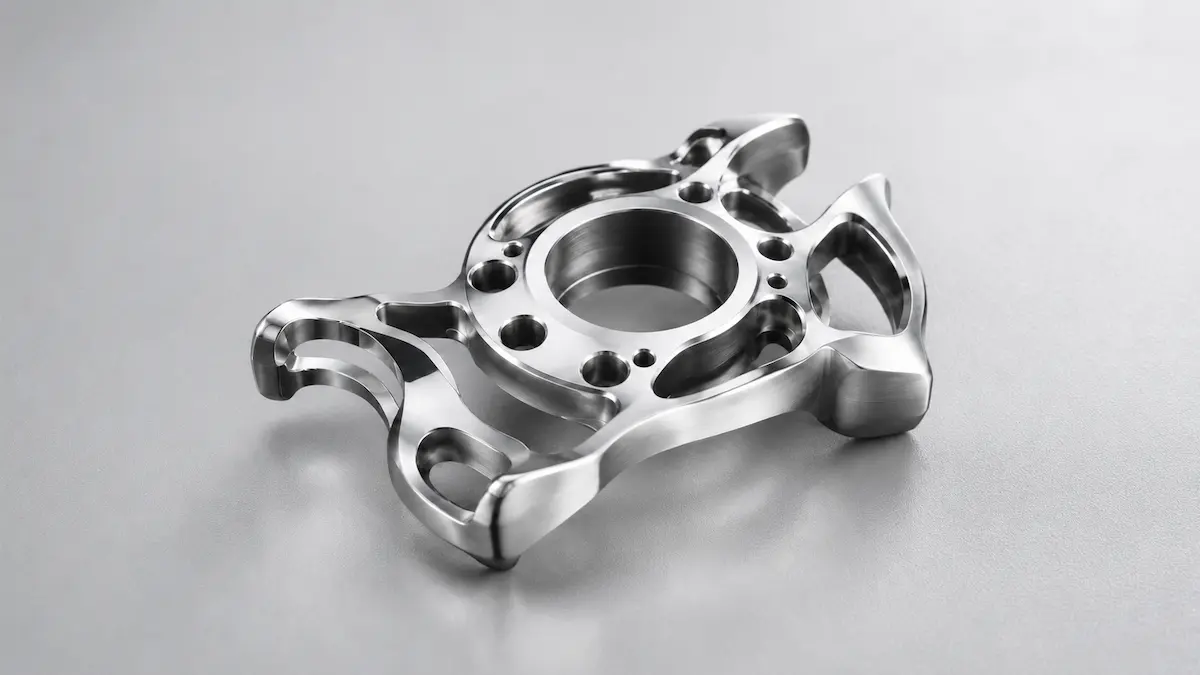
By focusing on application scenarios, boundaries of advantages, and non-recommended scenarios, it helps sales, customer service, and quoting staff quickly determine whether the material meets current part requirements.
The metal has a high-end texture, stable color, good corrosion resistance, strong oxidation resistance, suitable for long-term wear, high precious metal value, suitable for complex casting and refined appearance after polishing.
Rings, pendants, earrings, bracelet accessories, necklace accessories, jewelry inlays, high-end souvenirs, small art pieces, precious metal ornaments, small precision decorative pieces, custom gifts, and branded high-end accessories.
Large-size, low-cost structural parts, high-load-bearing industrial parts, high-elastic snap-fit parts, high-frequency moving parts, complex large thin-walled parts, high-precision mechanical transmission parts, low-budget decorative parts, large-volume products requiring lightweight design, and wearable accessories that are extremely sensitive to weight.
The following parameters come from product information and material knowledge fields, used for design review, quotation communication, and preliminary judgment before material selection.
| Material positioning | Precious metal materials suitable for high-end jewelry, precious metal accessories, art pieces, small precision castings, and high-value custom parts. |
|---|---|
| Precision performance | Wax-cast platinum is suitable for complex shapes and small precious metal parts, but not suitable for direct ultra-high-precision machining solutions. Actual accuracy is affected by wax pattern printing accuracy, embedded materials, casting shrinkage, metal flow, cooling, finishing, grinding, and polishing. For precision assembly or embedding positions, it is recommended to reserve allowances for post-processing and manual finishing. |
| Dimensional tolerances | Conventional dimensional tolerances can be referenced ± 0.15mm to ±0.50mm. This value is the standard reference range after wax casting and grinding, and is not an absolute guarantee tolerance for all structures. Small pieces of jewelry and simple structures are usually easier to control, while larger pieces, thin-walled pieces, complex hollowed-out pieces, and areas requiring extensive polishing may have greater deviations. For precision hole positions, embedding positions, and assembly surfaces, post-processing or manual finishing is recommended. |
| Minimum Wall Thickness | It is recommended that the minimum wall thickness be no less than 0.8mm. Small decorative details can be locally thinner, but it is not recommended to use them as the main load-bearing structure. For rings, pendants, inlays, and locations requiring long-term wear, it is recommended to increase the length to above 1.0mm according to the structure to avoid incomplete casting, deformation, or damage during later wear. |
| Recommended wall thickness | For ordinary jewelry and small decorative parts, it is recommended to be above 1.0mm-1.5mm; for ring rings, pendant bodies, connecting rings, and load-bearing positions, it is recommended to be at least 1.2mm-2.0mm; for areas requiring stone setting, welding, or long-term wear, the thickness should be appropriately thickened, with allowance for grinding and polishing losses. |
| Minimum aperture | The recommended aperture is no less than 0.8mm-1.0mm. Too small holes may shrink, become clogged, or deform during wax patterns, embedding, casting, and polishing. It is recommended to reserve allowance for chain holes, assembly holes, inlay holes, and positioning holes; if necessary, drill, ream, or finish after casting. |
| Assembly clearance | For ordinary metal assemblies, it is recommended to reserve 0.10mm-0.30mm on one side; for movable connections or areas requiring post-polishing, it is recommended to reserve larger gaps. The positions of stone inlays, insertions, movable buckles, and chain connections need to be evaluated separately according to the actual structure to avoid overtightening or loosening caused by shrinkage and grinding during casting. |
| Detailed performance | Platinum wax casting is suitable for expressing relief, texture, text, hollowing, and complex curved surfaces. Raised text, shallow relief, and fine textures are recommended to be no less than 0.3mm-0.5mm. Overly fine details may weaken during wax pattern cleaning, embedding, casting, polishing, or polishing. Important text and textures should be avoided in large polishing areas. |
| Surface effect | The surface of original platinum castings is usually relatively coarse and requires polishing and polishing to develop a delicate silvery-white metallic luster. It can achieve glossy mirror finishes, soft mattes, sandblasting, brushing, and localized highlights. Mirror polishing is suitable for jewelry and high-end display pieces, while matte or sandblasted finishes are better suited for understated and sophisticated design styles. |
Based on material characteristics and suitable product ranges, customer needs are broken down into easier application directions to determine.
Rings, pendants, earrings, bracelet accessories, necklace accessories, jewelry inlays, high-end souvenirs, small art pieces, precious metal ornaments, small precision decorative pieces, custom gifts, and branded high-end accessories.
Precious metal materials suitable for high-end jewelry, precious metal accessories, art pieces, small precision castings, and high-value custom parts.
Platinum has high density and a heavy texture, appearing silver-white or grayish-white in color, and is resistant to oxidation and discoloration after long-term use. Through wax casting, complex curved surfaces, reliefs, hollowing, textures, and custom shapes can be achieved. After casting, processes such as gate removal, finishing, grinding, and polishing are needed to achieve a better final appearance. Platinum is a material of high value, but its processing difficulty and material cost are higher than ordinary metals.
Based on wall thickness, hole position, assembly clearance, dimensional tolerances, and material usage risks, determine in advance whether the part structure is suitable for Platinum – Lost-Wax Casting, Polished.
Post-processing of Platinum – Lost-Wax Casting, Polished affects appearance, dimensions, hole position, assembly clearance, and usage validation results, and should be explained in advance during quotation, DFM review, and sample confirmation stages.
Post-processing should focus on appearance display, dimensional fitting, connection assembly, and testing verification. Parts involving assembly positions need to be reserved in advance for machining, coating, and trial assembly allowances.
For common issues such as threads, snaps, strength, temperature resistance, and weather resistance, identify in advance whether the material needs to be replaced or if another processing method should be used.
When customer demand exceeds Platinum – Lost-Wax Casting, Polished material boundaries, it is necessary to combine strength, temperature resistance, toughness, long-term stability, and mass production goals to promptly recommend alternative materials or processing technologies.
If you want a similar silver-white precious metal texture, you can choose 18K white gold, palladium, or silver; If you need samples at lower cost, you can choose Brass platinum-plated color, silver stainless steel, or resin metallic paint; If higher hardness and wear resistance are required, K gold, titanium alloy, or stainless steel can be considered; If you need high-end jewelry to wear for a long time, platinum remains one of the better choices.
If customers care about premium texture, precious metal value, long-term wear stability, and jewelry-grade appearance, platinum (wax-cast-polished) is the right choice. If customers prioritize cost, lightweight, complex large-size structures, or industrial functional strength, platinum is not recommended; instead, options such as silver, K gold, stainless steel, titanium alloy, or electroplated metal can be considered.
After uploading 3D/2D drawings and supplementing materials, quantities, tolerances, surface treatments, and delivery requirements, XPartsLab will provide next steps in 3D printing manufacturability, cost, and delivery pathways.