Support Hours: 09:00–18:00 (GMT+8) · Messages and quote requests are accepted 24/7.
Material Database

Red Wax

High-detail 3D printing materials suitable for early wax model production in precision casting, mainly used for lost wax casting of jewelry, handicrafts, small precision metal parts, and complex-shaped metal parts.

Material description

Red Wax is a material commonly used for 3D printing precision casting wax models, mainly for lost-wax casting, jewelry casting, handicraft casting, and small precision metal casting. Its core function is not as a final part but as a disappearable model before casting, which is printed with high-precision wax patterns, then embedded, burned, and cast metal, ultimately resulting in a finished metal product.

3D printing Red WaxRed Wax moldCasting Red WaxLost wax casting waxJewelry Red WaxPrecision casting wax modelsRed wax pattern material
Red Wax materials are mainly used for model making before castingIt has good detail rendering ability and the ability to form complex structuresIt is suitable for creating richly textured texturesThe surface is complexThe size is relatively smallWax patterns with high detail requirementsRed Wax has limited strength and toughnessUsually not used as a final productInstead, it serves as an intermediate model in the metal casting process
Red Wax
3D PrintingPlastics

Material compatibility assessment

By focusing on application scenarios, boundaries of advantages, and non-recommended scenarios, it helps sales, customer service, and quoting staff quickly determine whether the material meets current part requirements.

Core advantages

It has excellent detail rendering, is suitable for complex shapes, precision casting, can create small structures difficult to form with traditional processing, is suitable for wax models of jewelry and artwork, facilitates subsequent embedding and burning, and can improve pre-casting model production efficiency.

Suitable for the product

Jewelry wax patterns, ring wax patterns, pendant wax patterns, earring wax patterns, bracelet accessory wax patterns, craft wax patterns, sculpture small piece wax patterns, complex metal jewelry wax patterns, small precision casting wax models, cultural and creative metal product wax models, art ornament casting master molds.

Not suitable for the product

Final functional parts, long-term use parts, load-bearing structural parts, high-temperature direct use parts, impact-bearing parts, assembly functional parts, large-size structural parts, transparent display parts, high-toughness parts, and plastic prototypes that need to be delivered directly for use.

Key parameter references

The following parameters come from product information and material knowledge fields, used for design review, quotation communication, and preliminary judgment before material selection.

Material positioningHigh-detail 3D printing materials suitable for early wax model production in precision casting, mainly used for lost wax casting of jewelry, handicrafts, small precision metal parts, and complex-shaped metal parts.
Precision performanceRed Wax is usually suitable for small-scale, high-detail models and precision casting wax models, with good detail performance. Actual accuracy is affected by printing equipment, material type, model size, support position, cleaning method, wax pattern deformation, and subsequent casting shrinkage. Precision fitting metal parts require a comprehensive evaluation of casting shrinkage rate and post-processing allowance.
Dimensional tolerancesStandard dimensional tolerances can refer to ± 0.10mm to ±0.30mm. This value is a reference value for the wax pattern printing stage and does not guarantee tolerance for the final metal casting. The final casting dimensions are also affected by the embedding material, burnout process, metal shrinkage rate, pouring process, and post-processing methods. It is recommended to reserve machining allowance for precise dimension positioning.
Minimum Wall ThicknessIt is recommended that the wax pattern wall thickness be no less than 0.6mm-0.8mm. Small decorative areas can be made thinner according to equipment capacity, but large areas are not recommended. If the casting structure is too thin, it may be damaged or incomplete during wax pattern handling, encapsulation, or metal pouring.
Recommended wall thicknessFor ordinary jewelry and small castings, it is recommended to have a wall thickness of at least 1.0mm-1.5mm; to ensure casting integrity and additional grinding allowance, appropriate thickness is recommended. Large areas of thin sheets, slender structures, and suspended textures should be combined with casting techniques to increase thickness or strengthen connections.
Minimum apertureThe recommended aperture is no less than 0.8mm-1.0mm. Holes that are too small may shrink or even become blocked after printing, cleaning, embedding, or metal pouring. It is recommended to reserve space for precision holes, assembly holes, and embedded holes; after metal casting, drilling, reaming, or finishing is performed.
Assembly clearanceIf Red Wax is used for post-casting assembly, the wax pattern stage should consider metal shrinkage and post-treatment effects. For ordinary assembly, it is recommended to reserve at least 0.20mm-0.40mm on one side of the final metal part, which should be confirmed based on the metal material, casting shrinkage rate, and post-processing method. Red Wax itself is not recommended for direct assembly of functional components.
Detailed performanceRed Wax is suitable for depicting fine textures, reliefs, text, patterns, and complex surfaces. Raised text, shallow relief, and fine textures are recommended to be no less than 0.2mm-0.4mm. Overly fine details may weaken or disappear during printing, waxing, embedding, burning, pouring, or metal polishing.
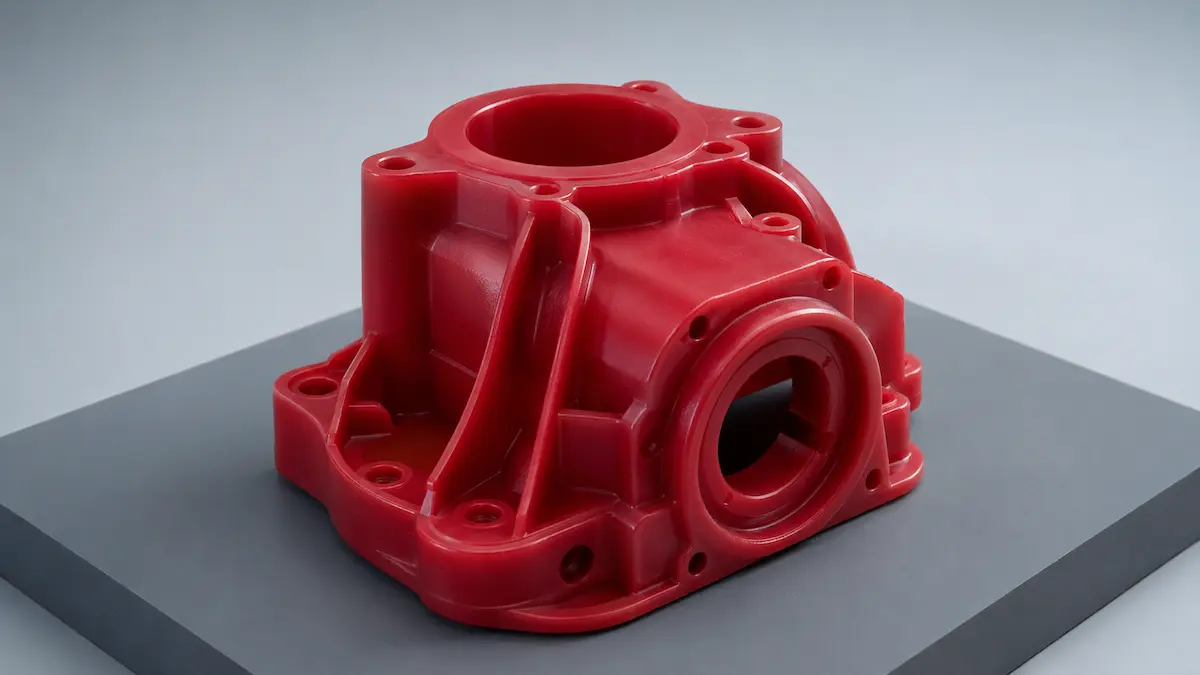
Surface effectRed Wax original surface is usually red or deep red, with a delicate texture suitable for observing details and texture. The surface may have slight layering, support marks, or finishing marks. After light wax touching and cleaning, the surface integrity of the wax pattern can be improved. The final appearance mainly depends on subsequent processes such as metal casting, grinding, polishing, and electroplating.

Typical application scenarios

Based on material characteristics and suitable product ranges, customer needs are broken down into easier application directions to determine.

Product validation

Jewelry wax patterns, ring wax patterns, pendant wax patterns, earring wax patterns, bracelet accessory wax patterns, craft wax patterns, sculpture small piece wax patterns, complex metal jewelry wax patterns, small precision casting wax models, cultural and creative metal product wax models, art ornament casting master molds.

Reasons for material selection

High-detail 3D printing materials suitable for early wax model production in precision casting, mainly used for lost wax casting of jewelry, handicrafts, small precision metal parts, and complex-shaped metal parts.

Material characteristics

Red Wax materials are mainly used for model making before casting, offering good detail rendering and complex structure forming capabilities. It is suitable for making wax patterns with rich textures, complex curves, small sizes, and high detail requirements. Red Wax has limited strength and toughness and is usually not used as a final product, but rather as an intermediate model in the metal casting process.

Design and risk review

Based on wall thickness, hole position, assembly clearance, dimensional tolerances, and material usage risks, determine in advance whether the part structure is suitable for Red Wax.

Design considerations

  • When designing Red Wax model
  • Casting feasibility should be prioritized
  • And not just printability
  • It is recommended to avoid overly thin walls
  • A solitary slender pole
  • Sharp thin edges
  • Closed, difficult-to-vent structures and overly deep narrow grooves
  • Detailed positioning should consider subsequent metal shrinkage
Precision performanceRed Wax is usually suitable for small-scale, high-detail models and precision casting wax models, with good detail performance. Actual accuracy is affected by printing equipment, material type, model size, support position, cleaning method, wax pattern deformation, and subsequent casting shrinkage. Precision fitting metal parts require a comprehensive evaluation of casting shrinkage rate and post-processing allowance.
Dimensional tolerancesStandard dimensional tolerances can refer to ± 0.10mm to ±0.30mm. This value is a reference value for the wax pattern printing stage and does not guarantee tolerance for the final metal casting. The final casting dimensions are also affected by the embedding material, burnout process, metal shrinkage rate, pouring process, and post-processing methods. It is recommended to reserve machining allowance for precise dimension positioning.
Quality riskThe main risk of Red Wax is not whether it can be printed, but rather the details of the wax model, support marks, thin-wall strength, casting shrinkage, burn residue, and the final metal casting effect. If the design is too fine, too thin, or the structure too complex, the wax pattern may be damaged during cleaning, transportation, embedding, or casting. Red Wax good printing quality does not necessarily mean the final metal part is flawless; subsequent casting processes are equally critical.
Surface effectRed Wax original surface is usually red or deep red, with a delicate texture suitable for observing details and texture. The surface may have slight layering, support marks, or finishing marks. After light wax touching and cleaning, the surface integrity of the wax pattern can be improved. The final appearance mainly depends on subsequent processes such as metal casting, grinding, polishing, and electroplating.

Post-processing and assembly precautions

Post-processing of Red Wax affects appearance, dimensions, hole position, assembly clearance, and usage validation results, and should be explained in advance during quotation, DFM review, and sample confirmation stages.

Post-processing options

Post-processing should focus on appearance display, dimensional fitting, connection assembly, and testing verification. Parts involving assembly positions need to be reserved in advance for machining, coating, and trial assembly allowances.

To support itRemove the printed support structure, focus on controlling the support contact points, and avoid cracking at edges caused by hard prying.
Light trimmingLight finishing is used to improve part appearance, assembly, or usage validation, requiring confirmation of dimensions, strength, and delivery impact based on material properties.
Surface cleaningSurface Cleaning is used to improve the appearance, assembly, or validation of parts, and must be combined with material properties to confirm dimensions, strength, and delivery impact.
Apply local waxingLocalized wax refill is used to improve the appearance, assembly, or validation of parts, and must be determined by combining material properties with dimensions, strength, and delivery impact.
Finely trimmed waxFine wax retouching is used to improve the appearance, assembly, or validation of parts, and must be combined with material properties to confirm dimensions, strength, and delivery impact.
Embedded and castEmbedding casting is used to improve the appearance, assembly, or validation of parts, requiring confirmation of dimensions, strength, and delivery impact based on material properties.
Burning and losing the waxBurn-out and de-waxing is used to improve the appearance, assembly, or validation of parts, and must be combined with material properties to confirm dimensions, strength, and delivery impact.
Metal castingMetal casting is used to improve the appearance, assembly, or validation of parts, and must be combined with material properties to confirm dimensions, strength, and delivery impact.

Key control point

Size impactRed Wax pieces are usually brittle or soft; During repairs, avoid applying excessive force that could cause breakage; Deformation or damage to details; Support points should be avoided as much as possible from important appearance surfaces and detailed surfaces; Used before casting; Surface cleanliness should be ensured; Structural integrity; No obvious cracks or residues
Assembly clearanceFor positions involving snapping, plugging, sliding, or enclosure closure, the clearance needs to be adjusted according to post-processing thickness, material shrinkage, and trial assembly results.
Hole Position StrengthThreading, inserting nuts, locking screws, and the areas around positioning holes need to ensure wall thickness to avoid cracks, stripped threads, or chipped edges during post-processing or assembly.
Environmental matchingWhen used in high-temperature, outdoor, humid, friction, or load-bearing scenarios, post-processing materials, adhesives, coatings, and fasteners must also meet the corresponding usage environment.

Structure and usage boundaries

For common issues such as threads, snaps, strength, temperature resistance, and weather resistance, identify in advance whether the material needs to be replaced or if another processing method should be used.

Thread Recommendation

Applicable ScopeRed Wax not suitable for directly producing usable thread functions.
Risk pointIf the final metal part requires threading, it is recommended to reserve a hole or solid position during the wax mold stage, and then proceed with drilling, tapping, or post-processing after casting.
Recommended practiceFor small-size precision threads, it is not recommended to rely directly on casting for one-time forming.

Buckle recommendation

Applicable ScopeRed Wax is not suitable for making clip structures that can be repeatedly deformed.
Risk pointIf the final metal part requires a snap-fit or elastic structure, it should be redesigned according to the elasticity, thickness, and heat treatment method of the target metal material.
Recommended practiceRed Wax stage can be used for appearance validation, but it does not represent the final snap performance.

Strength and Environment

Mechanical strengthRed Wax has limited strength, is usually brittle or soft, suitable for short-term model displays and pre-casting processes, and is not suitable as a long-term load-bearing component.
Environmental boundarySmall structures, thin-walled structures, and sharp corners are easily damaged during desupporting, transportation, trimming, or embedding, so they must be handled gently and packaged properly.
Recommended practiceRed Wax has weak heat resistance and may soften, deform, or melt when heated. Its purpose is precisely to create casting cavities by heating and burning or dewaxing, so it is not suitable for direct use at high temperatures. During storage and transportation, avoid direct sunlight, high temperatures, and proximity to heat sources. Red Wax is not suitable for long-term outdoor or exposed storage; temperature changes, ultraviolet rays, dust, and external forces may all affect surface and structural stability. When casting wax models, it is recommended to promptly enter subsequent embedding and casting processes to avoid deformation, contamination, or damage to details caused by prolonged storage.

Alternative material selection and final judgment

When customer demand exceeds Red Wax material boundaries, it is necessary to combine strength, temperature resistance, toughness, long-term stability, and mass production goals to promptly recommend alternative materials or processing technologies.

Alternative material suggestions

If only appearance is needed, you can choose photosensitive resin in white, gray, or black; If higher precision is needed for jewelry wax patterns, professional casting wax resin or jewelry-specific wax model materials can be chosen; If direct metal finished products are needed, options include metal 3D printing, CNC metal machining, or metal forming after lost-wax casting; If Silicone Rubber mold is needed, photosensitive resin master molds or high-precision resin master molds can be chosen.

Material selection suggestions

If the client's goal is to create jewelry, crafts, or complex metal pieces, and plans to obtain finished metal through lost-wax casting, Red Wax is the right choice. If customers only want to see the appearance model, they can choose ordinary photosensitive resin; If customers need functional parts that are used directly, they should choose nylon, CNC plastic, CNC metal, or metal 3D printing instead of Red Wax.

Already have the blueprints? Directly enter the quotation for custom parts

After uploading 3D/2D drawings and supplementing materials, quantities, tolerances, surface treatments, and delivery requirements, XPartsLab will provide next steps in 3D printing manufacturability, cost, and delivery pathways.