Support Hours: 09:00–18:00 (GMT+8) · Messages and quote requests are accepted 24/7.
Material Database

65Mn Spring Steel

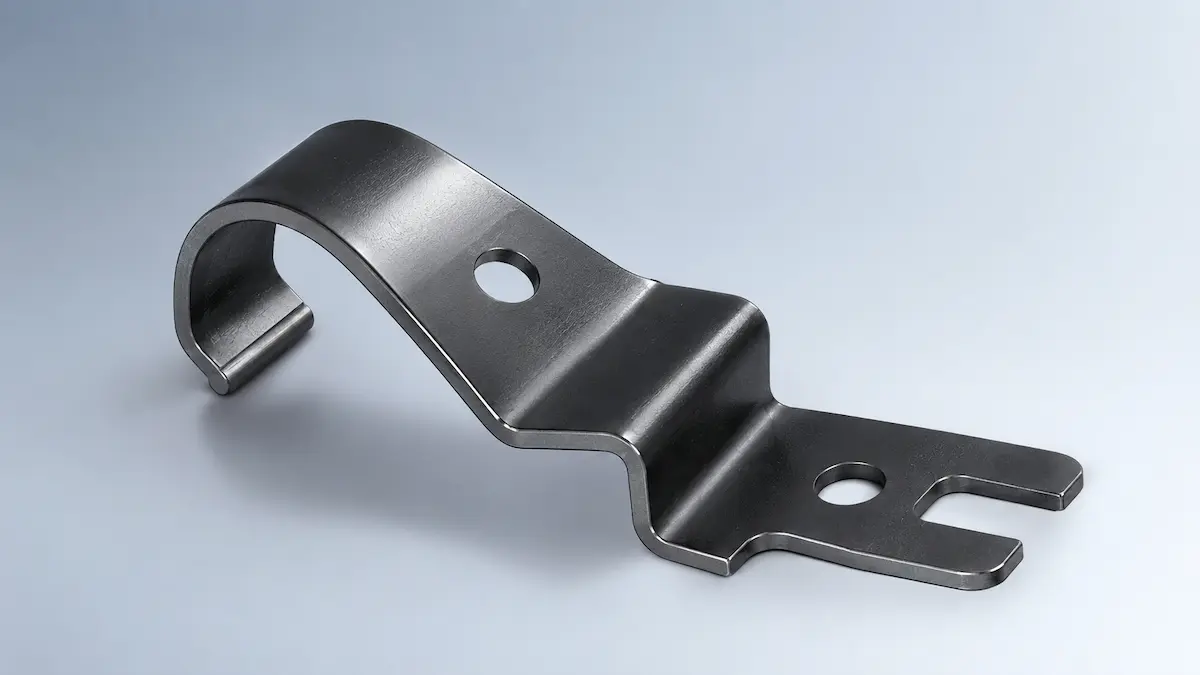
Spring steel materials suitable for producing spring plates, spring plates, clips, clips, blades, saw blades, stamped elastic parts, and metal functional parts requiring high elastic recovery capacity.

Material description

Spring steel 65Mn is a commonly used high-carbon manganese spring steel, characterized by high strength, good elasticity, good wear resistance, and high hardness. After heat treatment such as quenching and tempering, it can achieve excellent elastic limits and fatigue resistance. It is commonly used in spring plates, elastic clips, spring clips, blades, saw blades, gaskets, clamps, stamped parts, wear-resistant parts, and metal parts requiring elastic recovery capability. Compared to ordinary carbon steel, 65Mn is more suitable for elastic structures; Compared to 301 Stainless Steel, 65Mn is less expensive and stronger, but has poor corrosion resistance.

65Mn spring steel65 manganese steel65Mn steelManganese spring steelHigh-carbon manganese steelSpring plate steelSpring steel fragmentsSpring steel platesSpring steel strip
The core features of 65Mn are good elasticity and strengthSuitable for making thin elastic partsSpring plates and metal clipsAfter proper heat treatment,It can achieve higher hardnessGood resilience and certain wear resistance65Mn is a spring steel that is prone to rustIts corrosion resistance is clearly inferior to 301304 and other stainless steel materialsTherefore, in actual use, blackening is usually required
65Mn Spring Steel
CNC MachiningMetals

Material compatibility assessment

By focusing on application scenarios, boundaries of advantages, and non-recommended scenarios, it helps sales, customer service, and quoting staff quickly determine whether the material meets current part requirements.

Core advantages

Good elasticity, high strength, relatively high hardness, good wear resistance, good fatigue resistance, suitable for spring and spring structures, heat-treated strengthening, cost lower than some stainless steel elastic materials, suitable for batch stamping and thin elastomer parts.

Suitable for the product

Spring plates, spring plates, metal clips, clamps, gaskets, elastic connectors, hardware elastic parts, stamped elastic parts, saw blades, blades, scrapers, clutch plates, brake pads, retaining rings, wear-resistant thin pieces, mechanical elastic structural parts.

Not suitable for the product

Highly corrosive environment parts, long-term exposed outdoor parts, food direct contact parts, medical implant parts, high-end exterior stainless steel parts, rust-free maintenance parts, strong welded structural parts, large-size heavy-duty structural parts, high-temperature long-term elastic parts, parts requiring high corrosion resistance spring.

Key parameter references

The following parameters come from product information and material knowledge fields, used for design review, quotation communication, and preliminary judgment before material selection.

Material positioningSpring steel materials suitable for producing spring plates, spring plates, clips, clips, blades, saw blades, stamped elastic parts, and metal functional parts requiring high elastic recovery capacity.
Precision performance65Mn is commonly used for thin sheets, steel strips, stamping, bending, wire cutting, laser cutting, and spring sheet forming. Plane profile accuracy is usually good, but the angle, elasticity, and rebound after bending are affected by material condition, plate thickness, heat treatment, rolling direction, die, and processing batch. For spring parts, key dimensions, bending angles, elastic force ranges, and fatigue testing should be carefully controlled.
Dimensional tolerancesDimensional tolerances for laser cutting or stamping planes can be referenced ±0.05mm-±0.20mm; The overall dimensional tolerance after ordinary bending can be referenced ± 0.20mm to ±0.50mm; Warping or dimensional changes may occur after heat treatment; key elastic structures are recommended to be confirmed through sample testing. These values represent the conventional reference range and are not absolute guaranteed tolerances for all structures. Elasticity, angle, and lifespan requirements should be separately defined as testing standards.
Minimum Wall Thickness65Mn is commonly used in the form of thin plates, steel strips, and spring plates, with typical thicknesses ranging from 0.1mm, 0.2mm, 0.3mm, 0.5mm to over 1.0mm. Small spring clips can be made from thinner materials according to elasticity requirements; Areas subjected to significant clamping forces, impacts, or wear should be appropriately thickened. Structures that are too thin are prone to deformation, while structures that are too thick may lack elasticity or be difficult to bend.
Recommended wall thicknessStandard spring pieces, clips, and contact structures can be adjusted to 0.2mm-0.8mm; medium-strength clips, stoppers, and elastic pressure plates can be used as a reference 0.5mm-1.5mm; sheet-like parts requiring greater elasticity or wear resistance can be increased to 1.0mm-2.0mm or more depending on the structure. The specific thickness should be determined based on the target elastic force, deformation amount, lifespan, processing method, and assembly space.
Minimum apertureStamping or laser cutting aperture is recommended to be no less than one time the plate thickness; stable design suggests the hole diameter should be no less than 0.8mm-1.5mm. Small holes, dense holes, elongated holes, and holes near the bending line are prone to deformation, cracking, or burrs. Hole positions near the spring's load-bearing area should have margin spacing to prevent fatigue cracks from spreading from the hole edges.
Assembly clearanceFor ordinary metal sheet assembly, it is recommended to reserve 0.05mm-0.20mm on one side; for insertion, slot, spring plate crimping, and clamping structures, it is recommended to reserve 0.10mm-0.30mm based on plate thickness, burrs, surface treatment, and springback. Electroplating, blackening, spraying, and other treatments affect thickness and friction, so assembly clearance must be considered in advance. Elastic components should be avoided from being overly tight and causing permanent deformation.
Detailed performance65Mn is suitable for making thin sheet profiles, slots, clips, springs, clamping edges, positioning holes, serrations, cutting edges, and stamping details. Small grooves and sharp corners need to be considered for burrs, heat treatment cracks, and fatigue life. Raised text or decorative textures are not the core advantages of 65Mn; marking is recommended through laser marking, etching, stamping, or inkjet printing.
Surface effectThe original surface of 65Mn is usually silver-gray or gray-black metallic, and may have oxide scale, knife marks, stamping marks, or heat-treated oxidation coloration. After blackening, a black rust-resistant appearance is obtained; after phosphating, a gray-black or dark gray surface is obtained; after electroplating, silver-white, nickel, or colored zinc effects can be obtained; after spraying, a specified color can be obtained. If long-term appearance stability and corrosion resistance are sought, electroplating, spraying, or stainless steel elastic materials should be chosen.

Typical application scenarios

Based on material characteristics and suitable product ranges, customer needs are broken down into easier application directions to determine.

Product validation

Spring plates, spring plates, metal clips, clamps, gaskets, elastic connectors, hardware elastic parts, stamped elastic parts, saw blades, blades, scrapers, clutch plates, brake pads, retaining rings, wear-resistant thin pieces, mechanical elastic structural parts.

Reasons for material selection

Spring steel materials suitable for producing spring plates, spring plates, clips, clips, blades, saw blades, stamped elastic parts, and metal functional parts requiring high elastic recovery capacity.

Material characteristics

The core features of 65Mn are good elasticity and strength, making it suitable for making thin elastic parts, spring plates, and metal clips. After proper heat treatment, it can achieve higher hardness, better resilience, and a certain degree of wear resistance. 65Mn is a spring steel prone to rust, with significantly inferior corrosion resistance compared to stainless steels like 301 and 304. Therefore, in practical use, surface protection such as blackening, phosphating, electroplating, spraying, and anti-rust oil is usually required.

Design and risk review

Based on wall thickness, hole position, assembly clearance, dimensional tolerances, and material usage risks, determine in advance whether the part structure is suitable for 65Mn Spring Steel.

Design considerations

  • When designing 65Mn elastic components
  • Focus should be placed on the condition of the materials
  • The planks are thick
  • Rolling direction
  • Bending radius
  • Elastic deformation amount
  • Fatigue lifespan and burr orientation
  • The base of the spring should have rounded corners
Precision performance65Mn is commonly used for thin sheets, steel strips, stamping, bending, wire cutting, laser cutting, and spring sheet forming. Plane profile accuracy is usually good, but the angle, elasticity, and rebound after bending are affected by material condition, plate thickness, heat treatment, rolling direction, die, and processing batch. For spring parts, key dimensions, bending angles, elastic force ranges, and fatigue testing should be carefully controlled.
Dimensional tolerancesDimensional tolerances for laser cutting or stamping planes can be referenced ±0.05mm-±0.20mm; The overall dimensional tolerance after ordinary bending can be referenced ± 0.20mm to ±0.50mm; Warping or dimensional changes may occur after heat treatment; key elastic structures are recommended to be confirmed through sample testing. These values represent the conventional reference range and are not absolute guaranteed tolerances for all structures. Elasticity, angle, and lifespan requirements should be separately defined as testing standards.
Quality riskThe main risks of 65Mn include heat treatment deformation, unstable elasticity, fatigue fracture, bending cracking, edge burrs, surface rust, and rust prevention layer failure. For spring pieces and snap-fit parts, you should not only look at material strength but also focus on evaluating plate thickness, bending radius, deformation, rebound angle, fatigue life, burr direction, and surface protection. If exposed to humid or corrosive environments for a long time, exposed 65Mn is prone to rust and affects elastic life.
Surface effectThe original surface of 65Mn is usually silver-gray or gray-black metallic, and may have oxide scale, knife marks, stamping marks, or heat-treated oxidation coloration. After blackening, a black rust-resistant appearance is obtained; after phosphating, a gray-black or dark gray surface is obtained; after electroplating, silver-white, nickel, or colored zinc effects can be obtained; after spraying, a specified color can be obtained. If long-term appearance stability and corrosion resistance are sought, electroplating, spraying, or stainless steel elastic materials should be chosen.

Post-processing and assembly precautions

Post-processing of 65Mn Spring Steel affects appearance, dimensions, hole position, assembly clearance, and usage validation results, and should be explained in advance during quotation, DFM review, and sample confirmation stages.

Post-processing options

Post-processing should focus on appearance display, dimensional fitting, connection assembly, and testing verification. Parts involving assembly positions need to be reserved in advance for machining, coating, and trial assembly allowances.

Remove burrsDeburring is used to improve the appearance of parts, assembly, or functional verification effects, and it is necessary to confirm the impact on dimensions, strength, and delivery in combination with material characteristics.
PolishingImproves support marks, layer lines, and edge feel, but will slightly alter local dimensions and the shape of sharp edges.
PolishingUsed to improve transparency or surface smoothness, may change edge details and local dimensions.
SandblastingAchieve a more uniform matte surface, suitable for engineering prototype display and slight surface mark reduction.
Heat treatmentUsed to adjust metal hardness, strength, or internal stress, it is necessary to confirm deformation risk and subsequent processing allowance in advance.
QuenchingQuenching is used to improve the appearance, assembly, or validation of parts, and must be combined with material properties to confirm dimensions, strength, and delivery impact.
TemperingTempering is used to improve the appearance, assembly, or validation of parts, and must be combined with material properties to confirm dimensions, strength, and delivery impact.
Turns blackUsed for rust prevention and appearance treatment of steel parts, suitable for low-reflective black effects but limited protection.

Key control point

Size impact65Mn typically requires heat treatment to achieve the desired elasticity and hardness; Heat treatment affects dimensions; flatness and elasticity performance; Thin elastomer components may warp after heat treatment; Deformation or uneven hardness; Burrs on the edges of stamped parts affect assembly and fatigue life; Deburring treatment is required; 65Mn is prone to rust
Assembly clearanceFor positions involving snapping, plugging, sliding, or enclosure closure, the clearance needs to be adjusted according to post-processing thickness, material shrinkage, and trial assembly results.
Hole Position StrengthThreading, inserting nuts, locking screws, and the areas around positioning holes need to ensure wall thickness to avoid cracks, stripped threads, or chipped edges during post-processing or assembly.
Environmental matchingWhen used in high-temperature, outdoor, humid, friction, or load-bearing scenarios, post-processing materials, adhesives, coatings, and fasteners must also meet the corresponding usage environment.

Structure and usage boundaries

For common issues such as threads, snaps, strength, temperature resistance, and weather resistance, identify in advance whether the material needs to be replaced or if another processing method should be used.

Thread Recommendation

Applicable Scope65Mn thin plates are not suitable for direct machining of deep threads. For thin sheet connections, it is recommended to use rivets, screw mating nuts, pressure rivet nuts, welded nuts, or standard fasteners.
Risk pointIf the plate thickness is sufficient, tapping can be performed, but after high-hardness heat treatment, tapping becomes more difficult.
Recommended practiceIt is not recommended to arrange high locking force threads in elastic areas to avoid affecting elasticity and fatigue life.

Buckle recommendation

Applicable Scope65Mn is ideal for making thin metal clips, elastic clips, and spring clips, but it is essential to control bending radius, root fillets, deformation, and fatigue life.
Risk pointThe base of the clip should avoid sharp corners, and the direction of force should match the material's elastic working mode as much as possible.
Recommended practiceFor fasteners with frequent use or long service life requirements, sample testing should confirm springback, clamping force, and fatigue life.

Strength and Environment

Mechanical strengthAfter proper heat treatment, 65Mn has high strength, good elasticity, and good wear resistance, making it suitable for spring plates, spring plates, clip rings, and wear-resistant thin sheets.
Environmental boundaryIts elasticity and strength are better than ordinary low-carbon steel and Q235, but its corrosion resistance is not as good as stainless steel.
Recommended practiceActual strength and elasticity performance depend heavily on material condition, heat treatment hardness, plate thickness, bending direction, and processing quality. 65Mn has better temperature resistance than plastics and ordinary low-strength materials, but it does not belong to high-temperature elastic alloys. Prolonged high-temperature environments may cause elastic decay, stress relaxation, oxidation, and performance degradation. If used for high-temperature spring plates, hot-end snaps, or elastic components near heat sources, tests should be conducted based on specific temperature, load, and service life requirements, and high-temperature elastic alloys or stainless steel elastic materials should be considered. 65Mn has poor weather resistance and rusts easily in exposed environments, especially in humid conditions, salt spray, sweat, acids and alkalis, or outdoor environments. Rust reduces the lifespan of the spring and fatigue strength. For long-term use, outdoor or humid environments, it must be blackened, phosphated, electroplating, sprayed, anti-rust oil, or other surface protection. If customers require maintenance-free corrosion resistance, priority should be given to 301 stainless steel, 304 stainless steel, or other corrosion-resistant elastic materials.

Alternative material selection and final judgment

When customer demand exceeds 65Mn Spring Steel material boundaries, it is necessary to combine strength, temperature resistance, toughness, long-term stability, and mass production goals to promptly recommend alternative materials or processing technologies.

Alternative material suggestions

If better corrosion resistance is required, 301 stainless steel springs, 304 stainless steel, or 316 stainless steel can be chosen; If higher strength and fatigue performance are required, spring steels such as 60Si2Mn and 50CrVA can be chosen; If ordinary low-cost structural parts are needed, Q235, 45# steel, or ordinary carbon steel can be chosen; If high wear-resistant inserts are needed, T8, T10, and Cr12 tool steels can be chosen; If lightweight elastic structures are needed, evaluation can be combined with beryllium copper, phosphate copper, or engineering plastics.

Material selection suggestions

If customers need low-cost, highly elastic, and high-strength spring clips, clips, clips, or spring plates, 65Mn is a more suitable choice. If the part needs to be exposed to moisture, sweat, salt spray, or outdoor environments for extended periods, it is recommended to prioritize 301 stainless steel or reliable rust prevention treatment for 65Mn. If customers require high fatigue life, high-temperature elasticity, or harsh working conditions, they should further evaluate higher-grade spring steel or specialized elastic alloys.

Already have the blueprints? Directly enter the quotation for custom parts

After uploading 3D/2D drawings and supplementing materials, quantities, tolerances, surface treatments, and delivery requirements, XPartsLab will provide next steps in 3D printing manufacturability, cost, and delivery pathways.