Material Database

316L Stainless Steel

Engineering metal materials suitable for corrosion-resistant structural parts, medical device parts, food-grade equipment parts, chemical equipment parts, precision mechanical parts, and high-end metal functional parts.

Material description

316L Stainless Steel is a low-carbon austenitic stainless steel material with good corrosion resistance, oxidation resistance, weldability, and comprehensive mechanical properties. Compared to 304 stainless steel, 316L contains molybdenum and performs better corrosion resistance in humid environments, salt spray, weak acids and alkalis, and certain chemical media environments. It is commonly used in medical devices, food equipment, chemical equipment, marine environmental parts, precision structural components, and high-end industrial components.

316L stainless steelSUS316LAISI 316L1. 4404 stainless steelLow-carbon 316 stainless steelMedical-grade stainless steelCorrosion-resistant stainless steel
316L Stainless Steel belongs to corrosion-resistant stainless steels with good overall performanceLow-carbon components facilitate welding and reduce the risk of intergranular corrosionIts surface can exhibit a metallic silver-white textureA glossy finish can be achieved through polishingIt can also be brushed throughSandblastingpassivation and other methods to achieve an industrial appearance316L strengthToughness and corrosion resistance are well balancedMetal parts suitable for long-term use
316L Stainless Steel
3D PrintingMetals

Material compatibility assessment

By focusing on application scenarios, boundaries of advantages, and non-recommended scenarios, it helps sales, customer service, and quoting staff quickly determine whether the material meets current part requirements.

Core advantages

It has good corrosion resistance, oxidation resistance, weldability, stable strength, attractive appearance, suitable for long-term use, suitable for humid and mildly corrosive environments, and can be treated with surface treatments such as polishing, brushing, sandblasting, and passivation.

Suitable for the product

Medical device parts, food equipment parts, chemical equipment parts, marine environment parts, valve parts, pump body parts, precision structural parts, mechanical connectors, instrument and meter parts, fixtures and fixtures, hardware accessories, watch accessories, corrosion-resistant housings, and high-end metal decorative parts.

Not suitable for the product

Extremely low-cost parts, ultra-lightweight parts, parts in long-term contact with strong acids and alkalis, high conductivity parts, high thermal conductivity parts, structural parts sensitive to weight, extremely hardness wear-resistant parts, large-stroke fasteners requiring elastic deformation, and highly magnetic functional parts.

Key parameter references

The following parameters come from product information and material knowledge fields, used for design review, quotation communication, and preliminary judgment before material selection.

Material positioningEngineering metal materials suitable for corrosion-resistant structural parts, medical device parts, food-grade equipment parts, chemical equipment parts, precision mechanical parts, and high-end metal functional parts.
Precision performance316L Stainless Steel suitable for CNC machining, turning, milling, wire cutting, sheet metal, welding, and some metal 3D printing processes. CNC machining can achieve higher dimensional accuracy and better surface quality; Metal 3D printing is suitable for complex cavities and lightweight structures, but its surface roughness and precision are usually inferior to CNC, requiring post-processing to refine key dimensions.
Dimensional tolerancesConventional CNC machining dimensional tolerances can refer to ±0.02mm-±0.10mm, while ordinary metal parts can be evaluated at ±0.10mm-±0.20mm; If metal 3D printing is used, standard dimensional tolerances can refer to ± 0.10mm to ±0.30mm or higher. These values are standard reference ranges and are not absolute guaranteed tolerances for all structures. Actual tolerances should be confirmed based on process, dimensions, structure, and post-processing requirements.
Minimum Wall ThicknessIf CNC machining is used, the wall thickness of ordinary structures is recommended to be no less than 0.8mm-1.0mm, and deformation of thin-walled parts must be considered; If metal 3D printing is used, it is recommended that the minimum wall thickness be no less than 0.8mm-1.2mm. Long-term stress, welding, tapping, or pressure-bearing structures should be appropriately thickened.
Recommended wall thicknessStandard CNC structural parts are recommended to be above 1.0mm-3.0mm; load-bearing structures, mounting seats, screw posts, and welding positions are recommended to be above 2.0mm; metal 3D printed functional parts are recommended to be 1.5mm-3.0mm, and design should be based on structural reinforcement ribs, force direction, and post-processing allowance.
Minimum apertureIf CNC machining is used, small holes can be made by drilling, but deep small holes are more difficult to machine; For general designs, the recommended aperture is no less than 1.0mm. If metal 3D printing is used, it is recommended that the hole diameter should not be less than 1.5mm-2.0mm. For precision holes, threaded holes, and positioning holes, it is recommended to print, then drill, ream, or tap.
Assembly clearanceFor ordinary metal assemblies, it is recommended to reserve 0.02mm-0.10mm on one side for precise fitting; for ordinary plug-in and assembly, it is recommended to reserve 0.10mm-0.30mm on one side. If sandblasting, polishing, electrolytic polishing, passivation, or post-processing of metal 3D printing are involved, the assembly allowance should be increased based on the surface treatment thickness and actual processing method.
Detailed performance316L Stainless Steel is suitable for achieving holes, grooves, steps, threads, chamfers, curved surfaces, and precision structures. CNC machining delivers good detail performance, with sharp edges and high surface quality; Metal 3D printing can achieve complex curved surfaces, cavities, and hollowed structures, but fine text, thin sheets, sharp corners, and small holes require consideration of printing precision, support, and post-processing impacts. Decorative textures are recommended for post-processing, laser marking, or etching.
Surface effectThe original machined surface has a silver-white or gray-silver metallic texture. It can machine textures, brushed surfaces, sandblasted matte surfaces, mirror polishing, electrolytic polishing, and passivation surfaces. Mirror polishing is suitable for exterior and decorative parts, sandblasting and brushing are suitable for industrial product appearances, while passivation and electrolytic polishing are better suited for medical, food, and corrosion-resistant applications.

Typical application scenarios

Based on material characteristics and suitable product ranges, customer needs are broken down into easier application directions to determine.

Product validation

Medical device parts, food equipment parts, chemical equipment parts, marine environment parts, valve parts, pump body parts, precision structural parts, mechanical connectors, instrument and meter parts, fixtures and fixtures, hardware accessories, watch accessories, corrosion-resistant housings, and high-end metal decorative parts.

Reasons for material selection

Engineering metal materials suitable for corrosion-resistant structural parts, medical device parts, food-grade equipment parts, chemical equipment parts, precision mechanical parts, and high-end metal functional parts.

Material characteristics

316L Stainless Steel is a corrosion-resistant stainless steel with good overall performance, and its low-carbon composition is beneficial for welding and reduces the risk of intergranular corrosion. Its surface can exhibit a metallic silver-white texture, achieve a glossy finish through polishing, or achieve an industrial appearance through brushing, sandblasting, passivation, and other methods. 316L has a well-balanced performance in strength, toughness, and corrosion resistance, making it suitable for long-term use of metal parts.

Design and risk review

Based on wall thickness, hole position, assembly clearance, dimensional tolerances, and material usage risks, determine in advance whether the part structure is suitable for 316L Stainless Steel.

Design considerations

  • When designing 316L Stainless Steel parts
  • The structural scheme should be determined according to the processing technology
  • CNC parts should avoid overly deep and narrow grooves
  • passing by the long, thin wall
  • Structures with overly small inner R-angles and difficulty in clamping
  • Metal 3D printed parts should avoid overhanging too thin
  • Sealed inner cavity with difficult-to-clean powder and overly fine support structures
  • Load-bearing positions should include fillets and transition structures
Precision performance316L Stainless Steel suitable for CNC machining, turning, milling, wire cutting, sheet metal, welding, and some metal 3D printing processes. CNC machining can achieve higher dimensional accuracy and better surface quality; Metal 3D printing is suitable for complex cavities and lightweight structures, but its surface roughness and precision are usually inferior to CNC, requiring post-processing to refine key dimensions.
Dimensional tolerancesConventional CNC machining dimensional tolerances can refer to ±0.02mm-±0.10mm, while ordinary metal parts can be evaluated at ±0.10mm-±0.20mm; If metal 3D printing is used, standard dimensional tolerances can refer to ± 0.10mm to ±0.30mm or higher. These values are standard reference ranges and are not absolute guaranteed tolerances for all structures. Actual tolerances should be confirmed based on process, dimensions, structure, and post-processing requirements.
Quality riskThe main risks 316L Stainless Steel include work hardening, tool wear, burrs, thermal deformation, surface scratches, uneven polishing, welding deformation, and dimensional control. 316L has good corrosion resistance, but that doesn't mean it won't corrode in all highly corrosive environments. When involving salt spray, chemical liquids, medical food, or long-term outdoor use, confirmation should be made based on the specific medium, surface treatment, and usage conditions.
Surface effectThe original machined surface has a silver-white or gray-silver metallic texture. It can machine textures, brushed surfaces, sandblasted matte surfaces, mirror polishing, electrolytic polishing, and passivation surfaces. Mirror polishing is suitable for exterior and decorative parts, sandblasting and brushing are suitable for industrial product appearances, while passivation and electrolytic polishing are better suited for medical, food, and corrosion-resistant applications.

Post-processing and assembly precautions

Post-processing of 316L Stainless Steel affects appearance, dimensions, hole position, assembly clearance, and usage validation results, and should be explained in advance during quotation, DFM review, and sample confirmation stages.

Post-processing options

Post-processing should focus on appearance display, dimensional fitting, connection assembly, and testing verification. Parts involving assembly positions need to be reserved in advance for machining, coating, and trial assembly allowances.

Remove burrsDeburring is used to improve the appearance of parts, assembly, or functional verification effects, and it is necessary to confirm the impact on dimensions, strength, and delivery in combination with material characteristics.
PolishingImproves support marks, layer lines, and edge feel, but will slightly alter local dimensions and the shape of sharp edges.
PolishingUsed to improve transparency or surface smoothness, may change edge details and local dimensions.
Mirror polishingMirror polishing is used to improve the appearance, assembly, or validation of parts, and must be determined by combining material properties to confirm dimensions, strength, and delivery impact.
BrushedBrushing is used to improve the appearance, assembly, or validation of parts, and must be combined with material properties to confirm dimensions, strength, and delivery impact.
SandblastingAchieve a more uniform matte surface, suitable for engineering prototype display and slight surface mark reduction.
PassivationCommonly used for corrosion-resistant treatment of stainless steel, it is necessary to confirm treatment requirements based on surface condition and usage environment.
Electrolytic polishingElectrolytic polishing is used to improve the appearance, assembly, or validation of parts, requiring confirmation of dimensions, strength, and delivery impact based on material properties.

Key control point

Size impact316L Stainless Steel has relatively high hardness and toughness; Processing and grinding times are usually higher than those for aluminum alloys; Polishing reduces local dimensions; Brushing and sandblasting alter surface gloss; Passivation and electrolytic polishing can enhance corrosion resistance and cleanliness; Precision hole positioning; Threads; Assembly surfaces and sealing surfaces should avoid excessive grinding or uncontrolled polishing
Assembly clearanceFor positions involving snapping, plugging, sliding, or enclosure closure, the clearance needs to be adjusted according to post-processing thickness, material shrinkage, and trial assembly results.
Hole Position StrengthThreading, inserting nuts, locking screws, and the areas around positioning holes need to ensure wall thickness to avoid cracks, stripped threads, or chipped edges during post-processing or assembly.
Environmental matchingWhen used in high-temperature, outdoor, humid, friction, or load-bearing scenarios, post-processing materials, adhesives, coatings, and fasteners must also meet the corresponding usage environment.

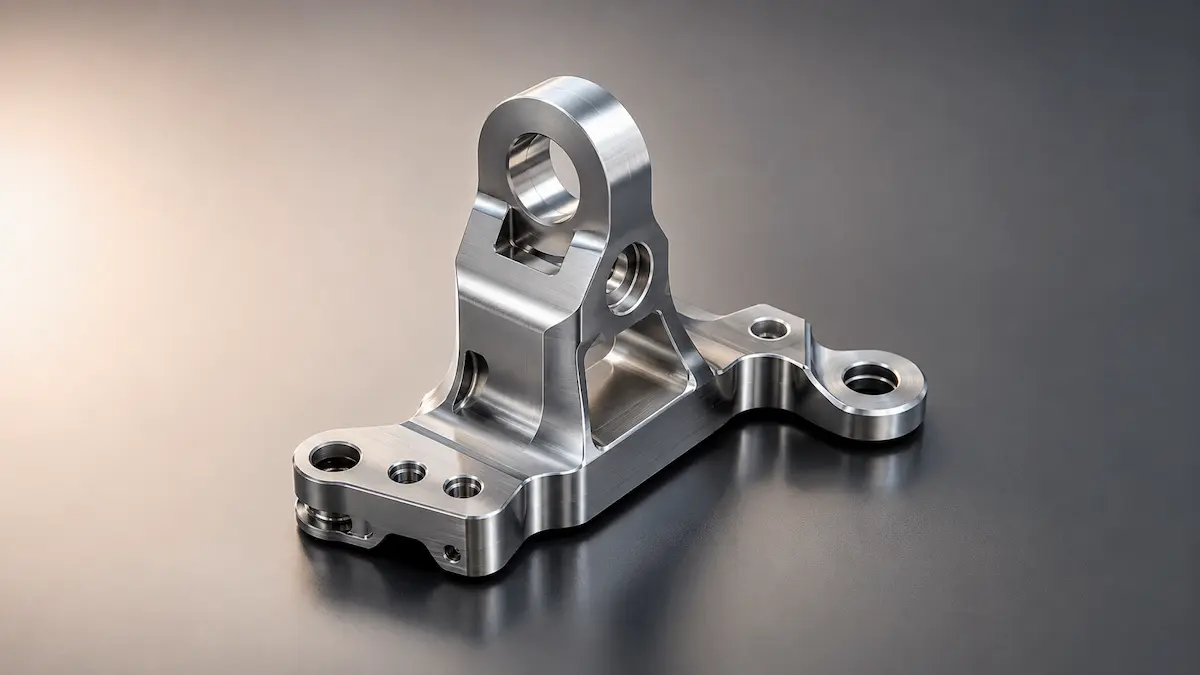
Structure and usage boundaries

For common issues such as threads, snaps, strength, temperature resistance, and weather resistance, identify in advance whether the material needs to be replaced or if another processing method should be used.

Thread Recommendation

Applicable Scope316L Stainless Steel is suitable for tapping and thread processing, but the material has high toughness, so attention must be paid to the tool, cooling, and chip removal during tapping.
Risk pointFor small and deep threads, post-processing methods are recommended to avoid relying directly on metal 3D printing for forming.
Recommended practiceFor frequent disassembly or high-strength connection positions, sufficient wall thickness and threaded mesh length should be ensured, and if necessary, screw sleeves or standard fastener structures should be used.

Buckle recommendation

Applicable Scope316L Stainless Steel is not suitable for designing large deformation elastic buckles like plastic.
Risk pointLow-deformation metal springs, couplers, slots, or screw fixing structures can be designed, but evaluation must be based on plate thickness, elastic deformation amount, fatigue life, and processing method.
Recommended practiceWhen high-elasticity buckles are required, spring steel, stainless steel spring materials, or standard hardware should be considered.

Strength and Environment

Mechanical strength316L Stainless Steel has excellent strength, toughness, and corrosion resistance, making it suitable for long-term use of metal functional and structural components.
Environmental boundaryIts strength is higher than most low-strength grades of plastics and aluminum alloys, but not as strong as some heat-treated steels, 17-4PH stainless steel, or high-strength alloy steels.
Recommended practiceThe load-bearing structure should be designed considering load, wall thickness, processing method, and safety factor.316L Stainless Steel temperature resistance is significantly better than that of plastic and resin materials, making it suitable for use in higher temperature environments. It has good stability in daily engineering environments, but prolonged high temperatures can affect material properties and surface conditions. If high-temperature pressure, thermal cycling, welded structures, or corrosive media are involved, verification should be conducted based on specific temperature, load, and material standards.316L Stainless Steel has good weather resistance and corrosion resistance, suitable for humid, outdoor, salt spray, and some mildly corrosive environments. Compared to 304 stainless steel, 316L generally has advantages in chlorine-consuming, humid, and marine-related environments. However, pitting, crevice corrosion, or surface contamination may still occur in strong acids, strong alkalis, high concentrations of chloride ions, or prolonged harsh environments, requiring a combination of passivation, electrolytic polishing, or regular maintenance.

Alternative material selection and final judgment

When customer demand exceeds 316L Stainless Steel material boundaries, it is necessary to combine strength, temperature resistance, toughness, long-term stability, and mass production goals to promptly recommend alternative materials or processing technologies.

Alternative material suggestions

If lower costs are needed,304 Stainless Steel is an option; If higher strength or better machinability is required,303 Stainless Steel, 17-4PH, or alloy steel can be chosen; If you need a lighter weight, you can choose the 6061 Aluminum Alloy or 7075; If higher corrosion resistance is required, duplex stainless steel, titanium alloy, or Hastelloy alloy can be chosen; If only the appearance is for display, aluminum alloy,304 Stainless Steel, or metal sprayed resin parts can be chosen.

Material selection suggestions

If customers care about corrosion resistance, long-term stability, suitability for medical food environments, and metallic texture,316L Stainless Steel is the right choice. If customers mainly care about cost, 304 stainless steel is usually more economical; If customers care about weight, aluminum alloy is more suitable; If customers care about high strength and hardness, consider 17-4PH, alloy steel, or heat-treated steel.

Already have the blueprints? Directly enter the quotation for custom parts

After uploading 3D/2D drawings and supplementing materials, quantities, tolerances, surface treatments, and delivery requirements, XPartsLab will provide next steps in 3D printing manufacturability, cost, and delivery pathways.