Support Hours: 09:00–18:00 (GMT+8) · Messages and quote requests are accepted 24/7.
Material Database

410 Stainless Steel

It is suitable for manufacturing medium to high-strength structural parts, wear-resistant parts, heat-treatable stainless steel parts, mechanical shaft parts, valve fittings, tool parts, and stainless steel functional parts requiring a certain hardness.

Material description

410 Stainless Steel is a type of martensitic stainless steel material with high strength, good hardness, certain wear resistance, and heat-treated strengthening capabilities. Compared to austenitic stainless steels like 304 and 316, 410 has weaker corrosion resistance but better hardness and strength, and it is magnetic. It is commonly used in valve parts, pump shafts, cutting tools, fasteners, mechanical structural parts, wear-resistant parts, mold accessories, and stainless steel parts requiring a certain hardness.

410 stainless steelSUS410AISI 4101Cr13 stainless steelMartensitic stainless steelHeat-treatable stainless steel13Cr stainless steel410 stainless iron
410 Stainless Steel belongs to martensitic stainless steelIts greatest feature is that it can achieve higher hardness and strength through heat treatmentSuitable for parts that require certain wear resistance and mechanical strengthIt is magneticCorrosion resistance is lower than 304 and 316But it is superior to ordinary carbon steel410 leans more towards stainless steel materials that prioritize strength and hardnessRather than stainless steel materials that prioritize corrosion resistance
410 Stainless Steel
CNC MachiningMetals

Material compatibility assessment

By focusing on application scenarios, boundaries of advantages, and non-recommended scenarios, it helps sales, customer service, and quoting staff quickly determine whether the material meets current part requirements.

Core advantages

It has high strength, good hardness, can be strengthened by heat treatment, has better wear resistance than ordinary austenitic stainless steel, is magnetic, suitable for mechanical structural parts and shaft parts, can be improved by heat treatment after processing, and costs are usually lower than 316L and other highly corrosion-resistant stainless steels.

Suitable for the product

Valve parts, pump shafts, shaft sleeves, screws, fasteners, cutting tools, cutting tools, mechanical structural parts, wear-resistant connectors, mold parts, compressor parts, turbine-related parts, hardware, and high-strength stainless steel parts for low to moderate corrosion environments.

Not suitable for the product

Parts in highly corrosive environments, seawater or high salt spray environments, long-term contact with food, medical implants, parts in strong acid and strong alkali environments, high-end mirror-finish parts, strong welded structural parts, parts requiring high toughness and impact resistance, parts requiring non-magnetic materials, and parts requiring corrosion resistance higher than 304 or 316.

Key parameter references

The following parameters come from product information and material knowledge fields, used for design review, quotation communication, and preliminary judgment before material selection.

Material positioningIt is suitable for manufacturing medium to high-strength structural parts, wear-resistant parts, heat-treatable stainless steel parts, mechanical shaft parts, valve fittings, tool parts, and stainless steel functional parts requiring a certain hardness.
Precision performance410 Stainless Steel is suitable for CNC turning, milling, grinding, drilling, tapping, and finishing after heat treatment. In the annealed state, the processability is good; after heat treatment, hardness increases, making processing more difficult. For shaft parts, hole positions, threads, mating surfaces, and wear-resistant surfaces, it is recommended to reserve machining allowance according to the heat treatment sequence, and perform grinding or finishing if necessary.
Dimensional tolerancesThe conventional dimensional tolerances of CNC machining 410 Stainless Steel can be referenced as ± 0.02mm to ±0.10mm, while ordinary structural parts can be evaluated at ±0.10mm-±0.20mm. If a part requires heat treatment, dimensional changes or deformation may occur after heat treatment. It is recommended to heat treat key dimensions before finishing. This value is a standard reference range and does not guarantee absolute tolerances for all structures.
Minimum Wall ThicknessThe wall thickness of ordinary CNC machined structures is recommended to be no less than 0.8mm-1.0mm. Small non-load-bearing areas can be further optimized according to structure and processing methods, but large-area designs that are too thin are not recommended. Areas requiring heat treatment, tapping, load-bearing, or wear resistance should be appropriately thickened to avoid deformation, cracking, or insufficient strength.
Recommended wall thicknessFor ordinary structural parts, 1.5mm-3.0mm is recommended; for shaft parts, mounting seats, threaded connection points, wear-resistant surfaces, and load-bearing positions, it is recommended to be above 2.0mm; for parts requiring heat treatment, additional allowances should be added to account for deformation risk, and precision machining allowances should be reserved at key dimensional positions.
Minimum apertureCNC machining can achieve smaller hole diameters, but controlling deep small holes and hole position accuracy after heat treatment is more challenging. For general designs, the recommended aperture is no less than 1.0mm. For precision holes, threaded holes, positioning holes, and fitting holes, it is recommended to reserve machining allowance; if necessary, heat treatment should be followed before drilling, reaming, boring, or grinding.
Assembly clearanceFor precision metal assembly, one side can be reserved at 0.02mm-0.10mm according to fitting requirements; for ordinary plug-in and assembly, it is recommended to reserve 0.10mm-0.30mm per side. If parts require heat treatment, sandblasting, passivation, anti-rust, or coating treatment, assembly allowance should be increased in conjunction with heat treatment deformation and surface treatment thickness.
Detailed performance410 Stainless Steel suitable for machining holes, grooves, steps, chamfers, threads, shaft shoulders, positioning surfaces, and wear-resistant structural details. Under CNC machining, detail performance is good, and after heat treatment, key surface quality can be improved through grinding. For fine text, logos, and markings, it is recommended to achieve laser marking, engraving, or etching to avoid designing overly fine and difficult-to-machine mechanical textures under high hardness.
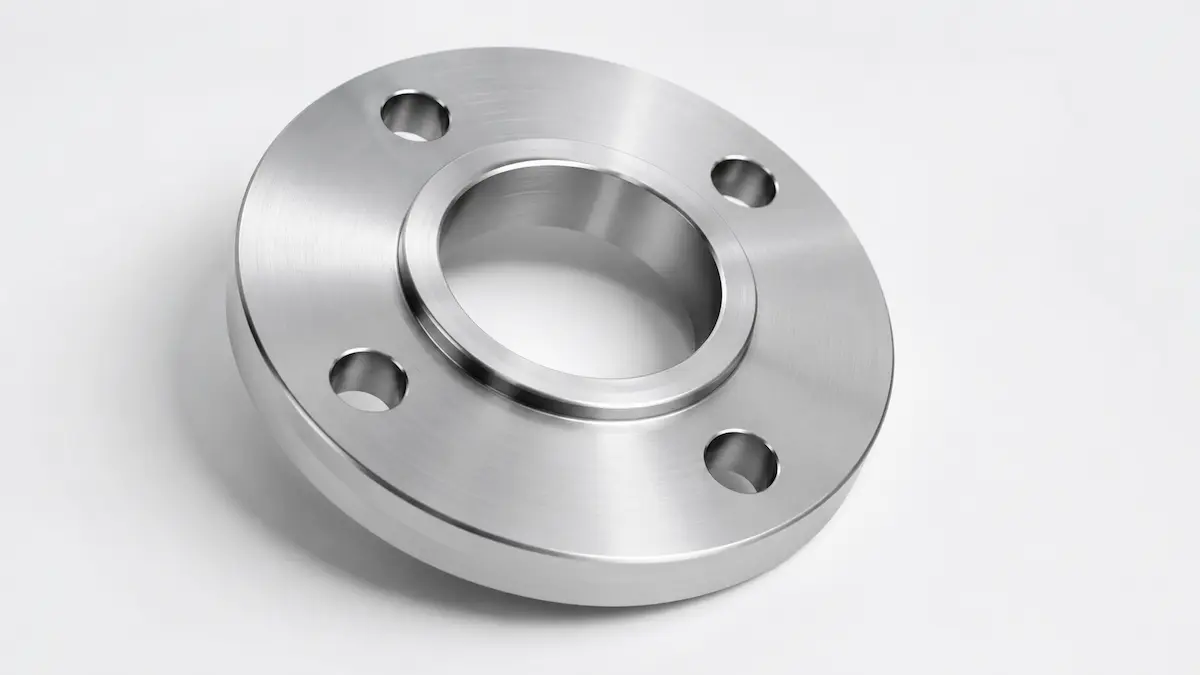
Surface effect410 Stainless Steel raw processed surface usually has a silver-gray metallic texture, which can be achieved by polishing to achieve a brighter surface, brushing for linear metal textures, and sandblasting for a matte industrial appearance. Since its corrosion resistance is inferior to 304 and 316, if the exterior parts are exposed for long-term use, it is recommended to combine passivation, rust prevention, spraying, or other surface protection treatments.

Typical application scenarios

Based on material characteristics and suitable product ranges, customer needs are broken down into easier application directions to determine.

Product validation

Valve parts, pump shafts, shaft sleeves, screws, fasteners, cutting tools, cutting tools, mechanical structural parts, wear-resistant connectors, mold parts, compressor parts, turbine-related parts, hardware, and high-strength stainless steel parts for low to moderate corrosion environments.

Reasons for material selection

It is suitable for manufacturing medium to high-strength structural parts, wear-resistant parts, heat-treatable stainless steel parts, mechanical shaft parts, valve fittings, tool parts, and stainless steel functional parts requiring a certain hardness.

Material characteristics

410 Stainless Steel is a martensitic stainless steel, and its main feature is that it can achieve higher hardness and strength through heat treatment, making it suitable for parts requiring certain wear resistance and mechanical strength. It is magnetic, corrosion resistant to 304 and 316 grades, but better than ordinary carbon steel. 410 leans more toward stainless steel materials that prioritize "strength and hardness," rather than stainless steel that prioritizes "corrosion resistance."

Design and risk review

Based on wall thickness, hole position, assembly clearance, dimensional tolerances, and material usage risks, determine in advance whether the part structure is suitable for 410 Stainless Steel.

Design considerations

  • When designing 410 Stainless Steel parts
  • Structure and machining allowances should be arranged according to whether heat treatment is needed
  • Load-bearing positions should include fillets and transition structures
  • Avoid stress concentration at sharp corners
  • Thin-walled components
  • For long shaft parts and large planar parts, attention should be paid to heat treatment deformation
  • If the part is in a humid or corrosive environment
  • Surface passivation should be considered
Precision performance410 Stainless Steel is suitable for CNC turning, milling, grinding, drilling, tapping, and finishing after heat treatment. In the annealed state, the processability is good; after heat treatment, hardness increases, making processing more difficult. For shaft parts, hole positions, threads, mating surfaces, and wear-resistant surfaces, it is recommended to reserve machining allowance according to the heat treatment sequence, and perform grinding or finishing if necessary.
Dimensional tolerancesThe conventional dimensional tolerances of CNC machining 410 Stainless Steel can be referenced as ± 0.02mm to ±0.10mm, while ordinary structural parts can be evaluated at ±0.10mm-±0.20mm. If a part requires heat treatment, dimensional changes or deformation may occur after heat treatment. It is recommended to heat treat key dimensions before finishing. This value is a standard reference range and does not guarantee absolute tolerances for all structures.
Quality riskThe main risk of 410 Stainless Steel is that customers may easily use it as highly corrosion-resistant stainless steel. Although 410 is stainless steel, its corrosion resistance is significantly weaker than 304 and 316, and rust spots or corrosion may appear in humid conditions, salt spray, acids and alkalis, or long-term outdoor environments. In terms of processing, attention should be paid to heat treatment deformation, increased difficulty after hardening, cracking sharp corners, surface scratches, burrs, and thread engagement.
Surface effect410 Stainless Steel raw processed surface usually has a silver-gray metallic texture, which can be achieved by polishing to achieve a brighter surface, brushing for linear metal textures, and sandblasting for a matte industrial appearance. Since its corrosion resistance is inferior to 304 and 316, if the exterior parts are exposed for long-term use, it is recommended to combine passivation, rust prevention, spraying, or other surface protection treatments.

Post-processing and assembly precautions

Post-processing of 410 Stainless Steel affects appearance, dimensions, hole position, assembly clearance, and usage validation results, and should be explained in advance during quotation, DFM review, and sample confirmation stages.

Post-processing options

Post-processing should focus on appearance display, dimensional fitting, connection assembly, and testing verification. Parts involving assembly positions need to be reserved in advance for machining, coating, and trial assembly allowances.

Remove burrsDeburring is used to improve the appearance of parts, assembly, or functional verification effects, and it is necessary to confirm the impact on dimensions, strength, and delivery in combination with material characteristics.
PolishingImproves support marks, layer lines, and edge feel, but will slightly alter local dimensions and the shape of sharp edges.
PolishingUsed to improve transparency or surface smoothness, may change edge details and local dimensions.
SandblastingAchieve a more uniform matte surface, suitable for engineering prototype display and slight surface mark reduction.
BrushedBrushing is used to improve the appearance, assembly, or validation of parts, and must be combined with material properties to confirm dimensions, strength, and delivery impact.
Heat treatmentUsed to adjust metal hardness, strength, or internal stress, it is necessary to confirm deformation risk and subsequent processing allowance in advance.
QuenchingQuenching is used to improve the appearance, assembly, or validation of parts, and must be combined with material properties to confirm dimensions, strength, and delivery impact.
TemperingTempering is used to improve the appearance, assembly, or validation of parts, and must be combined with material properties to confirm dimensions, strength, and delivery impact.

Key control point

Size impact410 stainless steel can be improved in hardness and strength through heat treatment; However, heat treatment may cause dimensional changes; Deformation or surface oxidation; After quenching and tempering, further processing becomes more difficult; Precision dimensions usually require grinding or finishing after heat treatment; Passivation and rust prevention treatments can enhance corrosion resistance to a certain extent; However, it cannot reach the corrosion resistance level of 316L in highly corrosive environments
Assembly clearanceFor positions involving snapping, plugging, sliding, or enclosure closure, the clearance needs to be adjusted according to post-processing thickness, material shrinkage, and trial assembly results.
Hole Position StrengthThreading, inserting nuts, locking screws, and the areas around positioning holes need to ensure wall thickness to avoid cracks, stripped threads, or chipped edges during post-processing or assembly.
Environmental matchingWhen used in high-temperature, outdoor, humid, friction, or load-bearing scenarios, post-processing materials, adhesives, coatings, and fasteners must also meet the corresponding usage environment.

Structure and usage boundaries

For common issues such as threads, snaps, strength, temperature resistance, and weather resistance, identify in advance whether the material needs to be replaced or if another processing method should be used.

Thread Recommendation

Applicable Scope410 Stainless Steel can tap and process threads; machining before heat treatment is easier, but thread processing after heat treatment is more difficult.
Risk pointHigh-strength connection positions should ensure sufficient thread meshing length and hole edge wall thickness.
Recommended practiceFor frequent disassembly or high locking force positions, it is recommended to use anti-seizure lubrication, sleeves, or standard fastener structures to prevent stainless steel threads from sticking or wearing.

Buckle recommendation

Applicable Scope410 Stainless Steel is not suitable for designing large deformation elastic buckles like plastic.
Risk pointMetal slots, pressure plates, pin connections, screw fixation, or low-deformation snapping structures can be designed, but long-term repeated elastic deformation is not recommended.
Recommended practiceIf spring clips, spring plates, or highly elastic clips are needed, 301 stainless steel, spring steel, or specialized elastic alloy materials should be prioritized.

Strength and Environment

Mechanical strength410 Stainless Steel strength and hardness are usually higher than austenitic stainless steels such as 304 and 316, and after heat treatment, hardness and wear resistance can be further improved.
Environmental boundaryIt is suitable for medium to high-strength mechanical parts, shaft parts, and wear-resistant parts, but toughness and corrosion resistance require evaluation in combination with heat treatment conditions and usage environment.
Recommended practiceHigh-load structures should be validated based on material condition, heat treatment process, and safety factors.410 Stainless Steel heat resistance is superior to plastics, aluminum alloys, and ordinary low-strength materials, making it suitable for general metal engineering environments. In high-temperature environments, material strength, hardness, and surface condition may change, and the heat treatment state can affect temperature resistance. When involving continuous high temperatures, thermal cycling, frictional heating, or corrosive media environments, verification should be conducted considering specific temperatures, loads, and surface treatments.410 Stainless Steel has certain corrosion and weather resistance but is significantly weaker than 304, 316, and 316L. It can be used indoors and in mildly humid environments, but long-term outdoor conditions, salt spray, seaside, acidic, alkaline, or humid environments may cause rust spots, pitting, or surface discoloration. If weather resistance and corrosion resistance are core requirements, it is recommended to switch to 304 or 316L or apply passivation, rust prevention, coating protection, and other protective treatments.

Alternative material selection and final judgment

When customer demand exceeds 410 Stainless Steel material boundaries, it is necessary to combine strength, temperature resistance, toughness, long-term stability, and mass production goals to promptly recommend alternative materials or processing technologies.

Alternative material suggestions

If better corrosion resistance is required, 304 stainless steel or 316L stainless steel can be chosen; If better machinability is required, 303 stainless steel can be chosen; If spring clips and elastic structures are needed, 301 stainless steel can be chosen; If higher strength and hardness are required, 420 stainless steel, 440C stainless steel, 17-4PH stainless steel, or alloy steel can be chosen; If lightweight design is needed, 6061 aluminum alloy, 7075 aluminum alloy, or TC4 Titanium Alloy (Ti-6Al-4V) can be chosen.

Material selection suggestions

If customers need stainless steel materials and also care about hardness, strength, wear resistance, and heat treatment properties,410 Stainless Steel is the right choice. If customers are more concerned about corrosion resistance, food equipment, moisture salt spray, or long-term outdoor stability, it is recommended to prioritize 304, 316, or 316L. If customers require high-hardness tools or high-wear-resistant shaft parts, further evaluation of 420, 440C, or heat-treated alloy steel can be considered.

Already have the blueprints? Directly enter the quotation for custom parts

After uploading 3D/2D drawings and supplementing materials, quantities, tolerances, surface treatments, and delivery requirements, XPartsLab will provide next steps in 3D printing manufacturability, cost, and delivery pathways.