Material Database

Tool Steel 1.2709

Suitable for high-strength mold inserts, conformal cooling molds, precision tooling, fixtures and fixtures, small batches of high-strength metal functional parts, and engineering mold steel materials for complex metal mold structures.

Material description

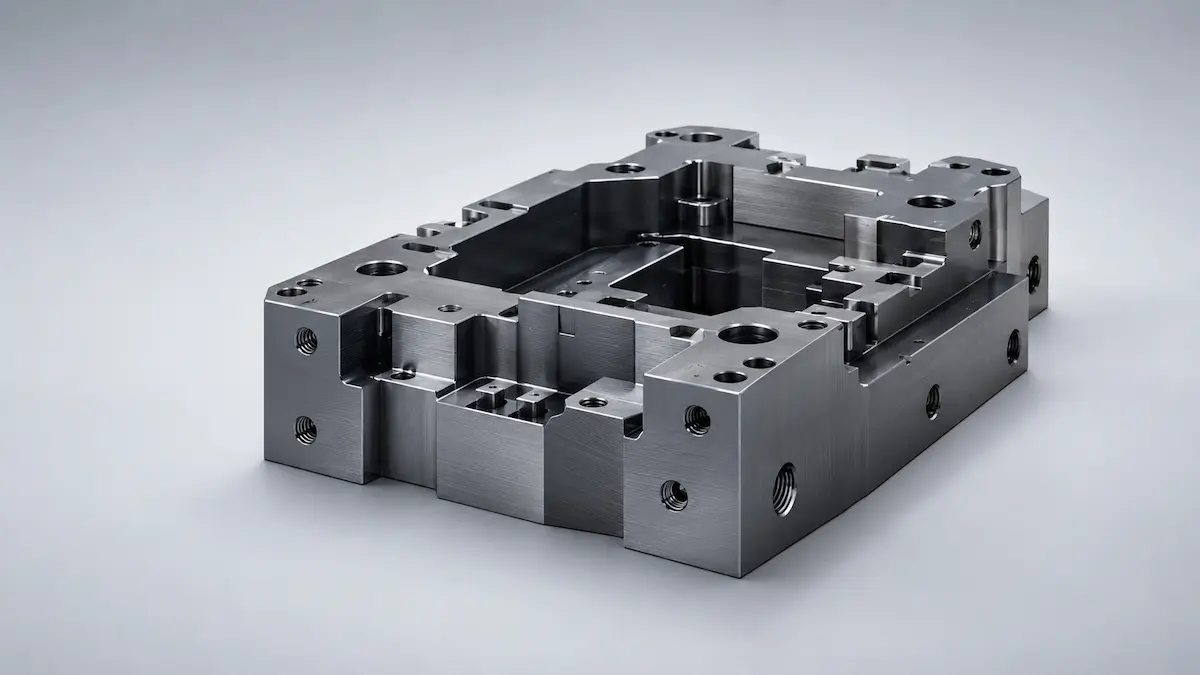
Tool Steel 1.2709 is a high-strength martensitic aging steel, commonly used in metal 3D printing, precision molds, injection mold inserts, conformal water channel molds, die-casting mold samples, and high-strength tooling fixtures. It features high strength, good toughness, high hardness after heat treatment, good dimensional stability, and good polishability, making it especially suitable for mold-type parts that require high strength, high precision, and complex cooling structures.

1. 2709 mold steel18Ni300Martensitic aging steelMaraging Steel3D printing mold steelSLM mold steelHigh-strength mold steelAge-hardened mold steel
Tool Steel 1.2709 is characterized by high strengthCan be heat-treated for strengtheningSuitable for high-load structures and mold applicationsIf metal 3D printing is used,It can realize conformal cooling channels that are difficult to machine with traditional CNCComplex inner cavity and integrated mold structureIf CNC machining is used,It is suitable for high-precision mold parts and high-strength mechanical structural componentsThis material has obvious advantages in strength and hardnessBut processing costs
Tool Steel 1.2709
3D PrintingMetals

Material compatibility assessment

By focusing on application scenarios, boundaries of advantages, and non-recommended scenarios, it helps sales, customer service, and quoting staff quickly determine whether the material meets current part requirements.

Core advantages

High strength, high hardness after heat treatment, good dimensional stability, suitable for complex metal 3D printing structures, can fabricate conformal cooling channels, suitable for mold inserts, can be post-processed, can be polished, and is suitable for high-strength engineering verification and mold applications.

Suitable for the product

Injection mold inserts, conformal water channel molds, mold cores, mold cavities, die-casting mold samples, stamping tooling samples, fixtures and jigs, high-strength mounting bases, high-strength structural parts, metal functional prototypes, complex cooling structural parts, and small-batch high-strength metal parts.

Not suitable for the product

Low-cost ordinary metal parts, ultra-lightweight parts, highly corrosion-resistant parts, long-term outdoor exposed parts, food direct contact parts, medical implant parts, high thermal conductivity requirements, strong acid and alkali corrosion resistance parts, ordinary appearance parts that do not require high strength, large-size low-budget structural parts.

Key parameter references

The following parameters come from product information and material knowledge fields, used for design review, quotation communication, and preliminary judgment before material selection.

Material positioningSuitable for high-strength mold inserts, conformal cooling molds, precision tooling, fixtures and fixtures, small batches of high-strength metal functional parts, and engineering mold steel materials for complex metal mold structures.
Precision performanceTool Steel 1.2709 achieve high dimensional accuracy through CNC machining; Metal 3D printing enables the realization of complex cavities and conformal cooling structures, but the original printing accuracy and surface quality are usually lower than those of CNC machining. Key dimensions, cavity surfaces, assembly surfaces, positioning holes, threads, and water interface are recommended for CNC post-processing, wire cutting, or EDM machining.
Dimensional tolerancesConventional dimensional tolerances Tool Steel 1.2709 metal 3D printing can refer to ± 0.10mm to ±0.30mm. Complex structures, large parts, thin-walled parts, and heat-treated parts may have even greater deviations. CNC post-machining can achieve higher precision according to structure and requirements; conventionally, refer to ±0.02mm to ±0.10mm. These values are standard reference ranges and do not guarantee absolute tolerances for all structures; actual results must be confirmed by considering process, dimensions, heat treatment, and post-processing.
Minimum Wall ThicknessFor metal 3D printing, it is recommended that the minimum wall thickness be no less than 0.8mm-1.0mm. For small, non-load-bearing local structures, thinner structures can be tried according to equipment capacity, but large-area use is not recommended. For mold inserts, load-bearing structures, heat-treated parts, and locations requiring post-processing, the recommended wall thickness should not be less than 1.5mm-2.0mm.
Recommended wall thicknessFor ordinary high-strength structural parts, 2.0mm-4.0mm is recommended; for mold inserts, mounting seats, screw connection positions, and pressure areas, it is recommended to be at least 3.0mm; mold structures with conformal water channels should be comprehensively designed based on channel diameter, cavity distance, pressure requirements, and post-processing allowance.
Minimum apertureThe recommended aperture for metal 3D printing is no less than 1.5mm-2.0mm. Small holes, deep holes, and curved water channels are prone to powder residue, insufficient roundness, or difficult cleaning. It is recommended to print the cooling water channels, threaded holes, positioning holes, and sealing holes for drilling, reaming, tapping, or finishing.
Assembly clearanceFor ordinary metal assembly, it is recommended to reserve 0.10mm-0.30mm on one side; for unprocessed metal printed surfaces, it is recommended to reserve 0.30mm-0.60mm. It is not recommended to use the original printed surface directly on the mold mating surface, positioning pin holes, slider mating surface, and sealing surface; post-processing should ensure dimensions and surface quality.
Detailed performanceTool Steel 1.2709 can achieve complex curved surfaces, internal waterways, hollowed structures, text markings, and high-strength structural details. Metal 3D printing details are affected by powder particle size, laser melting pool, supports, and surface roughness. For fine text and textures, it is recommended to be no less than 0.5mm-0.8mm. High-precision cavity textures, mirror surfaces, and precise markings are recommended for post-processing, etching, laser marking, or EDM.
Surface effectThe surface of raw metal 3D printing usually has a gray or dark gray metallic texture, with a distinct powder print texture and high roughness. After sandblasting, a uniform matte metal surface can be obtained; After CNC finishing, grinding, and polishing, better mold surface quality can be obtained. When used in mold cavities, further polishing, EDM, or surface treatment is usually required to meet the appearance requirements of the molded parts.

Typical application scenarios

Based on material characteristics and suitable product ranges, customer needs are broken down into easier application directions to determine.

Product validation

Injection mold inserts, conformal water channel molds, mold cores, mold cavities, die-casting mold samples, stamping tooling samples, fixtures and jigs, high-strength mounting bases, high-strength structural parts, metal functional prototypes, complex cooling structural parts, and small-batch high-strength metal parts.

Reasons for material selection

Suitable for high-strength mold inserts, conformal cooling molds, precision tooling, fixtures and fixtures, small batches of high-strength metal functional parts, and engineering mold steel materials for complex metal mold structures.

Material characteristics

Tool Steel 1.2709 features high strength, heat-treatable strengthening, and suitability for high-load structures and mold applications. If metal 3D printing is used, it is possible to achieve conformal cooling channels, complex internal cavities, and integrated mold structures that are difficult to machine with traditional CNC; If CNC machining is used, it is suitable for high-precision mold parts and high-strength mechanical structural components. This material has obvious advantages in strength and hardness, but its processing costs, post-treatment requirements, and anti-rust maintenance requirements are higher than those of ordinary aluminum alloys and some stainless steel materials.

Design and risk review

Based on wall thickness, hole position, assembly clearance, dimensional tolerances, and material usage risks, determine in advance whether the part structure is suitable for Tool Steel 1.2709.

Design considerations

  • When designing Tool Steel 1.2709 parts
  • High intensity should be prioritized
  • Advantages of heat treatment strengthening and complex metal 3D printing structures
  • Powder removal should be considered in the conformal cooling water circuit
  • Traffic
  • The walls are thick
  • Pressure and joint processing
  • Load-bearing positions should include fillets and transition structures
Precision performanceTool Steel 1.2709 achieve high dimensional accuracy through CNC machining; Metal 3D printing enables the realization of complex cavities and conformal cooling structures, but the original printing accuracy and surface quality are usually lower than those of CNC machining. Key dimensions, cavity surfaces, assembly surfaces, positioning holes, threads, and water interface are recommended for CNC post-processing, wire cutting, or EDM machining.
Dimensional tolerancesConventional dimensional tolerances Tool Steel 1.2709 metal 3D printing can refer to ± 0.10mm to ±0.30mm. Complex structures, large parts, thin-walled parts, and heat-treated parts may have even greater deviations. CNC post-machining can achieve higher precision according to structure and requirements; conventionally, refer to ±0.02mm to ±0.10mm. These values are standard reference ranges and do not guarantee absolute tolerances for all structures; actual results must be confirmed by considering process, dimensions, heat treatment, and post-processing.
Quality riskThe main risks Tool Steel 1.2709 include metal 3D printing stress, warpage deformation, support removal marks, internal porosity, difficulty in powder removal, heat treatment deformation, insufficient post-processing allowance, and surface polishing difficulties. It is suitable for high-strength and mold applications, but it does not mean it can be printed directly as the final high-precision mold. Key cavity surfaces, parting surfaces, hole positions, threads, water interfaces, and assembly surfaces usually require post-processing to ensure accuracy.
Surface effectThe surface of raw metal 3D printing usually has a gray or dark gray metallic texture, with a distinct powder print texture and high roughness. After sandblasting, a uniform matte metal surface can be obtained; After CNC finishing, grinding, and polishing, better mold surface quality can be obtained. When used in mold cavities, further polishing, EDM, or surface treatment is usually required to meet the appearance requirements of the molded parts.

Post-processing and assembly precautions

Post-processing of Tool Steel 1.2709 affects appearance, dimensions, hole position, assembly clearance, and usage validation results, and should be explained in advance during quotation, DFM review, and sample confirmation stages.

Post-processing options

Post-processing should focus on appearance display, dimensional fitting, connection assembly, and testing verification. Parts involving assembly positions need to be reserved in advance for machining, coating, and trial assembly allowances.

To support itRemove the printed support structure, focus on controlling the support contact points, and avoid cracking at edges caused by hard prying.
SandblastingAchieve a more uniform matte surface, suitable for engineering prototype display and slight surface mark reduction.
PolishingImproves support marks, layer lines, and edge feel, but will slightly alter local dimensions and the shape of sharp edges.
PolishingUsed to improve transparency or surface smoothness, may change edge details and local dimensions.
CNC finishingCNC finishing is used to improve part appearance, assembly, or usage validation, requiring confirmation of dimensions, strength, and delivery impact based on material properties.
DrillingDrilling is used to improve the appearance, assembly, or validation of parts, and must be combined with material properties to confirm dimensions, strength, and delivery impact.
attacked YaSuitable for low-strength thread verification; the hole edge must ensure wall thickness; frequent disassembly or high-torque locking is not recommended.
Reaming holesReaming is used to improve the appearance, assembly, or validation of parts, and must be determined by combining material properties to confirm dimensions, strength, and delivery impact.

Key control point

Size impactTool Steel 1.2709 often require heat treatment or age hardening to achieve higher strength and hardness; Heat treatment affects dimensional stability and final performance; Metal 3D printed parts usually need to be supported; stress relief; Sandblasting and CNC finishing of key surfaces; Polishing; Polishing and EDM machining affect local dimensions and surface conditions; Mold cavity
Assembly clearanceFor positions involving snapping, plugging, sliding, or enclosure closure, the clearance needs to be adjusted according to post-processing thickness, material shrinkage, and trial assembly results.
Hole Position StrengthThreading, inserting nuts, locking screws, and the areas around positioning holes need to ensure wall thickness to avoid cracks, stripped threads, or chipped edges during post-processing or assembly.
Environmental matchingWhen used in high-temperature, outdoor, humid, friction, or load-bearing scenarios, post-processing materials, adhesives, coatings, and fasteners must also meet the corresponding usage environment.

Structure and usage boundaries

For common issues such as threads, snaps, strength, temperature resistance, and weather resistance, identify in advance whether the material needs to be replaced or if another processing method should be used.

Thread Recommendation

Applicable ScopeIt is not recommended to rely directly on metal 3D printing to form small-sized precision threads.
Risk pointFor threaded holes, it is recommended to print the base hole first, then process it through drilling, tapping, or milling threads.
Recommended practiceHigh-strength connections, frequent disassembly and assembly, and mold assembly positions should ensure sufficient wall thickness, thread meshing length, and machinability after heat treatment. If necessary, screw sleeves or standard inserts should be used.

Buckle recommendation

Applicable ScopeTool Steel 1.2709 is not suitable for designing large deformation elastic buckles like plastic.
Risk pointMetal slots, pressure plates, sliders, positioning pins, screw fixation, or low-deformation elastic structures can be designed, but evaluation must be based on material hardness, fatigue life, heat treatment condition, and force direction.
Recommended practiceWhen high-elasticity buckles are needed, spring steel, stainless steel springs, or standard hardware solutions should be considered.

Strength and Environment

Mechanical strengthTool Steel 1.2709 has very high strength and good toughness, and after aging hardening, it can achieve higher hardness and the load-bearing capacity required for mold applications.
Environmental boundaryIt is suitable for high-strength structural parts, mold inserts, and tooling fixtures, but its performance is affected by printing parameters, heat treatment status, porosity, post-processing, and surface defects.
Recommended practiceHigh-load mold applications should undergo material testing, heat treatment verification, and mold trial confirmation. Tool Steel 1.2709 temperature resistance is significantly superior to plastic, resin, and aluminum alloy materials, making it suitable for molds, fixtures, and medium- to high-temperature engineering environments. It can be used in thermal cycling scenarios such as injection molds, but prolonged high temperatures can affect hardness, strength, and dimensional stability. When involving die casting, high-temperature molds, or continuous high-temperature load-bearing processes, verification should be conducted based on actual temperature, load, heat treatment state, and mold service life requirements. Tool Steel 1.2709 is not highly corrosion-resistant stainless steel; long-term exposure to humidity, salt spray, or corrosive environments may cause rust or oxidation. Indoor mold and tooling environments can typically protect surfaces through rust-preventive oils, blackening, plating, passivation, or regular maintenance. If customers need long-term outdoor or corrosion-resistant applications, priority should be given to 316L Stainless Steel, 17-4PH, or other corrosion-resistant materials.

Alternative material selection and final judgment

When customer demand exceeds Tool Steel 1.2709 material boundaries, it is necessary to combine strength, temperature resistance, toughness, long-term stability, and mass production goals to promptly recommend alternative materials or processing technologies.

Alternative material suggestions

If higher corrosion resistance is required,316L Stainless Steel or 17-4PH stainless steel can be chosen; If higher thermal conductivity and lightweight design are required, Aluminum Alloy (AlSi10Mg) or CNC aluminum alloys can be chosen; If higher wear resistance and traditional mold performance are required, mold steels such as H13, P20, and S136 can be chosen; If only appearance or structural verification is needed, ordinary carbon steel, stainless steel, aluminum alloy, or high-strength resin materials can be chosen.

Material selection suggestions

If customers require high-strength mold inserts, conformal cooling structures, high hardness after heat treatment, and complex metal structures, Tool Steel 1.2709 is the right choice. If customers mainly focus on low cost, lightweight or fast ordinary metal prototyping, aluminum alloys, stainless steel, or ordinary steel are usually more economical. If customers require long-term rust prevention, corrosion resistance, or food and medical environments, they should prioritize stainless steel or other corrosion-resistant materials.

Already have the blueprints? Directly enter the quotation for custom parts

After uploading 3D/2D drawings and supplementing materials, quantities, tolerances, surface treatments, and delivery requirements, XPartsLab will provide next steps in 3D printing manufacturability, cost, and delivery pathways.