Support Hours: 09:00–18:00 (GMT+8) · Messages and quote requests are accepted 24/7.
Material Database

718 Mold Steel

Pre-hardened mold steel materials suitable for injection molds, plastic mold cavities, cores, mold bases, sliders, inserts, and medium to large mold structural parts.

Material description

718 Mold Steel is a commonly used pre-hardened plastic mold steel, typically used for injection molds, mold cavities, mold cores, mold bases, sliders, inserts, and medium to large plastic mold parts. It has good machinability, polishing performance, dimensional stability, and overall strength, making it suitable for manufacturing plastic molds that require certain requirements for surface quality, dimensional stability, and mold lifespan. Mold steel 718 is usually supplied in a pre-hardened state, which reduces the risk of deformation during subsequent heat treatment.

718 mold steel718H mold steelPre-hardened mold steelPlastic mold steel 7181. 2738 mold steelPre-hardened plastic mold steelInjection mold steel
718 Mold Steel belongs to pre-hardened plastic mold steelUsually, they already have a certain hardness at the factoryCan be directly CNC machinedEDM processingPolishing and assemblyReduces the risk of deformation caused by subsequent quenchingIt has better overall performance than ordinary P20 mold steelSuitable for medium and large molds and plastic product molds with certain surface quality requirementsBut 718 is not a highly corrosion-resistant mold steelNor is it a high-mirror steel specialized
718 Mold Steel
CNC MachiningMetals

Material compatibility assessment

By focusing on application scenarios, boundaries of advantages, and non-recommended scenarios, it helps sales, customer service, and quoting staff quickly determine whether the material meets current part requirements.

Core advantages

Stable pre-hardening state, good overall strength, good machinability, polishing performance, and dimensional stability, suitable for medium to large plastic molds, reducing the risk of heat treatment deformation, and suitable for making cavities and cores.

Suitable for the product

Injection mold cavities, plastic mold cores, mold inserts, sliders, inclined heads, mold bases, templates, medium and large plastic molds, automotive interior molds, home appliance shell molds, electronic product shell molds, daily necessities plastic molds, and low to medium batch injection molds.

Not suitable for the product

High corrosion resistance molds, high mirror transparent molds, high-temperature die casting molds, high-strength stamping molds, strong acid and strong alkali environment parts, long-term outdoor exposed parts, food direct contact parts, medical implant parts, high wear resistance cold work molds, high red hardness hot work molds.

Key parameter references

The following parameters come from product information and material knowledge fields, used for design review, quotation communication, and preliminary judgment before material selection.

Material positioningPre-hardened mold steel materials suitable for injection molds, plastic mold cavities, cores, mold bases, sliders, inserts, and medium to large mold structural parts.
Precision performance718 Mold Steel is suitable for CNC precision machining, EDM, wire cutting, and grinding processes, achieving good cavity dimensional accuracy, hole position accuracy, and mating surface quality. Actual accuracy is affected by mold size, deep cavity structure, clamping method, cutting tool, machining path, EDM process, polishing amount, and mold trial and modification. High-precision mating surfaces, parting surfaces, slider mating surfaces, and insert positions should have separate tolerances.
Dimensional tolerancesThe general dimensional tolerances of CNC machining 718 Mold Steel can be referenced as ± 0.02mm to ±0.10mm, while ordinary mold structural parts can be evaluated at ±0.05mm to ±0.20mm. Cavity, core, parting surface, insert position, slider mating position, and positioning hole can be further controlled according to mold requirements. This value is a conventional reference range and does not guarantee absolute tolerances for all structures. Actual values should be confirmed based on mold dimensions, processing methods, and polishing and mold repair requirements.
Minimum Wall Thickness718 Mold Steel when used as mold material, it is not recommended to design steel positions that are too thin. The recommended steel position for ordinary molds is no less than 1.0mm-1.5mm. The position near the cavity, inserts, sliders, and cooling water channels should be appropriately increased according to mold strength and machinability. Too thin steel positions are prone to deformation, cracking, or burn under machining, polishing, mold trials, or injection molding pressures.
Recommended wall thicknessIt is recommended to retain sufficient steel thickness for ordinary mold cavities and core structures. For important pressure areas, screw connection points, insert fixing positions, and around cooling water channels, it is recommended to be at least 2.0mm to 5.0mm. Specifically, this should be determined based on mold size, injection pressure, product structure, and processing method. Medium and large molds should prioritize rigidity, heat dissipation, and assembly stability.
Minimum apertureCNC drilling can achieve smaller hole diameters, but machining deep holes, water passage holes, and angled holes is more challenging. Standard hole diameters are recommended not less than 1.0mm; cooling water channels, ejector pin holes, screw holes, and positioning holes should be designed according to tool length, chip removal, machining accessibility, and mold strength. It is recommended to reserve machining space for deep holes and long waterways and avoid getting too close to the cavity surface.
Assembly clearance718 Mold Steel for mold assembly, standard positioning and assembly clearance can be precisely controlled to 0.01mm-0.05mm on one side; sliders, beveled ejectors, inserts, and movable structures should have reasonable clearance reserved according to movement mode, thermal expansion, lubrication, and wear. Ordinary non-precision structures can be evaluated as 0.05mm-0.20mm per side. The specific gap should be determined based on the mold structure and processing standards.
Detailed performance718 Mold Steel suitable for machining cavity details, steps, holes, grooves, chamfers, fillets, textures, parting surfaces, and insert fit structures. CNC machining and EDM can achieve more complex cavity details, while polishing and texturing enhance product surface effects. Overly fine sharp corners, deep narrow grooves, and thin steel positions increase machining difficulty and mold risk; it is recommended to optimize by rounding corners, insert splitting, or EDM machining.
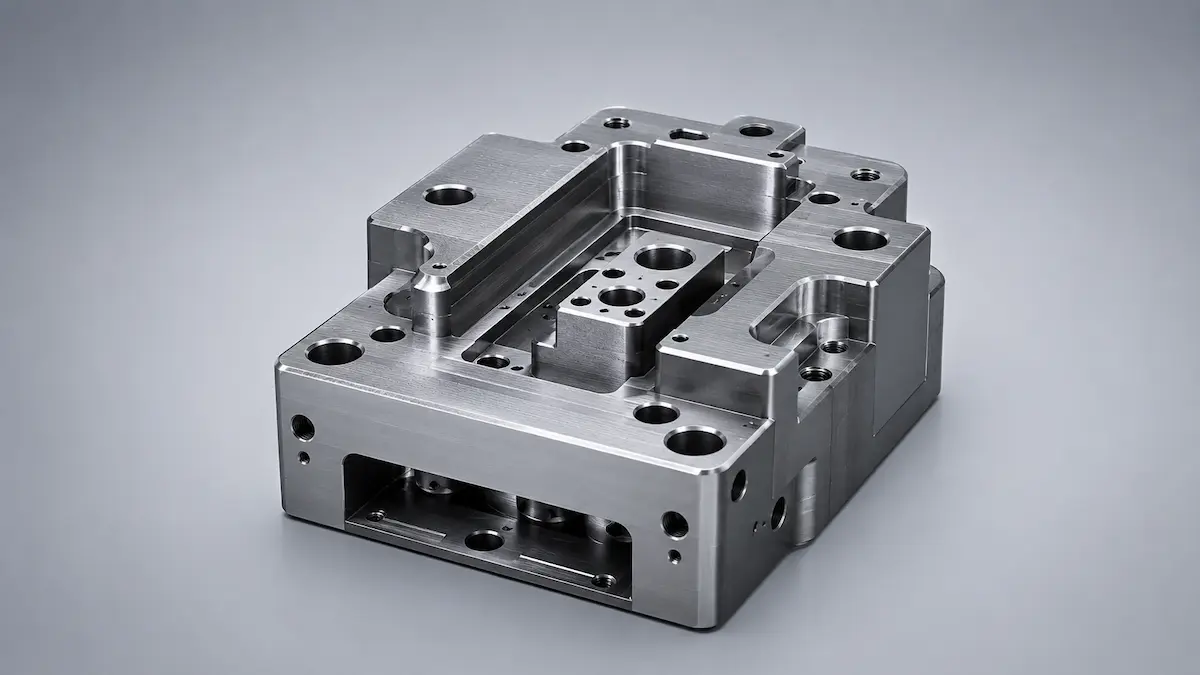
Surface effect718 Mold Steel after CNC machining, it has a silver-gray metallic surface, with visible knife lines or machining patterns. After grinding and polishing, a good mold cavity surface can be obtained, suitable for molding ordinary plastic parts. EDM can produce a uniform spark texture surface, and texture processing can achieve leather, matte, and fine texture effects. If high mirror transparency is required, 718 may not be as stable as mirror-finish mold steels like S136 or NAK80.

Typical application scenarios

Based on material characteristics and suitable product ranges, customer needs are broken down into easier application directions to determine.

Product validation

Injection mold cavities, plastic mold cores, mold inserts, sliders, inclined heads, mold bases, templates, medium and large plastic molds, automotive interior molds, home appliance shell molds, electronic product shell molds, daily necessities plastic molds, and low to medium batch injection molds.

Reasons for material selection

Pre-hardened mold steel materials suitable for injection molds, plastic mold cavities, cores, mold bases, sliders, inserts, and medium to large mold structural parts.

Material characteristics

718 Mold Steel is a pre-hardened material-plastic mold steel, which usually already has a certain hardness upon delivery, allowing direct CNC machining, EDM processing, polishing, and assembly, reducing the risk of deformation caused by subsequent refueling. It has better overall performance than ordinary P20 mold steel, making it suitable for medium to large molds and plastic product molds with certain surface quality requirements. However, 718 is neither a highly corrosion-resistant mold steel nor a high-mirror special steel. When dealing with corrosive plastics or transparent high-gloss products, careful material selection is necessary.

Design and risk review

Based on wall thickness, hole position, assembly clearance, dimensional tolerances, and material usage risks, determine in advance whether the part structure is suitable for 718 Mold Steel.

Design considerations

  • When designing 718 Mold Steel parts
  • The cavity strength should be given special consideration
  • Steel position thickness
  • Cooling water circuit
  • Exhaust
  • Parting surface
  • Insert separation
  • Ejection structure and polishing space
Precision performance718 Mold Steel is suitable for CNC precision machining, EDM, wire cutting, and grinding processes, achieving good cavity dimensional accuracy, hole position accuracy, and mating surface quality. Actual accuracy is affected by mold size, deep cavity structure, clamping method, cutting tool, machining path, EDM process, polishing amount, and mold trial and modification. High-precision mating surfaces, parting surfaces, slider mating surfaces, and insert positions should have separate tolerances.
Dimensional tolerancesThe general dimensional tolerances of CNC machining 718 Mold Steel can be referenced as ± 0.02mm to ±0.10mm, while ordinary mold structural parts can be evaluated at ±0.05mm to ±0.20mm. Cavity, core, parting surface, insert position, slider mating position, and positioning hole can be further controlled according to mold requirements. This value is a conventional reference range and does not guarantee absolute tolerances for all structures. Actual values should be confirmed based on mold dimensions, processing methods, and polishing and mold repair requirements.
Quality riskThe main risks of 718 Mold Steel include uneven material hardness, deep cavity machining deformation, polishing defects, EDM white coating, cavity surface scratches, mold rust, and post-processing size variations. It is suitable for most plastic molds, but not for all high mirror, highly corrosion, or ultra-long life scenarios. When used for appearance part molds, focus should be placed on material purity, polishing grade, texture effect, parting surface accuracy, and cavity protection.
Surface effect718 Mold Steel after CNC machining, it has a silver-gray metallic surface, with visible knife lines or machining patterns. After grinding and polishing, a good mold cavity surface can be obtained, suitable for molding ordinary plastic parts. EDM can produce a uniform spark texture surface, and texture processing can achieve leather, matte, and fine texture effects. If high mirror transparency is required, 718 may not be as stable as mirror-finish mold steels like S136 or NAK80.

Post-processing and assembly precautions

Post-processing of 718 Mold Steel affects appearance, dimensions, hole position, assembly clearance, and usage validation results, and should be explained in advance during quotation, DFM review, and sample confirmation stages.

Post-processing options

Post-processing should focus on appearance display, dimensional fitting, connection assembly, and testing verification. Parts involving assembly positions need to be reserved in advance for machining, coating, and trial assembly allowances.

CNC MachiningCNC machining is used to improve the appearance, assembly, or validation of parts, and must be combined with material properties to confirm dimensions, strength, and delivery impact.
DrillingDrilling is used to improve the appearance, assembly, or validation of parts, and must be combined with material properties to confirm dimensions, strength, and delivery impact.
attacked YaSuitable for low-strength thread verification; the hole edge must ensure wall thickness; frequent disassembly or high-torque locking is not recommended.
Reaming holesReaming is used to improve the appearance, assembly, or validation of parts, and must be determined by combining material properties to confirm dimensions, strength, and delivery impact.
Wire cuttingWire cutting is used to improve the appearance, assembly, or validation of parts, and must be combined with material properties to confirm dimensions, strength, and delivery impact.
EDM machiningEDM is used to improve the appearance, assembly, or validation of parts, requiring confirmation of dimensions, strength, and delivery impact based on material properties.
EDM texture processingEDM Texture Machining is used to improve the appearance, assembly, or validation of parts, requiring confirmation of dimensions, strength, and delivery impact based on material properties.
PolishingImproves support marks, layer lines, and edge feel, but will slightly alter local dimensions and the shape of sharp edges.

Key control point

Size impact718 Mold Steel usually in a pre-hardened state; During subsequent machining, attention should be paid to tool wear; Machining stress and deep cavity machining stability; Polishing reduces local dimensions; After EDM processing, the risk of white layers and microcracks should be removed; If nitriding is performed; Chrome plating or coating treatment; It is necessary to confirm the surface hardness
Assembly clearanceFor positions involving snapping, plugging, sliding, or enclosure closure, the clearance needs to be adjusted according to post-processing thickness, material shrinkage, and trial assembly results.
Hole Position StrengthThreading, inserting nuts, locking screws, and the areas around positioning holes need to ensure wall thickness to avoid cracks, stripped threads, or chipped edges during post-processing or assembly.
Environmental matchingWhen used in high-temperature, outdoor, humid, friction, or load-bearing scenarios, post-processing materials, adhesives, coatings, and fasteners must also meet the corresponding usage environment.

Structure and usage boundaries

For common issues such as threads, snaps, strength, temperature resistance, and weather resistance, identify in advance whether the material needs to be replaced or if another processing method should be used.

Thread Recommendation

Applicable Scope718 Mold Steel suitable for thread processing, screw holes, hanging ring holes, positioning holes, and assembly holes should ensure sufficient wall thickness and margin spacing.
Risk pointFor frequent disassembly or high locking force locations, increase the thread meshing length, and use screw sleeves or standard inserts if necessary.
Recommended practiceDeep threaded holes, blind hole threads, and threaded holes near the cavity should pay attention to chip removal during processing, hole bottom allowance, and dimensional changes after heat treatment or surface treatment.

Buckle recommendation

Applicable Scope718 Mold Steel itself is not suitable for designing large deforming elastic buckles like plastic.
Risk pointFor mold structures, pressure plates, slots, positioning blocks, inclined wedges, sliders, locking blocks, screw fixing, or pin positioning structures can be designed.
Recommended practiceWhen elastic clamping or spring functions are required, spring steel, standard springs, spring plates, or specialized hardware should be used, rather than relying on 718 steel for large deformation.

Strength and Environment

Mechanical strength718 Mold Steel has good overall strength and hardness, making it suitable for use in plastic mold cavities, cores, and structural components in its pre-hardened state.
Environmental boundaryIts strength and wear resistance are superior to ordinary structural steel, but not as strong as some high-hardness cold work mold steels and hot work mold steels.
Recommended practiceIf the mold requires high wear life, high impact loads, or long-term injection molding of glass fiber reinforced plastic, nitriding, coating, or switching to more wear-resistant mold steel should be evaluated.718 Mold Steel suitable for ordinary injection molds and medium-temperature mold environments, but it is not a specialized hot work mold steel. Under long-term high temperatures, strong thermal cycling, or die-casting high-temperature working conditions, its performance and lifespan may be inferior to those of H13 and other hot work mold steels. When used for ordinary plastic injection molding, temperature resistance is usually sufficient, but when involving high-temperature engineering plastics, near hot runners, or high mold temperature applications, evaluation should be made in consideration of mold temperature and material requirements.718 Mold Steel is not stainless steel, its corrosion resistance is limited, and long-term exposure to humidity, cooling water, sweat, corrosive plastic gases, or poor storage conditions may cause rust. During mold use and storage, proper management and regular maintenance should be carried out for rust-proof oil, moisture resistance, cooling water, and regular maintenance. If the plastic material is corrosive or the mold has been in a humid environment for a long time, it is recommended to choose corrosion-resistant mold steels such as S136 or add surface protection treatments.

Alternative material selection and final judgment

When customer demand exceeds 718 Mold Steel material boundaries, it is necessary to combine strength, temperature resistance, toughness, long-term stability, and mass production goals to promptly recommend alternative materials or processing technologies.

Alternative material suggestions

If better corrosion resistance is required, S136, NAK80, or stainless mold steels can be chosen; If higher mirror polishing is required, S136, NAK80, or high-purity mirror-finish mold steel can be chosen; If higher wear resistance is required, H13, Cr12MoV, or other high-wear mold steels can be selected; If you only use ordinary low-cost plastic molds, you can choose P20 or domestic pre-hardened mold steel; If complex conformal cooling structures are needed, metal 3D printing Tool Steel 1.2709 can be considered.

Material selection suggestions

If customers need to produce plastic injection molds ranging from ordinary to medium-to-high standards and focus on processing stability, mold strength, polishing effect, and cost balance,718 Mold Steel is a more suitable choice. If the customer's product is a transparent part, high-gloss part, corrosive plastic part, or ultra-long mass-produced mold, priority should be given to evaluating S136, NAK80, H13, or other more suitable mold steel materials.

Already have the blueprints? Directly enter the quotation for custom parts

After uploading 3D/2D drawings and supplementing materials, quantities, tolerances, surface treatments, and delivery requirements, XPartsLab will provide next steps in 3D printing manufacturability, cost, and delivery pathways.