Support Hours: 09:00–18:00 (GMT+8) · Messages and quote requests are accepted 24/7.
Material Database

SKD11 Tool Steel

Steel materials suitable for cold work molds, blanking molds, wear-resistant parts, punches, cutting tools, cutting tools, and mold parts requiring high hardness and wear resistance.

Material description

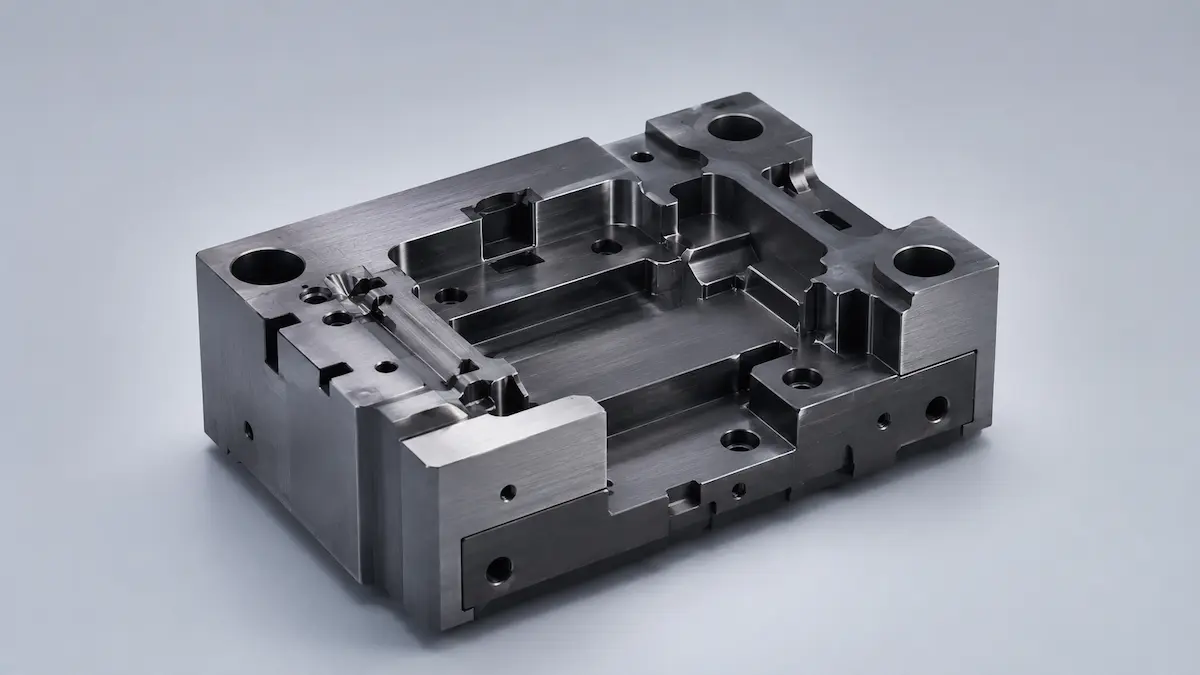
SKD11 Tool Steel is a high-carbon, high-chromium cold work mold steel, characterized by high hardness, good wear resistance, good dimensional stability, and strong compressive strength. It is commonly used in blanking dies, cold work dies, punches, cutting edges, shearing blades, wear-resistant inserts, precision mold parts, and highly wear-resistant mechanical parts. After quenching, tempering, and other heat treatments, SKD11 can achieve higher hardness and good wear resistance, but its toughness is relatively limited and it is not suitable for strong impact or large deformation structures.

SKD11 mold steelSKD11 cold work mold steelD2 tool steelCr12MoV class mold steelHigh-carbon, high-chromium mold steelCold work tool steelWear-resistant mold steelBlanking die steel
The core features of SKD11 Tool Steel are high hardness and excellent wear resistanceSuitable for cold work blankingCuttingEmbossing and wear-resistant mold structuresIt contains relatively high levels of carbon and chromiumAfter heat treatment, higher hardness and better wear resistance can be achievedCompared to ordinary 45# steel,T10 and other materialsSKD11 offers better wear resistance and mold lifeHowever, compared to hot-work mold steels or alloy structural steels, which have better toughness,
SKD11 Tool Steel
CNC MachiningMetals

Material compatibility assessment

By focusing on application scenarios, boundaries of advantages, and non-recommended scenarios, it helps sales, customer service, and quoting staff quickly determine whether the material meets current part requirements.

Core advantages

It has high hardness, good wear resistance, high compressive strength, good dimensional stability after heat treatment, suitable for precision cold work molds, blanking and shearing molds, high wear-resistant inserts, and generally has a service life better than ordinary carbon tool steel.

Suitable for the product

Blanking dies, blanking dies, punches, cavities, cutting blades, cold work die inserts, wear-resistant plates, wear-resistant blocks, forming dies, impression molds, cold extrusion dies, small precision mold parts, cutting edges, mold guide parts, wear-resistant mechanical parts, precision stamping die accessories.

Not suitable for the product

High-impact heavy-duty parts, hot work molds, high-temperature long-term working parts, highly corrosive environment parts, long-term exposed outdoor parts, welded structural parts, large deformation elastic parts, high-toughness snap fasteners, food direct contact parts, medical implant parts, low-cost ordinary structural parts, parts requiring stainless steel corrosion-resistant appearance.

Key parameter references

The following parameters come from product information and material knowledge fields, used for design review, quotation communication, and preliminary judgment before material selection.

Material positioningSteel materials suitable for cold work molds, blanking molds, wear-resistant parts, punches, cutting tools, cutting tools, and mold parts requiring high hardness and wear resistance.
Precision performanceThe SKD11 is suitable for CNC machining, wire cutting, EDM, grinding, and finishing after heat treatment. Before heat treatment, rough machining and semi-finish machining can be completed; after heat treatment, key dimensions are guaranteed through grinding, wire cutting, or finishing. Actual accuracy is affected by heat treatment deformation, internal material stress, machining method, part thickness, hole layout, and post-processing. Precision punches, dies, cutting edges, and mating surfaces should have separate tolerances and surface roughness controlled.
Dimensional tolerancesFor CNC machining SKD11, the standard dimensional tolerances can be referenced ± 0.02mm to ±0.10mm, while ordinary mold structural parts can be evaluated at ± 0.05mm to ±0.20mm; After heat treatment, dimensional changes or deformation may occur; critical dimensions are recommended to be ground or wire-cut for fine finishing after heat treatment. The precision die mating position, blade clearance, and blanking clearance should be separately controlled according to mold standards. This value is a standard reference range and does not guarantee absolute tolerances for all structures.
Minimum Wall ThicknessThe wall thickness of ordinary CNC machined structures is recommended to be no less than 1.0mm. Areas requiring quenching, bearing punching forces, forming blade edges, or serving as wear-resistant structures should be appropriately thickened. Thin walls, sharp corners, slender structures, and abrupt cross-sectional changes are more prone to deformation, cracking, or edge chipping during heat treatment and use. It is not recommended to design overly thin steel positions over large areas.
Recommended wall thicknessStandard mold inserts, wear-resistant blocks, and cutting edge parts are recommended to be 2.0mm to 5.0mm or more; punches, dies, cutting blades, and the positions bearing punching force should be appropriately thickened according to the punching force, material thickness, blade length, and installation method. Precision parts requiring heat treatment should have allowance for grinding and correction.
Minimum apertureCNC machining can achieve smaller hole diameters, but after heat treatment of SKD11, hole size, roundness, and position may change. A standard hole diameter is recommended to be no less than 1.0mm; deep small holes, slender holes, and holes near the blade edge require careful design. It is recommended to reserve machining allowance for precision holes, positioning holes, pin holes, and threaded holes. If necessary, after heat treatment, drill, reaming, grinding, or wire cutting for finishing.
Assembly clearanceFor ordinary metal assembly, it is recommended to reserve 0.05mm-0.20mm on one side; precision mold mating surfaces, punches and fixing plates, inserts and mold bases, and tool edge clearances should be determined separately according to mold structure and processing standards. If parts require heat treatment, nitriding, PVD coating, or blackening, dimensional changes and surface layer thickness should be considered to avoid overtightening or strain on the mating surface.
Detailed performanceSKD11 is suitable for machining holes, grooves, steps, chamfers, cutting edges, punch profiles, positioning surfaces, wear-resistant surfaces, and die fit structures. Wire cutting and grinding enable highly precise cutting edges and profiles, while EDM is suitable for deep cavities and complex local structures. Fine text, logos, and markings are recommended to be achieved through laser marking, engraving, or etching; complex decorative details are not recommended for high-hardness blades and high-stress areas.
Surface effectThe original machined surface of SKD11 is usually silver-gray or gray-black metallic surface, and after heat treatment, it may develop dark gray, oxidized color, or slight color differences. After grinding and polishing, a relatively flat mold working surface is obtained; after blackening or anti-rust treatment, a black or dark gray protective appearance can be obtained. Mold working surfaces usually focus more on hardness, wear resistance, flatness, and roughness rather than decorative appearance.

Typical application scenarios

Based on material characteristics and suitable product ranges, customer needs are broken down into easier application directions to determine.

Product validation

Blanking dies, blanking dies, punches, cavities, cutting blades, cold work die inserts, wear-resistant plates, wear-resistant blocks, forming dies, impression molds, cold extrusion dies, small precision mold parts, cutting edges, mold guide parts, wear-resistant mechanical parts, precision stamping die accessories.

Reasons for material selection

Steel materials suitable for cold work molds, blanking molds, wear-resistant parts, punches, cutting tools, cutting tools, and mold parts requiring high hardness and wear resistance.

Material characteristics

The core features of SKD11 Tool Steel are high hardness and high wear resistance, making it suitable for cold work blanking, cutting, embossing, and wear-resistant die structures. It contains relatively high levels of carbon and chromium, and after heat treatment, it can achieve higher hardness and better wear resistance. Compared to ordinary 45# steel, T10, and other materials, SKD11 offers better wear resistance and mold life; However, compared to hot-work mold steels or alloy structural steels with better toughness, SKD11 has weaker impact resistance, making sharp corners, thin walls, and large impact structures prone to cracking or cracking.

Design and risk review

Based on wall thickness, hole position, assembly clearance, dimensional tolerances, and material usage risks, determine in advance whether the part structure is suitable for SKD11 Tool Steel.

Design considerations

  • When designing SKD11 parts
  • Heat treatment deformation should be prioritized
  • Blade support
  • Direction of punching force
  • Stress concentration and post-processing allowance
  • Sharp angle
  • Base of the incision
  • Hole edge
Precision performanceThe SKD11 is suitable for CNC machining, wire cutting, EDM, grinding, and finishing after heat treatment. Before heat treatment, rough machining and semi-finish machining can be completed; after heat treatment, key dimensions are guaranteed through grinding, wire cutting, or finishing. Actual accuracy is affected by heat treatment deformation, internal material stress, machining method, part thickness, hole layout, and post-processing. Precision punches, dies, cutting edges, and mating surfaces should have separate tolerances and surface roughness controlled.
Dimensional tolerancesFor CNC machining SKD11, the standard dimensional tolerances can be referenced ± 0.02mm to ±0.10mm, while ordinary mold structural parts can be evaluated at ± 0.05mm to ±0.20mm; After heat treatment, dimensional changes or deformation may occur; critical dimensions are recommended to be ground or wire-cut for fine finishing after heat treatment. The precision die mating position, blade clearance, and blanking clearance should be separately controlled according to mold standards. This value is a standard reference range and does not guarantee absolute tolerances for all structures.
Quality riskThe main risks of SKD11 include heat treatment deformation, quenching cracking, cracking at sharp corners, insufficient toughness, wire cutting cracks, EDM white layers, surface rust, and uneven hardness. It is suitable for high wear-resistant cold work molds but not suitable for strong impact or large deformation conditions. If there are sharp corners, thin walls, deep and narrow grooves, holes with narrow spacing, or sudden cross-sectional changes in the design, cracks are likely to occur during heat treatment or use. The structure and heat treatment process should be optimized in advance.
Surface effectThe original machined surface of SKD11 is usually silver-gray or gray-black metallic surface, and after heat treatment, it may develop dark gray, oxidized color, or slight color differences. After grinding and polishing, a relatively flat mold working surface is obtained; after blackening or anti-rust treatment, a black or dark gray protective appearance can be obtained. Mold working surfaces usually focus more on hardness, wear resistance, flatness, and roughness rather than decorative appearance.

Post-processing and assembly precautions

Post-processing of SKD11 Tool Steel affects appearance, dimensions, hole position, assembly clearance, and usage validation results, and should be explained in advance during quotation, DFM review, and sample confirmation stages.

Post-processing options

Post-processing should focus on appearance display, dimensional fitting, connection assembly, and testing verification. Parts involving assembly positions need to be reserved in advance for machining, coating, and trial assembly allowances.

Remove burrsDeburring is used to improve the appearance of parts, assembly, or functional verification effects, and it is necessary to confirm the impact on dimensions, strength, and delivery in combination with material characteristics.
PolishingImproves support marks, layer lines, and edge feel, but will slightly alter local dimensions and the shape of sharp edges.
PolishingUsed to improve transparency or surface smoothness, may change edge details and local dimensions.
SandblastingAchieve a more uniform matte surface, suitable for engineering prototype display and slight surface mark reduction.
Annealing fireAnnealing is used to improve the appearance, assembly, or validation of parts, and must be determined by combining material properties with dimensions, strength, and delivery impact.
QuenchingQuenching is used to improve the appearance, assembly, or validation of parts, and must be combined with material properties to confirm dimensions, strength, and delivery impact.
TemperingTempering is used to improve the appearance, assembly, or validation of parts, and must be combined with material properties to confirm dimensions, strength, and delivery impact.
Cryogenic treatmentCryogenic treatment is used to improve the appearance, assembly, or validation of parts, and must be combined with material properties to confirm dimensions, strength, and delivery impact.

Key control point

Size impactSKD11 typically requires quenching and tempering to achieve the target hardness; Heat treatment may cause dimensional changes; Risk of deformation or cracking; Precision mold parts are recommended to use vacuum heat treatment; Grinding after cryogenic and heat treatment; to improve dimensional stability and wear resistance; After wire cutting and EDM processing, attention should be paid to the white layer; Microcracks and stress concentration
Assembly clearanceFor positions involving snapping, plugging, sliding, or enclosure closure, the clearance needs to be adjusted according to post-processing thickness, material shrinkage, and trial assembly results.
Hole Position StrengthThreading, inserting nuts, locking screws, and the areas around positioning holes need to ensure wall thickness to avoid cracks, stripped threads, or chipped edges during post-processing or assembly.
Environmental matchingWhen used in high-temperature, outdoor, humid, friction, or load-bearing scenarios, post-processing materials, adhesives, coatings, and fasteners must also meet the corresponding usage environment.

Structure and usage boundaries

For common issues such as threads, snaps, strength, temperature resistance, and weather resistance, identify in advance whether the material needs to be replaced or if another processing method should be used.

Thread Recommendation

Applicable ScopeSKD11 can process threads, but after high-hardness heat treatment, tapping is difficult and prone to tool wear, chipped teeth, or thread damage.
Risk pointIt is recommended to complete thread bottom holes and rough machining before heat treatment, and key threads should be finely trimmed as needed after heat treatment.
Recommended practiceHigh locking force or frequent disassembly and assembly positions should ensure sufficient thread meshing length, and consider the structure of the screw sleeve, pressure plate, or standard fastener.

Buckle recommendation

Applicable ScopeSKD11 is not suitable for large-deformation elastic buckles like plastic, nor for structures that repeatedly deform elastically over long periods.
Risk pointMetal slots, positioning blocks, pressure plates, limiting parts, pin connections, or screw fixing structures can be designed.
Recommended practiceIf spring clips, spring plates, or high-elasticity clips are needed, 65Mn, 301 stainless steel, spring steel, or specialized elastic materials should be chosen.

Strength and Environment

Mechanical strengthAfter proper quenching and tempering, SKD11 has high hardness, high compressive strength, and excellent wear resistance, making it suitable for cold work molds and wear-resistant parts.
Environmental boundaryCompared to ordinary carbon tool steel, it has better mold lifespan and wear resistance;
Recommended practiceHowever, its toughness is limited, and it may crack under strong impact, uneven loading, concentrated stress at sharp corners, or improper heat treatment. Actual strength and lifespan depend heavily on heat treatment, hardness control, structural design, and operating conditions. SKD11 is a cold work tool steel, not hot work tool steel or high-speed steel. It performs well in wear resistance under normal and low-temperature cold working conditions, but hardness, dimensional stability, and wear life may decrease in high-temperature environments. Not suitable for long-term high-temperature hot work molds, hot stamping, or high-temperature friction environments. If high-temperature mold performance is required, H13, SKD61, or other hot-work mold steels should be chosen. SKD11 has a relatively high chromium content, but it is not stainless steel and has limited corrosion resistance. Rust will still occur when exposed to moisture, salt spray, acidic or alkaline environments, or prolonged outdoor environments. After use, molds and wear-resistant parts should be kept dry and coated with anti-rust oil. For long-term storage, humid environments, or scenarios with high appearance requirements, it is recommended to apply blackening, plating, anti-rust oil, PVD coating, or other surface protection; If corrosion resistance is required, S136, stainless steel, mold steel, or other corrosion-resistant materials should be considered.

Alternative material selection and final judgment

When customer demand exceeds SKD11 Tool Steel material boundaries, it is necessary to combine strength, temperature resistance, toughness, long-term stability, and mass production goals to promptly recommend alternative materials or processing technologies.

Alternative material suggestions

If higher toughness and impact resistance are required, H13, DC53, Cr12MoV modified materials or 42CrMo can be selected; If higher wear resistance and longer mold life are required, powder high-speed steel, ASP-type powder steel, or cemented carbide can be chosen; If ordinary low-cost mold parts are needed, Cr12MoV, T10, 45# steel, or 40Cr can be chosen; If hot work die performance is required, hot work die steels such as H13 and SKD61 should be selected; If corrosion-resistant molds are needed, S136 or stainless mold steel can be chosen.

Material selection suggestions

If customers need to manufacture cold stamping dies, punches, cutting cuts, wear-resistant inserts, or precision cold work mold parts, with core requirements for hardness and wear resistance, SKD11 is a suitable choice. If the customer's parts need to withstand significant impact, repeated bending, welding, or high-temperature hot working environments, SKD11 is not recommended; instead, better toughness alloy steel, hot work mold steel, or specialized tool steel should be considered.

Already have the blueprints? Directly enter the quotation for custom parts

After uploading 3D/2D drawings and supplementing materials, quantities, tolerances, surface treatments, and delivery requirements, XPartsLab will provide next steps in 3D printing manufacturability, cost, and delivery pathways.