Material Database

Rubber-Like TPU

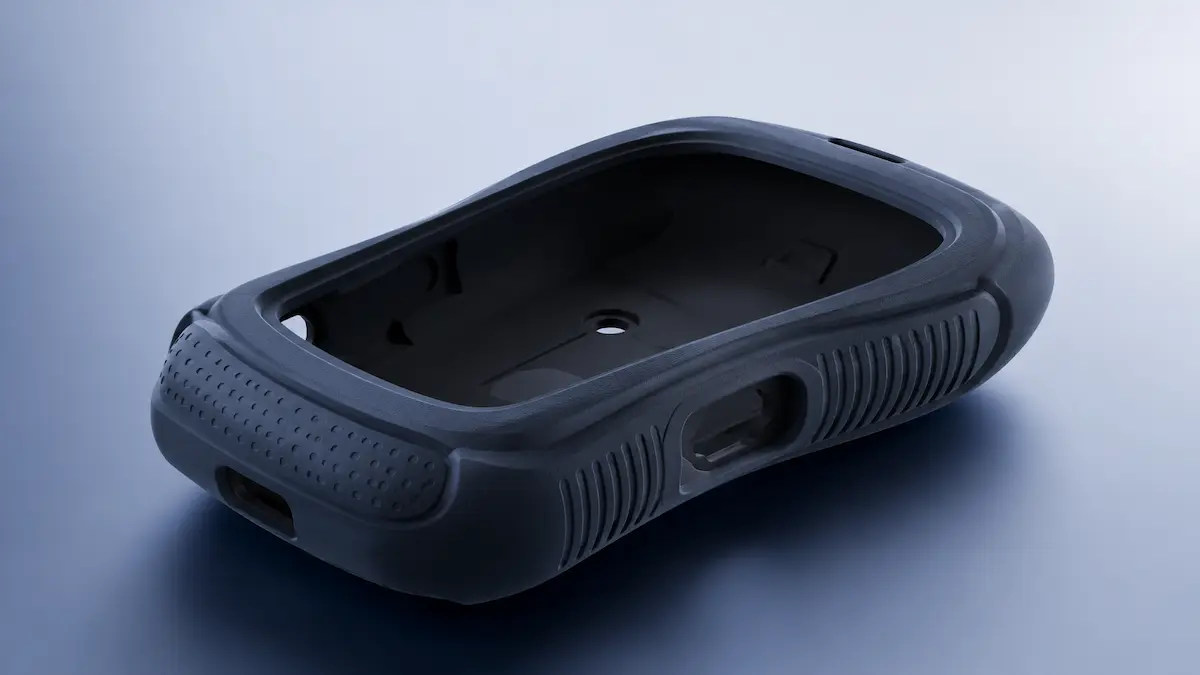
Suitable for Soft Rubber parts, protective sleeves, cushioning parts, sealing auxiliary parts, rubber overhangs, wear-resistant elastic parts, soft housings, foot pads, rollers, and injection-molded elastic materials requiring a flexible touch.

Material description

Rubber-Like TPU is a thermoplastic polyurethane elastomer material that combines the elasticity of rubber with the injection molding of plastic, offering good elasticity, wear resistance, tear resistance, oil resistance, impact resistance, and tactile feel. Rubber-Like TPU are commonly used in Soft Rubber housings, protective covers, sealing rings, shock absorbers, foot pads, rollers, soft buttons, rubber parts, sports equipment, cable sheaths, and plastic parts requiring a soft touch or elastic cushioning. Compared to ordinary rubber, Rubber-Like TPU is more suitable for mass injection molding and complex structural molding; Compared to hard plastics such as Polypropylene (PP), ABS, and Polycarbonate (PC), Rubber-Like TPU is softer and better suited for elastic contact and protective cushioning scenarios.

TPUThermoplastic polyurethaneInjection molding Rubber-Like TPURubber-Like TPU injection-molded partsRubber-Like TPU Soft RubberPolyurethane elastomersElastic plasticSoft Rubber-Like TPUWear-resistant Rubber-Like TPUOvermolding Rubber-Like TPU
The core feature of injection molding Rubber-Like TPU is elasticityWear-resistant and soft to the touchSuitable for use when Soft Rubber protection is neededBufferNon-slipProducts that provide sealing assistance and tactile overhangsRubber-Like TPU has a wide hardness rangeYou can choose from softer to harder, depending on Shore A or Shore D hardnessDifferent hardness levels will significantly affect the feelRebound
TPU
Injection MoldingElastomers

Material compatibility assessment

By focusing on application scenarios, boundaries of advantages, and non-recommended scenarios, it helps sales, customer service, and quoting staff quickly determine whether the material meets current part requirements.

Core advantages

Good elasticity, good wear resistance, tear resistance, impact resistance, soft feel, good oil resistance, can be injection molded, can be made transparent or semi-translucent, suitable for overmolding and combining hardness and softness, ideal for cushioning and shock absorption, and surface protection.

Suitable for the product

Mobile phone protective cases, electronic product Soft Rubber casings, sports equipment accessories, soft keys, foot pads, anti-slip pads, sealing rings, cushioning pads, shock absorbers, rollers, rubber wheels, cable sleeves, hose connectors, tool handles coated with rubber coating, soft shells for medical devices, automotive interior Soft Rubber parts, footwear material components, wearable device straps, and soft contact parts for fixtures.

Not suitable for the product

High-rigidity structural parts, high-strength load-bearing parts, high-precision long-term dimensional stabilization parts, high-temperature long-term use parts, high conductivity parts, high thermal conductivity parts, high-gloss hard appearance parts, strong acid and strong alkali environment parts, long-term outdoor exposure without weather-resistant modification, parts requiring rigid threaded connections, and extremely low-cost ordinary hard plastic parts.

Key parameter references

The following parameters come from product information and material knowledge fields, used for design review, quotation communication, and preliminary judgment before material selection.

Material positioningSuitable for Soft Rubber parts, protective sleeves, cushioning parts, sealing auxiliary parts, rubber overhangs, wear-resistant elastic parts, soft housings, foot pads, rollers, and injection-molded elastic materials requiring a flexible touch.
Precision performanceInjection molding Rubber-Like TPU can meet the batch molding precision of ordinary Soft Rubber and elastic parts, but because the material is soft, highly elastic, and exhibits obvious shrinkage and demolding deformation, dimensional stability is usually not as stable as hard plastics such as ABS, Polycarbonate (PC), and Acetal (POM). The lower the hardness, the harder it is to control the size; The higher the hardness, the better the stability of assembly and processing. Precision assembly positions, rubber boundaries, sealing surfaces, and plug-in structures should be verified through mold trials to verify actual dimensions and rebound status.
Dimensional tolerancesConventional dimensional tolerances for injection molding Rubber-Like TPU can be referenced ± 0.15mm to ±0.40mm, making small size, high hardness, and simple structure easier to control; Low-hardness Soft Rubber parts, large-sized parts, thin-walled parts, elongated parts, overmolded parts, and complex elastic structures may have deviations of ±0.40mm-±1.00mm or more. These values are standard reference ranges and are not absolute guaranteed tolerances for all structures. It is recommended to define tolerances separately for sealing positions, overmolding boundaries, assembly holes, and snap structures and verify them through sample parts.
Minimum Wall ThicknessInjection molding Rubber-Like TPU recommends a minimum wall thickness of no less than 0.8mm-1.0mm. For low hardness Rubber-Like TPU it is not recommended to make large areas too thin, otherwise filling may become unstable, deformed, tear, or difficult to demold. Ordinary Soft Rubber enclosures and protective sleeves can be designed with thinner areas according to hardness, but the load-bearing, overhanging, sealing, and assembly positions should be appropriately thickened.
Recommended wall thicknessFor ordinary Rubber-Like TPU Soft Rubber parts, 1.2mm-3.0mm is recommended; protective covers, foot pads, cushioning pads, and soft housings are recommended 1.5mm-4.0mm; rollers, shock absorbers, sealing auxiliary parts, and compression-bearing positions are recommended to be above 2.0mm. The final thickness should be determined based on hardness, compression amount, springback, assembly space, and operating load.
Minimum apertureFor injection molding Rubber-Like TPU small holes, the recommended hole diameter is no less than 1.0mm-1.5mm. Low hardness Rubber-Like TPU small holes are prone to unstable hole size due to shrinkage, deformation, or demolding stretching. Deep small holes and elongated holes require evaluation based on mold insertion needle strength, venting, demolding method, and material hardness. Assembly holes, wire holes, and sealing holes should consider material springback and long-term deformation, and appropriately enlarge the hole size if necessary.
Assembly clearanceFor ordinary Rubber-Like TPU assembly, it is recommended to reserve 0.20mm-0.50mm on one side; Soft Rubber wrapping, inserting, and elastic press-in structures can be designed with appropriate interference according to hardness and compression amount. Low hardness Rubber-Like TPU can achieve a tight fit using elasticity, but long-term stress may cause creep loosening; High-hardness Rubber-Like TPU assembly gaps should be avoided to prevent overtight assembly difficulties, edge tearing, or permanent deformation. Sealing structures should have separate gaps designed based on compression rate and resilience.
Detailed performanceInjection molding Rubber-Like TPU can achieve ordinary textures, logos, rib positions, grooves, Soft Rubber edge wrapping, anti-slip textures, and shallow relief details, but the detail clarity is not as high as that of hard plastics like ABS, Polycarbonate (PC), and Polybutylene Terephthalate (PBT). For raised text, recessed text, and anti-slip textures, it is recommended to be no less than 0.4mm-0.8mm. Low hardness Rubber-Like TPU details are prone to rounding, softening, or delamination and scratching; High hardness Rubber-Like TPU clearer details. Appearance identification can be achieved through mold textures, laser engraving, silk screen printing, pad printing, or hot pressing.
Surface effectInjection molding Rubber-Like TPU can achieve transparent, semi-transparent, milky white, black, or various color effects, with surfaces that can be matte, fine-grained, matte, leather-textured, or soft to the touch. Transparent Rubber-Like TPU have a certain translucency but may turn yellow due to long-term use due to UV exposure, sweat, oil stains, or thermal aging. Matte Rubber-Like TPU suitable for non-slip and tactile parts; high-gloss Rubber-Like TPU easily shows scratches and fingerprints. For high-end appearance Soft Rubber, focus should be placed on controlling material transparency, flow marks, color differences, surface particles, and packaging indentations.

Typical application scenarios

Based on material characteristics and suitable product ranges, customer needs are broken down into easier application directions to determine.

Product validation

Mobile phone protective cases, electronic product Soft Rubber casings, sports equipment accessories, soft keys, foot pads, anti-slip pads, sealing rings, cushioning pads, shock absorbers, rollers, rubber wheels, cable sleeves, hose connectors, tool handles coated with rubber coating, soft shells for medical devices, automotive interior Soft Rubber parts, footwear material components, wearable device straps, and soft contact parts for fixtures.

Reasons for material selection

Suitable for Soft Rubber parts, protective sleeves, cushioning parts, sealing auxiliary parts, rubber overhangs, wear-resistant elastic parts, soft housings, foot pads, rollers, and injection-molded elastic materials requiring a flexible touch.

Material characteristics

The core features of injection molding Rubber-Like TPU are elasticity, wear resistance, and a soft touch, making them suitable for products that require Soft Rubber protection, cushioning, anti-slip, sealing assistance, and a tactile overmolding feel. Rubber-Like TPU has a wide hardness range, allowing selection from softer to harder according to Shore A or Shore D hardness. Different hardness levels significantly affect hand feel, rebound, processing difficulty, and assembly performance. Rubber-Like TPU has good wear resistance and tear resistance, but long-term stress can cause some creep or permanent compression deformation. High temperatures, ultraviolet rays, oils, and chemical media also affect material lifespan.

Design and risk review

Based on wall thickness, hole position, assembly clearance, dimensional tolerances, and material usage risks, determine in advance whether the part structure is suitable for Rubber-Like TPU.

Design considerations

  • When designing injection-molded Rubber-Like TPU parts
  • Hardness should be given special consideration
  • The walls are thick
  • Release angle
  • Rounded transitions
  • Shrinkage
  • Spread the edge
  • Exhaust
Precision performanceInjection molding Rubber-Like TPU can meet the batch molding precision of ordinary Soft Rubber and elastic parts, but because the material is soft, highly elastic, and exhibits obvious shrinkage and demolding deformation, dimensional stability is usually not as stable as hard plastics such as ABS, Polycarbonate (PC), and Acetal (POM). The lower the hardness, the harder it is to control the size; The higher the hardness, the better the stability of assembly and processing. Precision assembly positions, rubber boundaries, sealing surfaces, and plug-in structures should be verified through mold trials to verify actual dimensions and rebound status.
Dimensional tolerancesConventional dimensional tolerances for injection molding Rubber-Like TPU can be referenced ± 0.15mm to ±0.40mm, making small size, high hardness, and simple structure easier to control; Low-hardness Soft Rubber parts, large-sized parts, thin-walled parts, elongated parts, overmolded parts, and complex elastic structures may have deviations of ±0.40mm-±1.00mm or more. These values are standard reference ranges and are not absolute guaranteed tolerances for all structures. It is recommended to define tolerances separately for sealing positions, overmolding boundaries, assembly holes, and snap structures and verify them through sample parts.
Quality riskThe main risks of injection molding Rubber-Like TPU include peeling, mold sticking, shrinkage, deformation, gas marks, flow marks, surface stickiness, yellowing of transparent parts, unstable hardness, overmolding delamination, long-term compression deformation, and weathering resistance. Rubber-Like TPU is suitable for elastic protection and wear-resistant Soft Rubber parts, but not suitable as a high-rigidity precision structural material. When used for protective covers, sealing rings, foot pads, rollers, and overmolding parts, focus should be paid to verifying hardness, resilience, wear resistance, compression permanent deformation, bonding strength, operating temperature, and long-term aging performance.
Surface effectInjection molding Rubber-Like TPU can achieve transparent, semi-transparent, milky white, black, or various color effects, with surfaces that can be matte, fine-grained, matte, leather-textured, or soft to the touch. Transparent Rubber-Like TPU have a certain translucency but may turn yellow due to long-term use due to UV exposure, sweat, oil stains, or thermal aging. Matte Rubber-Like TPU suitable for non-slip and tactile parts; high-gloss Rubber-Like TPU easily shows scratches and fingerprints. For high-end appearance Soft Rubber, focus should be placed on controlling material transparency, flow marks, color differences, surface particles, and packaging indentations.

Post-processing and assembly precautions

Post-processing of Rubber-Like TPU affects appearance, dimensions, hole position, assembly clearance, and usage validation results, and should be explained in advance during quotation, DFM review, and sample confirmation stages.

Post-processing options

Post-processing should focus on appearance display, dimensional fitting, connection assembly, and testing verification. Parts involving assembly positions need to be reserved in advance for machining, coating, and trial assembly allowances.

Leave the armor on the frontierDe-defluffing: Used to improve the appearance, assembly, or validation of parts, it is necessary to confirm dimensions, strength, and delivery impact based on material properties.
and repaired the borderEdge trimming is used to improve the appearance, assembly, or validation of parts, and must be combined with material properties to confirm dimensions, strength, and delivery impact.
Freeze and trim the edgesCryo-trimming is used to improve the appearance, assembly, or validation of parts, requiring confirmation of dimensions, strength, and delivery impact based on material characteristics.
Screen printingSilk-screen printing is used to improve the appearance of parts, assembly, or functional verification effects, and it is necessary to confirm the dimensions, strength, and delivery impact in combination with the material characteristics.
Pad printingPad printing is used to improve the appearance of parts, assembly, or functional verification effects, and it is necessary to confirm the dimensions, strength, and delivery impact in combination with material characteristics.
Laser carvingLaser engraving is used to improve the appearance, assembly, or validation of parts, and must be combined with material properties to confirm dimensions, strength, and delivery impact.
Spray a touch oilSpraying tactile oil is used to improve the appearance, assembly, or validation of parts, and must be determined by combining material properties with dimensions, strength, and delivery impact.
Surface matte treatmentSurface matte treatment is used to improve the appearance, assembly, or validation of parts, requiring confirmation of dimensions, strength, and delivery impact based on material properties.

Key control point

Size impactRubber-Like TPU material is relatively soft; Injection-molded parts are prone to unraveling; Mold adhesion; Crown is white; Deformation and surface indentation; When trimming, avoid pulling the edges; Transparent Rubber-Like TPU gas patterns; Impurities
Assembly clearanceFor positions involving snapping, plugging, sliding, or enclosure closure, the clearance needs to be adjusted according to post-processing thickness, material shrinkage, and trial assembly results.
Hole Position StrengthThreading, inserting nuts, locking screws, and the areas around positioning holes need to ensure wall thickness to avoid cracks, stripped threads, or chipped edges during post-processing or assembly.
Environmental matchingWhen used in high-temperature, outdoor, humid, friction, or load-bearing scenarios, post-processing materials, adhesives, coatings, and fasteners must also meet the corresponding usage environment.

Structure and usage boundaries

For common issues such as threads, snaps, strength, temperature resistance, and weather resistance, identify in advance whether the material needs to be replaced or if another processing method should be used.

Thread Recommendation

Applicable ScopeRubber-Like TPU is not suitable for directly producing high-strength threads, nor for frequent disassembly and high-locking connections.
Risk pointFor low-load positions, perforated screws, slots, press-in structures, or fixed with rigid parts can be used.
Recommended practiceFor important connection points, it is recommended to use rigid plastic frames, metal inserts, overmolding substrates, nuts, or independent fastening structures. When tightening screws, do not directly compress Rubber-Like TPU use it as the main load-bearing point to avoid deformation, loosening, or tearing.

Buckle recommendation

Applicable ScopeRubber-Like TPU is flexible and can be used for low-strength flexible buckles, fitting structures, edge wrapping structures, and elastic limit structures, but it is not suitable for high-precision strong locking buckles.
Risk pointThe base of the clip should have a large rounded corner to avoid tearing;
Recommended practiceThe amount of deformation should be controlled within the recoverable range of the material. Rubber-Like TPU clips subjected to long-term stress may creep and loosen. If highly reliable mechanical clips are needed, it is recommended to choose Acetal (POM), Nylon (PA), Polycarbonate (PC), ABS, or metal spring clips, and let the Rubber-Like TPU only handle overmolding and cushioning functions.

Strength and Environment

Mechanical strengthRubber-Like TPU strength performance is closely related to hardness and formulation.
Environmental boundaryHigh hardness Rubber-Like TPU with good wear resistance and load-bearing capacity, suitable for rollers, foot pads, buffer blocks, and protective parts;
Recommended practiceLow hardness Rubber-Like TPU better softness and feel, suitable for sheaths, plugs, and Soft Rubber shells. Rubber-Like TPU overall rigidity is lower than hard engineering plastics and metals, but it offers better elasticity, wear resistance, tear resistance, and impact resistance. When under long-term compression, attention should be paid to compression permanent deformation and creep. Rubber-Like TPU temperature resistance is at a medium level, suitable for ambient and medium-low temperature applications. At higher temperatures, softening occurs, deformation, reduced elasticity, surface stickiness, or accelerated aging. At low temperatures Rubber-Like TPU some flexibility can still be maintained, but the specifics depend on the grade. When used in automotive interiors, electronics, sports goods, or structures near heat sources, verification should be conducted based on specific temperature, load, hardness, and formulation. For higher high-temperature requirements, Silicone Rubber, TPE E, fluororubber, Polyether Ether Ketone (PEEK), or metal materials can be considered. Rubber-Like TPU performs well in ordinary indoor and general usage environments, but long-term exposure to ultraviolet rays, sweat, oil stains, humidity, ozone, and outdoor exposure may cause yellowing, aging, hardness, stickiness, cracking, or performance degradation. Transparent Rubber-Like TPU especially prone to yellowing. For use outdoors, wearables, footwear, automotive applications, or long-term exposure to sweat and oil stains, weather resistance, UV-resistant, or hydrolysis-resistant Rubber-Like TPU should be selected, and verified through aging, sweat, oil, and abrasion tests.

Alternative material selection and final judgment

When customer demand exceeds Rubber-Like TPU material boundaries, it is necessary to combine strength, temperature resistance, toughness, long-term stability, and mass production goals to promptly recommend alternative materials or processing technologies.

Alternative material suggestions

If lower-cost Soft Rubber parts are needed, TPE or soft Polyvinyl Chloride (PVC) can be chosen; If higher temperature and chemical resistance are required, Silicone Rubber, fluororubber, or specialty elastomers can be chosen; If higher rigidity and dimensional stability are required, Acetal (POM), Polycarbonate (PC), ABS, or Nylon (PA) can be chosen; If better weather resistance and outdoor stability are needed, weather resistance Rubber-Like TPU, TPE E, or specialized rubber can be chosen; If higher wear-resistant rollers are needed, high-hardness Rubber-Like TPU, PU castable materials, or nylon/Acetal (POM) structural components can be chosen.

Material selection suggestions

If customers require a soft tactile feel, drop protection, wear resistance, slip resistance, cushioning, shock absorption, or soft-hard bonding overmolding, injection molding Rubber-Like TPU is an excellent choice. If customers require high rigidity, high-precision assembly, long-term high-temperature loading, or low-cost rigid housings, it is not recommended to prioritize Rubber-Like TPU; instead, ABS, Polycarbonate (PC), Polypropylene (PP), Acetal (POM), Nylon (PA), or metal materials should be considered. When selecting Rubber-Like TPU, first confirm hardness, color transparency, wear resistance requirements, resilience requirements, operating temperature, contact medium, and whether adhesive bonding is needed.

Already have the blueprints? Directly enter the quotation for custom parts

After uploading 3D/2D drawings and supplementing materials, quantities, tolerances, surface treatments, and delivery requirements, XPartsLab will provide next steps in 3D printing manufacturability, cost, and delivery pathways.